Educational Programming

Educational Programming

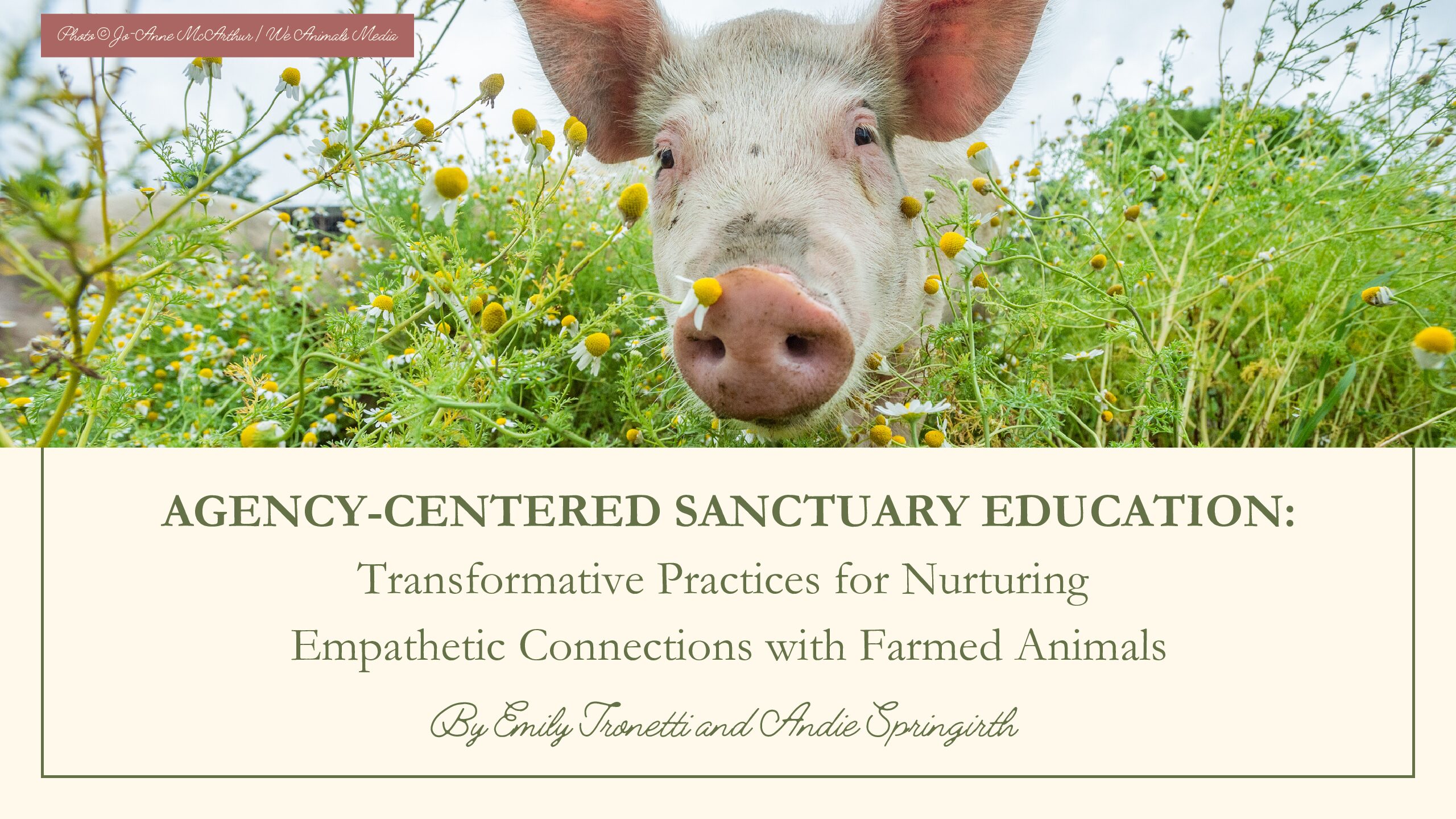
This is the recording of a webinar led by Andie Springirth of the Open Sanctuary Project and Dr. Emily Tronetti of the Institute for
This is the recording of a webinar led by Andie Springirth of the Open Sanctuary Project and Dr. Emily Tronetti of the Institute for Humane Education on how to foster farmed animal agency in sanctuary education.
This free downloadable lesson plan is the second part of a multi-part animal sanctuary education program for middle school-age children.
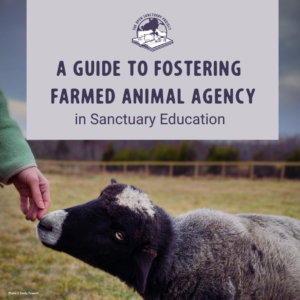
This resource is a comprehensive 68-page guide that explores the many ways that sanctuary educators can center and teach about resident agency and consent
This resource is a comprehensive 68-page guide that explores the many ways that sanctuary educators can center and teach about resident agency and consent during their education and outreach efforts.
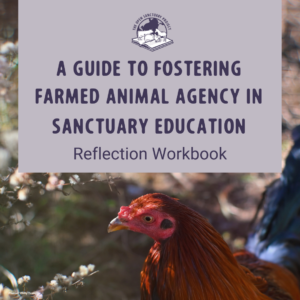
This is a free downloadable reflection workbook that accompanies “A Guide to Fostering Farmed Animal Agency in Sanctuary Education”.
This is a free downloadable reflection workbook that accompanies "A Guide to Fostering Farmed Animal Agency in Sanctuary Education".
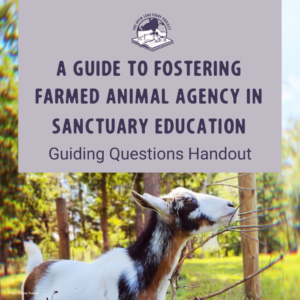
This is a free downloadable handout that is meant to help guide sanctuary educators in their daily reflections about agency-centered sanctuary education.
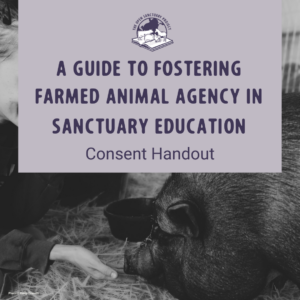
This is a free downloadable handout that provides folks with general guidance on how to have consent-based interactions with farmed animals.
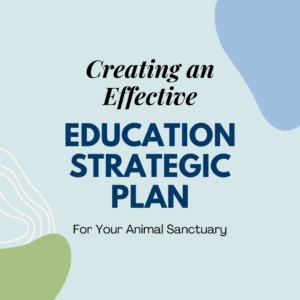
This handy infographic provides seven steps to creating an effective education strategic plan for your animal sanctuary.
This handy infographic provides four tips for communicating with youth about animal exploitation.
This free downloadable lesson plan is the first part of a multi-part sanctuary education program for middle school-age children.
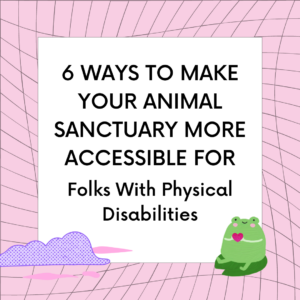
A white text box that says "six ways to make your animal sanctuary more accessible for folks with physical disabilities". There is a light pink background behind the text box, a purple cloud in the bottom left corner of the graphic, and a green frog holding a pink heart in the bottom right corner of the graphic.
This handy infographic covers six things sanctuaries can do to make their spaces more accessible for folks with physical disabilities.
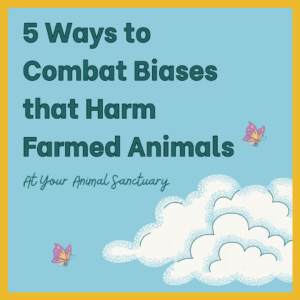
The background of this image is light aqua blue. There is a yellow frame bordering the entire image. There is a white cloud illustration in the bottom right corner. There is a pink and yellow butterfly illustration flying above the cloud. There is another pink and yellow butterfly illustration flying to the left of the cloud. The text on the image says "Five Ways to Combat Biases that Harm Farmed Animals at Your Animal Sanctuary".
This handy infographic covers five ways sanctuary educators can help folks who visit their educational spaces avoid and overcome biases that can negatively impact
This handy infographic covers five ways sanctuary educators can help folks who visit their educational spaces avoid and overcome biases that can negatively impact farmed animals.
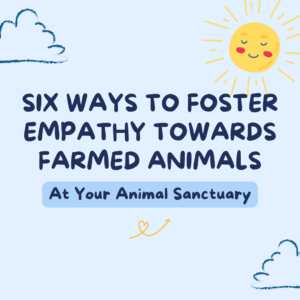
This handy infographic covers six ways animals sanctuaries can foster empathy towards farmed animals in their educational programming.
This handy infographic covers six things sanctuaries can do to make their spaces more accessible for Deaf and hard of hearing folks.
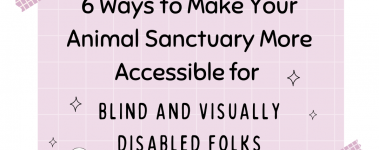
This is a graphic. There is a light purple square in the background. In front of the square is black text that says six ways to make your animal sanctuary more accessible for blind and visually disabled folks. There is an illustration of a white duck in the bottom left corner of the square. There is also two pieces of darker purple illustrated tape in the top left corner of the square and the bottom left corner of the square.
This handy infographic covers six things sanctuaries can do to make their spaces more accessible for blind and visually disabled folks.
The first handout for sanctuary visitors
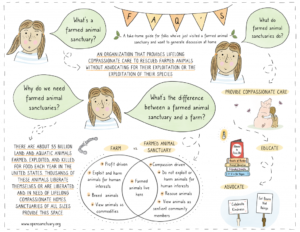
A take-home guide for folks who’ve just visited your animal sanctuary and want to generate discussion with their family and friends at home.
A take-home guide for folks who've just visited your animal sanctuary and want to generate discussion with their family and friends at home.
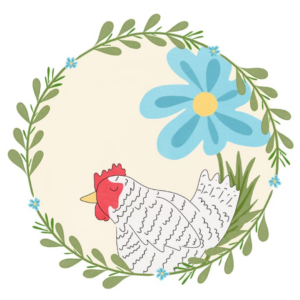
Illustration of a cream-colored circle with a white and black chicken in the middle. There are green vines wrapped around the circle with small blue flowers. There is a large blue and yellow flower behind the chicken.
This free downloadable lesson plan is the first part of a multi-part sanctuary education program for late elementary-age children.
This free downloadable lesson plan is the fourth part of a multi-part sanctuary education program for early elementary-age children.
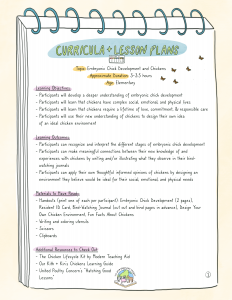
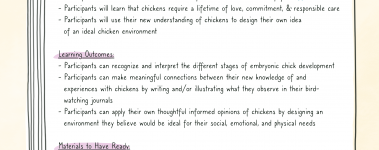
This lesson plan teaches children about embryonic chick development in a non-exploitative compassionate way.
This free downloadable lesson plan is the third part of a multi-part sanctuary education program for early elementary-age children.
This free downloadable lesson plan is the second part of a multi-part sanctuary education program for early elementary-age children.
This free downloadable lesson plan is the first part of a multi-part sanctuary education program for early elementary-age children.
Skip to content