



This resource has been fully reviewed and updatedA member of The Open Sanctuary Project’s staff has given this resource a full review and provided updates where necessary. by a member of The Open Sanctuary Project’s team as of August 3, 2026. It was originally published on August 8, 2018.
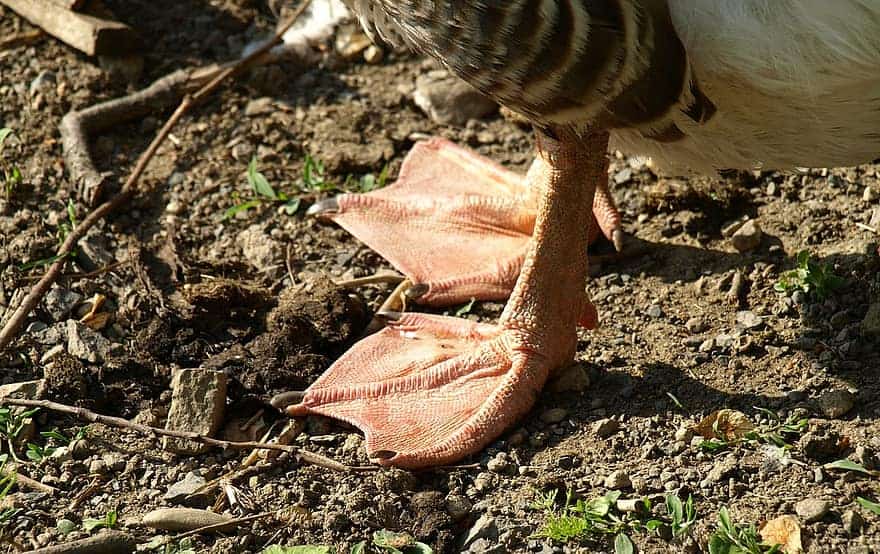
A goose’s nails are composed of keratin, the same protein that makes up our fingernails and toenails. Just like our nails, a goose’s nails are always growing and will need to be trimmed if they grow too long. We recommend checking their nails at every health checkThe Open Sanctuary Project uses the term "health check" to describe health evaluations performed by caregivers who are not licensed veterinarians. While regular health checks are an important part of animal care, they are not meant to be a replacement for a physical exam performed by a licensed veterinarian. and trimming them as needed. Below, we’ll discuss the factors that can affect how often a goose’s nails may need to be trimmed, how to assess whether they are overgrown, and how to bring them back to a normal length.
How Often Do You Need To Trim A Goose Resident’s Nails?
How often a goose resident needs their nails trimmed will depend on factors such as their genetics, how they bear weight, their general activity level, and environmental conditions. At first, it can be difficult to determine when nails need to be trimmed, but with time, you will become accustomed to what is normal and what is overgrown. Like cats and dogs, geeseUnless explicitly mentioned, we are referring to domesticated goose breeds, not wild geese, who may have unique needs not covered by this resource. have a blood vessel and nerve that runs partway down the center of the nail. This is known as the “quick.” If you look closely at the nail, the quick will look pink and more opaque than the rest of the nail. Nails should be slightly longer than the quick and should not curl or interfere with walking. To better see the quick, make sure the individual’s nails are clean. If it’s difficult to visualize the quick, try holding a light behind the nail. Light will not pass through the quick as easily as it does through the rest of the nail, making it easier to visualize any overgrowth. Please note that the quick is often longer in nails that haven’t been trimmed in a while (we’ll talk about this more below).
How To Trim A Goose’s Nails
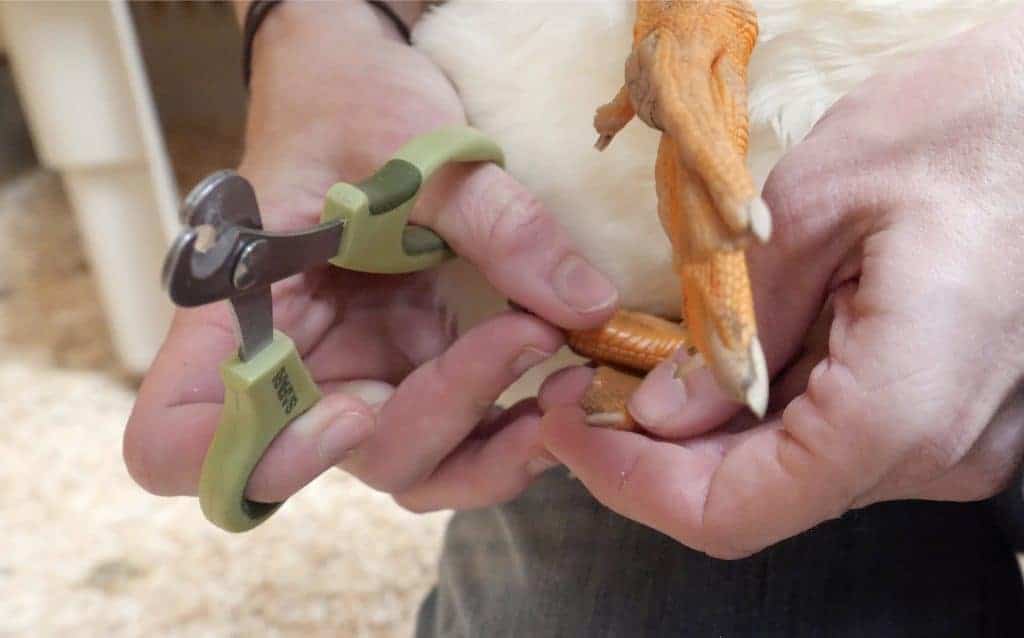
Nails can be trimmed with the same style nail clippers typically used for dogs or cats, or you may opt for a rotary tool such as a Dremel with an appropriate grinding attachment. One major benefit of using a rotary tool is that it avoids the crushing action of scissor- and plier-style clippers, reducing the risk of cracking the nail. If opting for these types of manual trimmers, you might want to soak their nails in warm water before trimming, as this will soften the nails and reduce the risk of them splitting when cut. While the goal is to trim nails without drawing blood, you should always have a blood-stop product, such as a styptic pencil or styptic powder (for example, Quick Stop), on hand just in case. Alternatively, cornstarch or flour can be used to encourage natural clotting.
If you’ve ever trimmed a dog or cat’s nails (or another bird species), you’ll find that the process is similar to that of a goose. Use your less dominant hand to secure their foot/toe and your dominant hand to trim/file the nail. Go slow, taking just a little bit off at a time. Cutting into the quick is painful and bloody, so it’s important to be very mindful about how much you trim. As you trim, pay close attention to where the quick ends and observe the appearance of the remaining nail tip. If it starts to change color, this is an indication that you are getting close to the quick and should stop trimming.
If nails have become seriously overgrown, you may note that the quick has also grown out, preventing you from trimming the nail back to a normal length without causing pain. In this case, trim as much as you can and then wait a few weeks for the quick to recede before trimming more. Repeat this process until their nails are back to a normal length.
If you are using manual clippers, you may find that you need to file down the remaining rough edges with an emery board, nail file, or rotary tool to protect the individual from injuring themself when they scratch.
If the idea of trimming a goose’s nails seems daunting, have no fear! With time and practice, you should get more comfortable performing this important health care task!
SOURCES:
Beak And Nail Care In Birds | VCA Animal Hospitals
Care Of Beak, Nails, And Spurs In Backyard/Fancy Poultry | UC Davis (Non-Compassionate Source)