



This resource was fully reviewed and updated by a member of The Open Sanctuary Project as of May 2026. It was originally published on May 10, 2019.
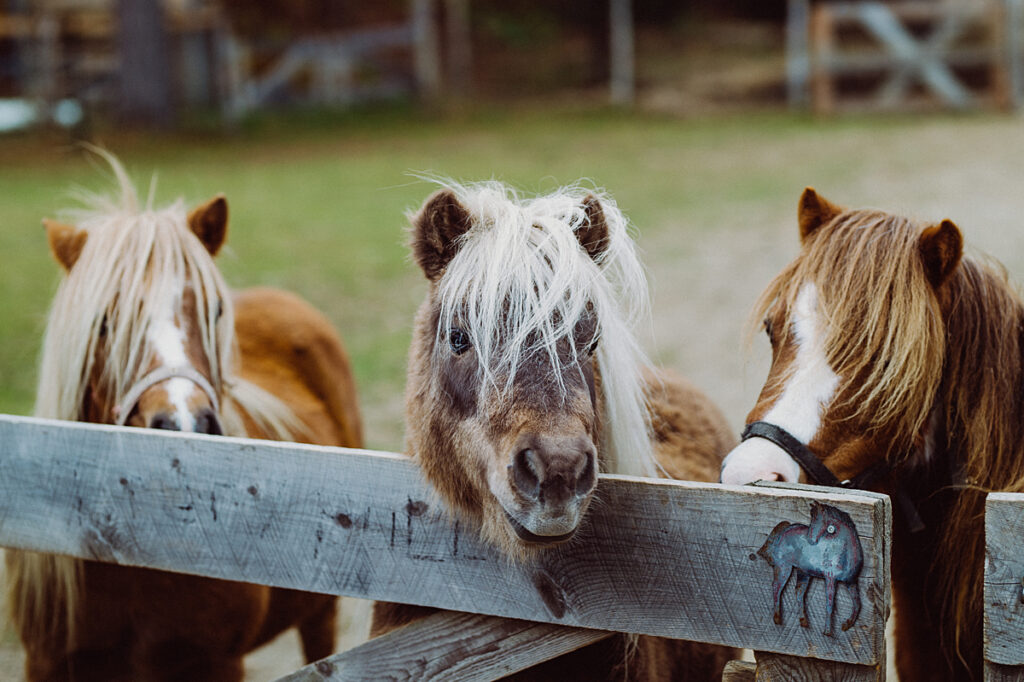
If you care for miniature horse or pony residents, it is easy to think of them as having the same needs as larger breeds. While much of their care is indeed the same, there are a number of conditions to which miniature horses and ponies are more susceptible. This mini resource covers some of these basic health issues, offering caregivers an introductory to special care considerations. Being knowledgeable about what theses conditions are and how to prevent them will help ensure your miniature residents are happy and healthy. Let’s get started!
Health Issues:
Colic
All horses are at risk of colic and should be carefully observed for any signs of distress. Miniature horses seem to be particularly vulnerable to certain forms of colic, specifically feed impactions and fecaliths (hard balls of feces). Possible reasons for this are poor dental formation and a subsequent inability to properly grind down food, and a disproportionately small intestine.
Cushing’s Disease
While all equines can develop Cushing’s disease, miniature horses, ponies, and donkeys are particularly susceptible. This disease is due to the overgrowth of the middle part of the pituitary gland in the brain. Symptoms include laminitis, long, hairy coats that don’t shed properly, and unusual fat deposits, along with muscle wasting and a pot-bellied appearance. Not all afflicted horses will show all these symptoms so it is important to take each seriously and call your veterinarian to diagnose and recommend treatment. Minis with Cushing’s will require special care in regards to nutrition, hoof, and dental care.
Dental Issues
All horses require good dental care. However, there is a greater prevalence of miniature horses retaining their “baby teeth”, causing overcrowding. In some cases, these may need to be pulled. Do not attempt this yourself! Overbites and underbites are also not uncommon in miniature horses and require a veterinary exam to identify any issues this may cause during feeding.
Dislocation Of The Hip Joint
While dislocation of the hip joint (coxofemoral joint) isn’t a particularly common occurrence in horses, it is more common in small horses such as Shetland ponies. Because the joint is supported by strong ligaments and tough tissue attached to the hip socket, dislocation is usually caused by trauma (an injury). In Shetland ponies, dislocation of the hip joint is generally a secondary issue from a locked stifle"A locking stifle in a horse affects the stifle joint which includes the kneecap and ligaments and is the most complex joint in the horse. In horses with this condition, one of the ligaments in the kneecap catches over the inner ridge of the femur. This causes the hind limb to be locked while extended." (see below).
Dwarfism
Miniature horses are not dwarfs. They have been selectively bred from larger breeds while trying to maintain similar conformation. However, while dwarfism is a condition that affects both larger and miniature breeds of horses, it is more commonly seen in miniature horses. This is important to know because dwarves often have their own special health needs.
There are two forms of dwarfism: achondroplasia dwarfism (short limbs) and diastrophia dwarfism (twisted limbs). While Achondroplastic dwarfs typically lead normal lives, Diastrophic dwarfs may have multiple limb deformities, domed heads, and roached backs, and may require extra support, including splints or surgery, to move properly.
Dystocia (Difficult Birth)
Due to their smaller size and the relatively large size of the fetus, miniature horse mares have a higher likelihood of experiencing a difficult birth. This can be very serious and even life threatening. If you have a pregnant mini resident, be sure to contact your veterinarian to prepare for the birth and any complications that may arise during the pregnancy and birth.
Excessive Weight Gain
Many minis tend to gain extra weight as they are often overfed and have limited exercise. Too much extra weight can contribute to the development of health issues, such as laminitis. Providing proper nutrition year round can prevent a host of ailments. You can learn about basic horse nutrition in our “Daily Diet, Treats And Supplements For Horses: The Basics“.
Hyperlipaemia
Miniature horses, ponies, and donkeys are all at a higher risk of Hyperlipaemia as their bodies tend to mobilize fat if their bodies sense an “energy crisis” and they are not able to meet their metabolic demands. Late-term pregnancy, lactation, stress, illness, or any factor that impairs appetite for more than 24 hours can initiate such a crisis. Unfortunately, this leads to a breakdown of fat, which is transported to the liver, turned to glucose, and released into the bloodstream. In turn, this level of fat can overwhelm the liver and cause Hepatic Lipidosis, also known as “Fatty Liver Disease”.
If your miniature horse resident hasn’t eaten in 24 hours, exhibits signs of lethargy, depression, weakness, diarrhea or incoordination, call your veterinarian immediately. Their survival counts on early prevention so don’t postpone calling the veterinarian if you suspect Hyperlipaemia"Hyperlipaemia is defined as an excess of lipids in the blood.". Prevention is key and is generally achievable through providing an appropriate diet year round.
Upward Fixation Of The Patella (“Locked Stifle”)
The stifle is the knee of the hind leg, complete with a patella (knee cap). This is located higher up where the leg meets the body. A locked stifle is when the patella slides up and becomes stuck, preventing the horse from stepping forward. This can happen to any horse but is more common in miniature horses. A locked stifle can be intermittent or fixed. The leg may be straight, stiff, and stuck out behind them. If it is catching but not fully fixed their leg may extend and stick momentarily then correct itself while the individual is walking. You can see an example of how a fully locked stifle may look here and an intermittent fixation of the patella may present like this.
Sometimes a locked stifle will correct itself when the individual moves about. However, there are times when it will not and requires assistance. Ask your vet about the best treatment route for your mini horse residents. You can see an example of how it may look here. Learn more about basic horse anatomy in ” Basic Horse Anatomy: Part 1“.
Tracheal Collapse
Tracheal collapse is a serious chronic disease that progresses through an individual’s life. While it is not overly common in general horse populations, it is more common in ponies and American miniature horses. Due to the overrepresentation of American miniature horses being diagnosed, it is believed to be hereditary. This disease causes the cartilaginous rings of the trachea to soften and collapse making it difficult to get air into the lungs. An affected individual may show heavy, wheezing breathing, even while at rest. They may also make a honking, coughing sound. Loose hay, dusty conditions, hot and humid weather, and exercise may exacerbate this condition. If an individual becomes distressed or excited, their breathing may also become difficult. Contact your veterinarian immediately if you have concerns a resident may be experiencing respiratory distress.
Nutrition For Miniature Horses
All horses require good quality hay or forage, including minis, and should make up the majority of their total diet. However, you should only give your mini limited access to early spring pastures to avoid laminitis. Grain can also help maintain a good body condition, but too much can lead to colic and weight issues. If feeding grain, smaller, more frequent feedings are better than one large feeding. Trace mineral salts are also important to provide minerals to your mini residents. Trace mineral salts can replenish electrolytes in hot weather and encourage your mini residents to drink more water, helping to prevent colic.
As you can see, there are some important differences between miniature horses and large-breed horses to consider when planning their care. In addition to these differences, individuals will have their own unique preferences and physical needs. Considering both the species and the individual when developing a care plan will help you successfully meet each resident’s needs and provide a comfortable home for them. With a better understanding of the special needs of miniature horses and ponies, you can develop a care program that supports these needs and helps ensure a happy, healthy mini herd. We hope you found this resource helpful!
Infographic
Miniature Horse Care Considerations by Amber D Barnes
SOURCES:
The Miniature Horse Not Just A Small Horse! | American Association Of Equine Practitioners
Diseases Of Miniature Horses | Easter Bush Veterinary Center
Common Problems Of Miniature Horses | Wisconsin Equine Clinic And Hospital
Disorders of the Hip in Horses | Merck Veterinary Manual (Non-Compassionate Source)
Intermittent Upward Fixation of the Patella and Delayed Patella Release (Locked Stifle) in Horses | Merck Veterinary Manual (Non-Compassionate Source)
The Miniature Horse: More Than Just A Smaller Horse | TheHorse.com (UC Davis)
Feeding the Miniature Horse | Michigan State University Extension (Non-Compassionate Source)