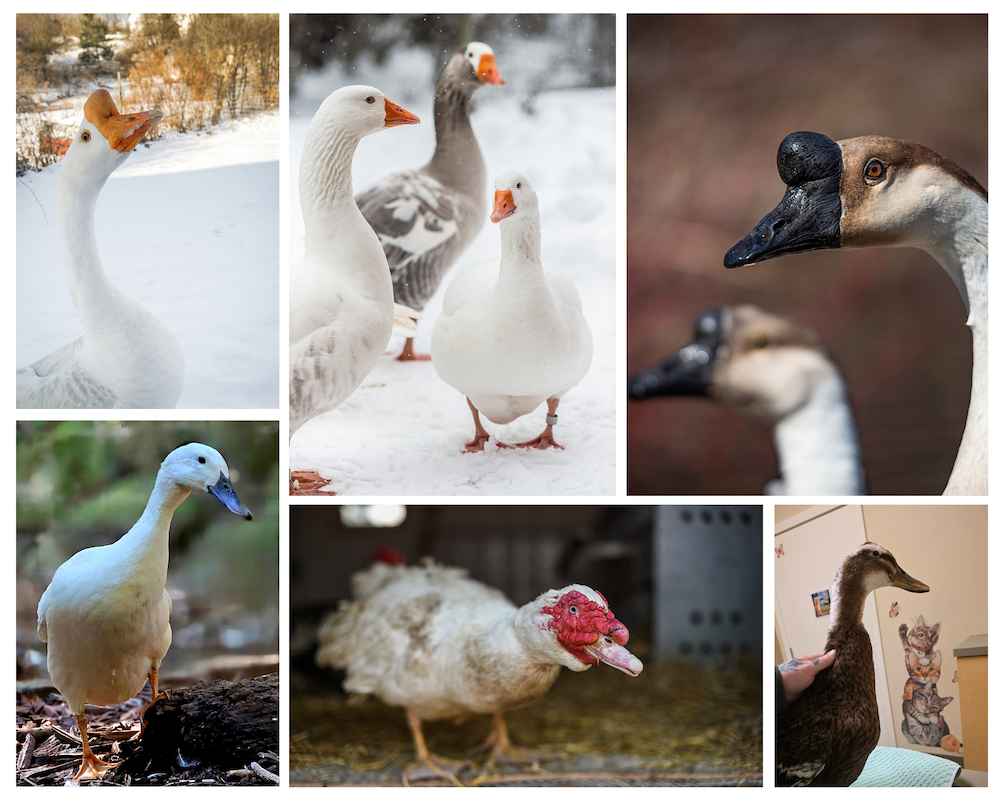




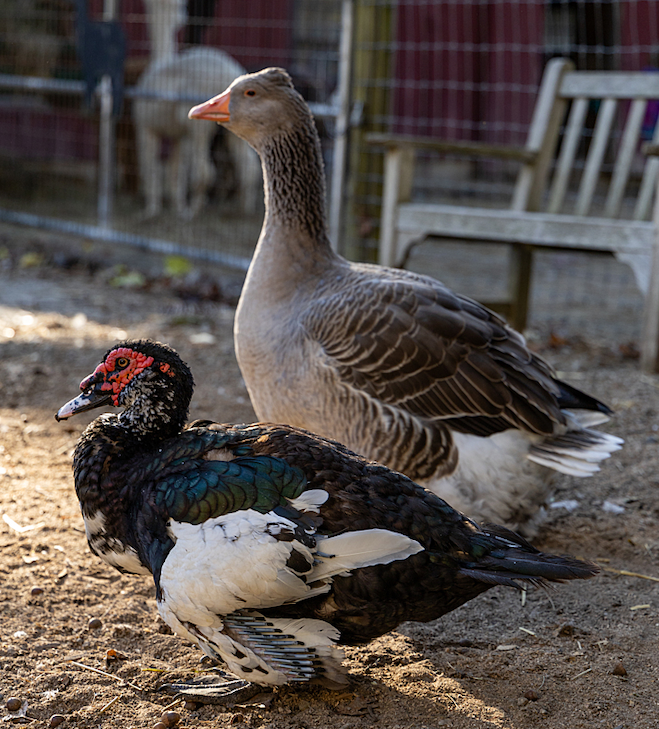
While folks who work closely with ducksUnless explicitly mentioned, we are referring to domesticated duck breeds, not wild ducks, who may have unique needs not covered by this resource. and geeseUnless explicitly mentioned, we are referring to domesticated goose breeds, not wild geese, who may have unique needs not covered by this resource. likely have little to no trouble telling the two species apart, it’s not uncommon for the average person to struggle in this area. In this brief guide, we’ll highlight some key physical differences that can help you determine if an individual is a duckUnless explicitly mentioned, we are referring to domesticated duck breeds, not wild ducks, who may have unique needs not covered by this resource. or gooseUnless explicitly mentioned, we are referring to domesticated goose breeds, not wild geese, who may have unique needs not covered by this resource., but please note that this resource does not cover all the ways in which ducks and geese differ. Also keep in mind that there are numerous different breeds of both domesticatedAdapted over time (as by selective breeding) from a wild or natural state to life in close association with and to the benefit of humans ducks and domesticated geese, each with their own specific traits in terms of things like size, feather and bill coloring, and more. In this resource, we will highlight some of the general physical differences between domesticated ducks and domesticated geese that are most helpful when differentiating between the two.
Size
There will be variation in size depending on an individual’s breed, but, as a species, geese are larger than ducks. While this is helpful to know, it’s not necessarily going to help you if you are looking at only one species at a time, which is why it’s important to know the other physical characteristics to look for.

Body Shape
If you look beyond their size and observe the shape of their body, you will notice that geese are more elongated and upright while most ducks are more compact (one exception here is the Indian Runner duck, known for their very upright body). One reason geese are more elongated and upright than ducks is because they have longer necks than ducks.
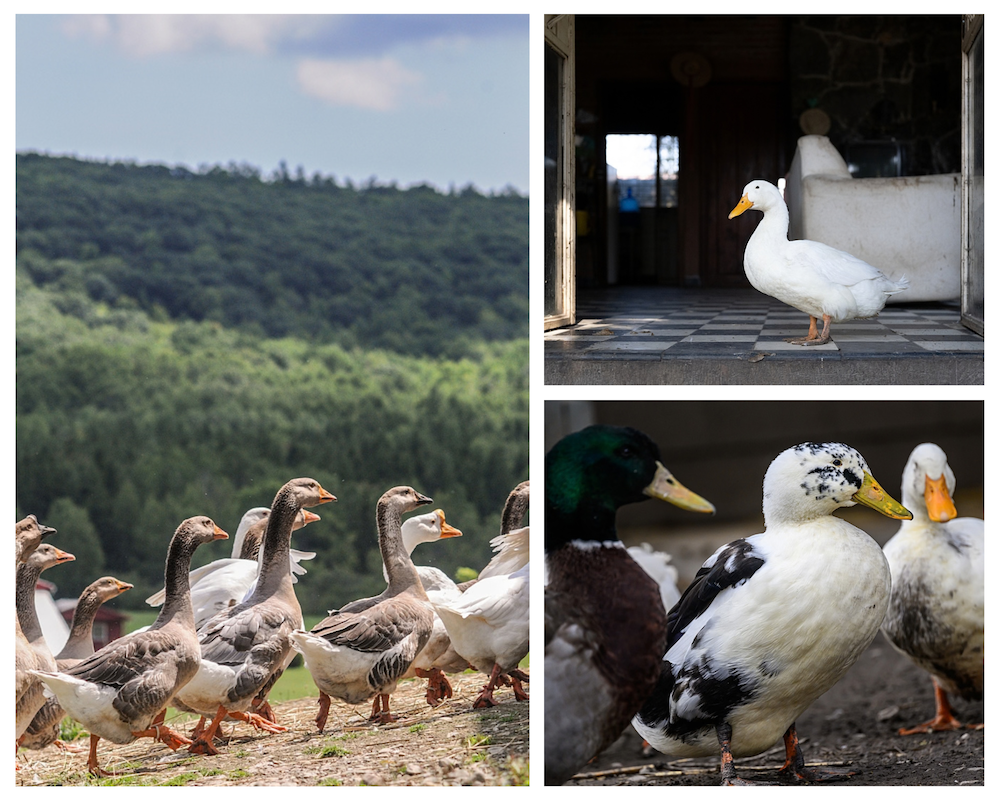
Bill
The shape and size of an individual’s bill can also help you determine whether they are a duck or goose. A goose’s bill is triangular in shape, starting out wider where it meets their head and tapering at the tip. Some breeds also have a bulbous knob where their upper bill meets their head (as shown in the top left and right photos below). Do not confuse a muscovy duck’s caruncles (bottom middle photo) with a goose’s knob. Compared to geese, a duck’s bill is broader and flatter. Relative to their body size, a duck’s bill is also longer than a goose’s.