



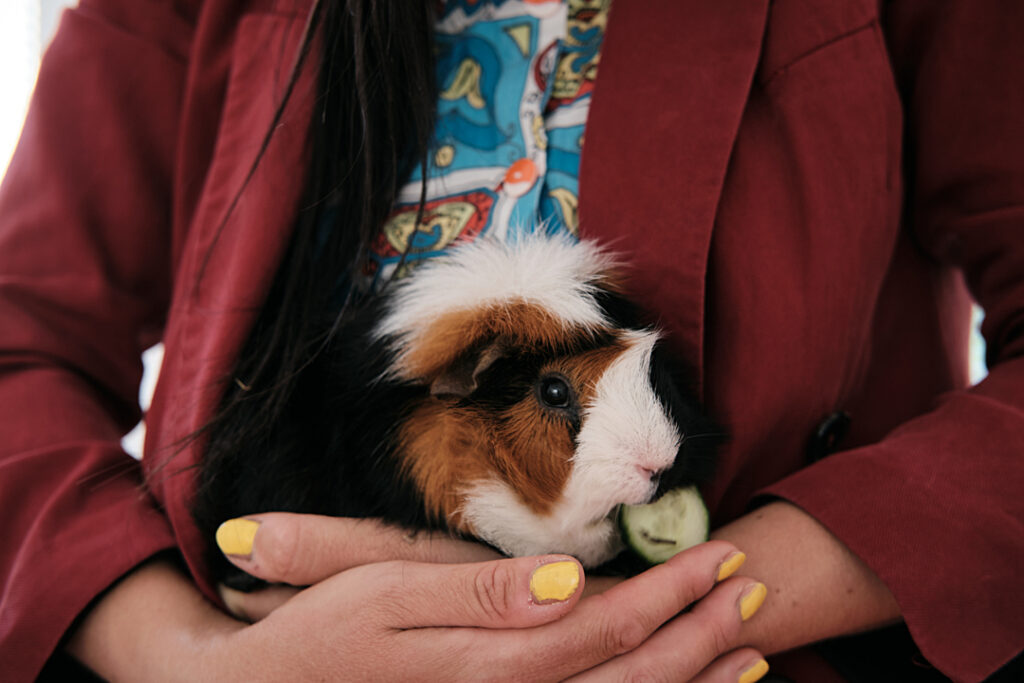
The compassionate lifelong care of cavies (guinea pigs) at animal sanctuaries starts with the food they’re provided. Cavies, like rabbits, are hindgut fermenters and are coprophagic (meaning they ingest some of their feces). However, while there are similarities between the digestive systems of rabbitsUnless explicitly mentioned, we are referring to domesticated rabbit breeds, not wild rabbits, who may have unique needs not covered by this resource. and cavies, there are also distinct differences, and the two species have unique dietary needs. In addition to the food recommendations below, keep in mind that coprophagy plays an important role in the nutrition and overall health of cavies, so don’t be alarmed if you see this behavior!
Daily Food For Cavies
Cavies are obligate herbivores who have evolved to eat a poorly digestible, high-fiber, low-nutrient diet. Adequate fiber is imperative for healthy digestion. Without it, digestion can slow down, causing the pH and bacterial population of the cecum to change, leading to digestive issues. To ensure adequate fiber intake, a cavy’s diet should consist primarily of hay. In addition to hay, a cavy’s diet should include pellets formulated specifically for cavies as well as appropriate fresh produce. Cavies, like humans, are unable to produce their own vitamin C and rely on dietary sources (namely their pellets and fresh foods) to meet their needs. Vitamin C deficiency can result in a host of health challenges, so ensuring adequate vitamin C intake is essential.
Much like human nutrition, different experts have different opinions about what constitutes the best diet for cavies. While some recommendations are universally accepted (cavies need unlimited access to hay, for example), other recommendations come with contradicting opinions (this is especially common when it comes to the type and amount of produce to offer). In this resource, we are focused on general dietary recommendations for cavies, but keep in mind that an individual in your care may have special dietary needs. We always recommend consulting with an experienced veterinarian to determine the best diet for your residents, but here are some general guidelines to keep in mind:
Grass Hay
Cavies should have access to hay at all times, and this should make up the bulk of their diet (approximately 80-90%). Adequate hay intake is imperative for healthy digestion and also helps wear down their teeth. Most cavies over 6 months old should be fed grass hay such as Timothy or orchard grass. They should not be fed alfalfa or other high-calcium hay unless specifically recommended by your veterinarian, because a high-calcium diet could result in urolithiasis, which can be common in older cavies. For individuals under 6 months of age, as well as those who are pregnant or lactating, alfalfa hay may be recommended.
In addition to ensuring cavies always have access to hay, you also need to consider the quality of their hay. Cavies may not eat hay that is trampled or dirty, so maintaining a fresh supply of clean hay is important. Be sure to remove any hay that has become wet or soiled. Also pay attention to the quality of hay as you are feeding it out. Avoid feeding hay that has lost its green color, and never feed moldy hay. To keep their hay supply fresh and maintain its nutritional value for as long as possible, keep it stored in a cool, dark, dry place.
Pellets
While grass hay should make up the bulk of a cavy’s diet, they should also be fed a high-quality pellet formulated specifically for cavies and fortified with stabilized vitamin C. Avoid formulas with nuts, seeds, dried fruits, or corn. RabbitUnless explicitly mentioned, we are referring to domesticated rabbit breeds, not wild rabbits, who may have unique needs not covered by this resource. pellets are not an appropriate substitute.
Most individuals over 6 months of age should be fed Timothy-based pellets. There is some debate in terms of quantity, with many veterinary sources recommending measured portions for individuals who are not pregnant or lactating (a common recommendation is ⅛ cup pellets daily). However, some rescue groups recommend providing pellets on a free-choice basis so cavies can self-regulate intake. We recommend consulting with your veterinarian regarding how much to feed your residents. Keep in mind that individuals who are pregnant, lactating, or who have certain health challenges may require a different diet than what your veterinarian recommends for your other cavy residents (such as alfalfa-based pellets and/or unrestricted access to pellets). For cavies under 6 months of age, free-choice access to alfalfa-based pellets is typically recommended.
Pellets should be offered in a dish that cannot be chewed and is unlikely to spill. Cavies often put their front feet up on their food dish while eating, so proper design to prevent tipping is important. Heavy, flat-bottomed, wide ceramic dishes or stainless steel non-tip dishes are good options.
To ensure freshness, store pellets in a sealed container kept in a cool, dry, and dark location. Because vitamin C will degrade over time, fortified pellets should be used within 90 days of the mill date.
Fresh Veggies
In addition to hay and pellets, fresh veggies should be offered daily. There’s some disagreement about which specific veggies are best and how much to feed, but most sources recommend offering a salad of leafy greens and herbs daily. While these greens should make up the bulk of their fresh foods, you should also include other safe veggies* in their diet, rotating through them to ensure variety and avoid the development of food preferences, which can be a common issue in cavies. Food preferences are developed at an early age, so depending on the age of your cavy companions and what they are used to eating, you may find they refuse certain foods. If you welcome a young cavy into your home or sanctuary, offering them a variety of cavy-appropriate foods early on can help avoid this issue. When introducing a new food, always start slow and with smaller quantities to avoid GI upset.
Offering fresh produce that is high in vitamin C is a great way to help ensure you are meeting your cavy resident’s daily requirement. However, you also want to consider a food’s calcium and oxalate content, as these minerals can contribute to urinary calculi. Foods that are high in these minerals don’t necessarily need to be avoided entirely, but should be given in smaller quantities and less frequently than those that are lower in these minerals. You can find a list of greens and their calcium and oxalate levels here. To meet vitamin C requirements, many veterinarians and cavy caregivers recommend feeding bell pepper daily. Orange, red, and yellow bell peppers contain more vitamin C than green, but green bell peppers can be offered too and are still higher in vitamin C than a navel orange.
Check in with your veterinarian to see what they recommend for the cavies in your care when it comes to fresh veggies. It seems that almost every cavy veterinarian and rescue group has their own list of recommendations regarding fresh foods to feed and how often, as well as foods to avoid, with some conflicting info between the various lists. The following is an example of how to incorporate fresh produce into your cavy residents’ diet.
Daily Salad: One half to one cup of the following greens (either offered individually, rotating through them to ensure variety, or offered in different combinations each day).
- Romaine lettuce
- Green leaf lettuce
- Red leaf lettuce
- Cilantro
The greens and herbs above are low in calcium and oxalate, and therefore safe to offer on a regular basis. Other greens and herbs can also be offered, but those that are higher in calcium and/or oxalate should be given less often.
Bell Peppers: 1-2 tablespoons of bell pepper daily.
Other Veggies: Added in small portions to their salad, switching it up daily to ensure variety.
- Cucumber
- Parsley
- Zucchini
- Celery
- Tomato
- Radicchio
- Arugala
Any leftover portions that remain uneaten after a few hours should be removed.
Water
Cavies should have access to fresh, clean drinking water at all times. Caregivers are sometimes divided on whether sipper bottles or water bowls are better. Ultimately, you should opt for the vessel your residents use. Cavies who are used to drinking out of a sipper bottle may be reluctant to drink out of a bowl, and vice versa. If water is offered in a bowl, be sure to use one that is heavy enough to prevent tipping.
Regardless of the vessel used, it should be cleaned thoroughly at least once per day. Water bowls may get dirty more quickly as residents stir up bedding, so you may need to clean the water more often than once per day. While sipper bottles can keep bedding and poop out, the water can still become soiled with food as cavies drink. Compared to bowls, sipper bottles can also be more difficult to clean, so make sure you have a bottle brush to thoroughly clean all of the inner surfaces, including the metal sipper part. These devices can be difficult to clean and can become slimy. Also, make sure to watch closely for signs that the sipper bottle is leaking, and replace it as needed.
Vitamin C Supplementation
As mentioned above, cavies cannot produce vitamin C, and deficiency can cause serious issues. The amount of vitamin C a cavy requires varies based on multiple factors, including age and health status, but adult cavies who are not pregnant usually need 10-25 mg daily. Offering fresh produce that is rich in vitamin C is considered by many cavy caregivers and veterinarians to be the best way to meet daily vitamin C requirements. However, some individuals may require supplementation – consult with your veterinarian to determine if and how to supplement your residents.
Vitamin C supplements come in tablets, oral suspensions, and formulas that are meant to be added to their drinking water. We recommend avoiding adding vitamin C to drinking water. Not only could it affect the taste, causing them to drink less and potentially become dehydrated, but it is also not efficient because it degrades quickly. While there are vitamin C tabs marketed specifically for cavies, some caregivers use a human supplement. If you opt for this, check in with your veterinarian to make sure it is appropriate to use and that you know how much to give. Do not use a multivitamin unless explicitly instructed to do so by your veterinarian.
SOURCES:
Anatomy, Physiology, And Behavior of Guinea Pigs | Merck Veterinary Manual
How The Digestive Physiology Differs Between Rabbits And Guinea Pigs | The Guinea Pig Vet
Feeding The Adult Guinea Pig | Oxbow
Diet For A Guinea Pig | Merck Veterinary Manual (Pet Owner Version)
Housing And Nutrition Of Guinea Pigs | Merck Veterinary Manual (Professional Version)
A Healthy Diet For Guinea Pigs | RSPCA
What Should I Feed My Guinea Pigs? | RSPCA Knowledge Base
Nutrition For Guinea Pigs | UC Davis Veterinary Medicine
Caring For Your Pet Guinea Pig | NC State Veterinary Hospital
Guinea Pig Safe Veggie List | Southern California Guinea Pig Rescue
Veggies For Guinea Pigs | Lafeber Company