



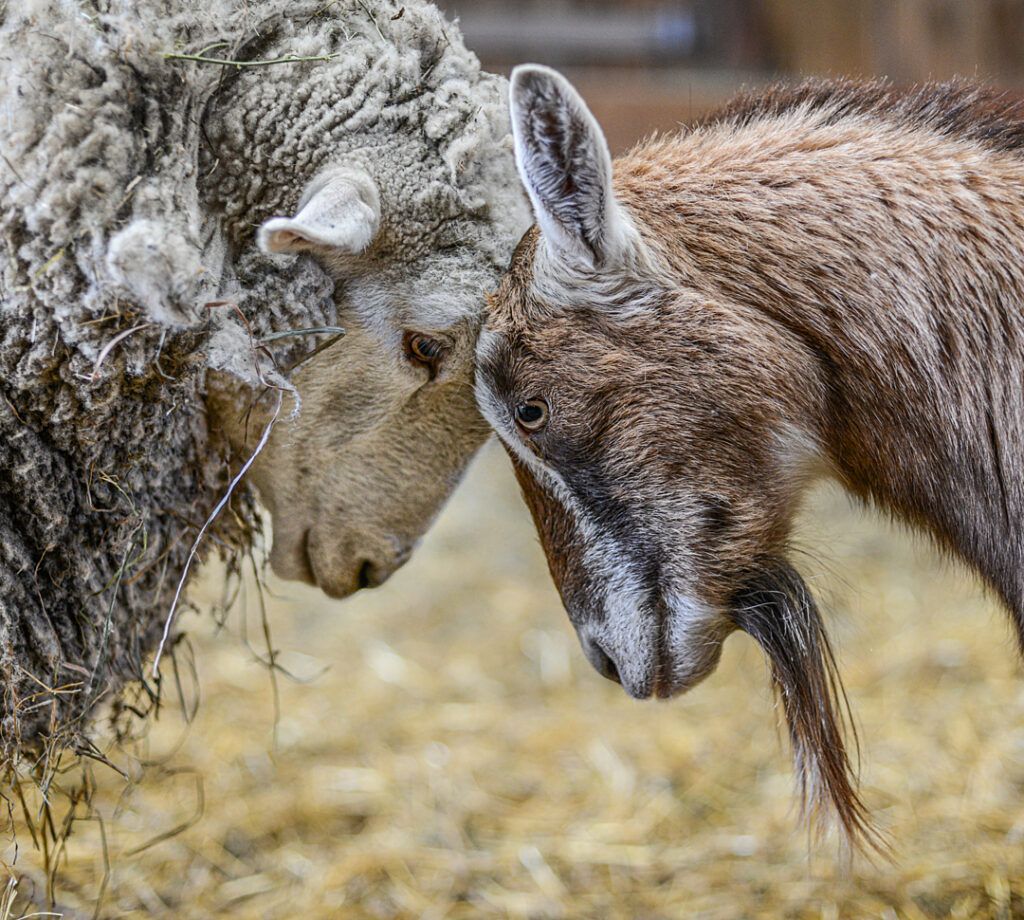
While folks who work closely with sheep and goats likely have little to no trouble telling the two species apart, it’s not uncommon for the average person to struggle in this area. In this brief guide, we’ll highlight some key physical differences that can help you determine if someone is a sheep or a goat, as well as physical signs that cannot be used to determine someone’s species. Please note this resource only highlights some of the physical differences between sheep and goats, focusing on those that are most helpful when differentiating between the two.
Physical Signs That CANNOT Be Used To Differentiate Between Sheep And Goats
Before we dive into the physical signs that actually can help you differentiate between sheep and goats, let’s dispel some common misconceptions about how to distinguish one from the other.
Hair Coat
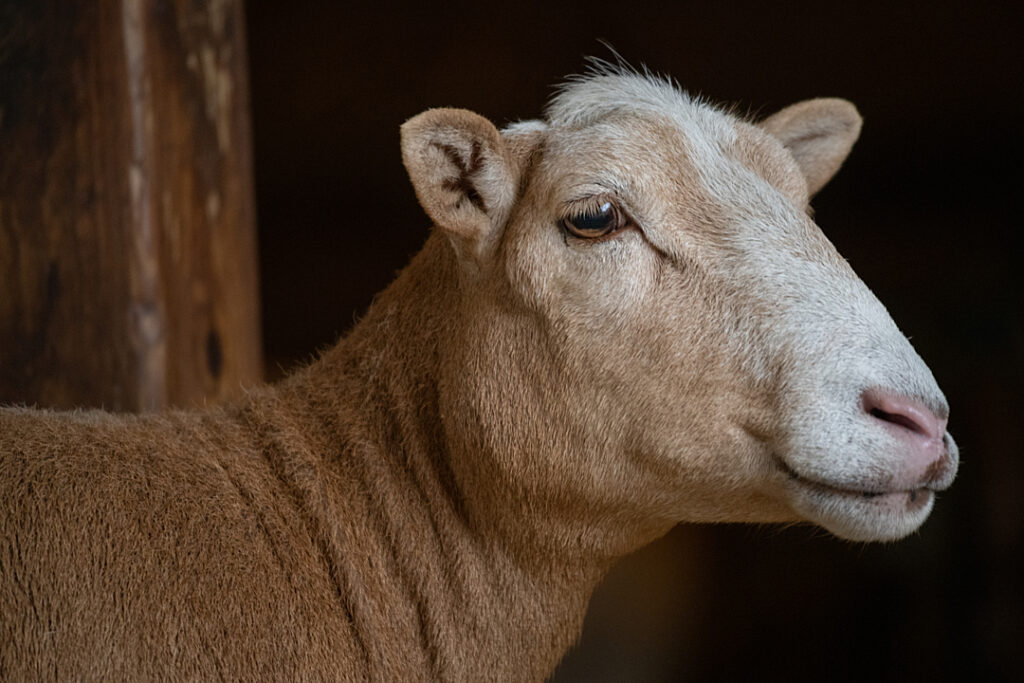
Many folks think you can tell a sheep from a goat by looking at their hair coat. Sheep always have big, fluffy hair coats, and goats never do, right? Actually, no! While many sheep breeds are woolly, not all are. Some breeds are classified as hair sheep, who, as you probably can guess, grow hair instead of wool (like our friend above). Without that woolly coat so many people picture when they think of sheep, folks may not immediately recognize them as sheep.
Even sheep who grow wool aren’t always woolly. Woolen sheep must be shorn regularly (often annually) to keep them comfortable, and if you see a sheep shortly after they have been shorn, their wool may be so short you don’t even realize it’s actually wool!
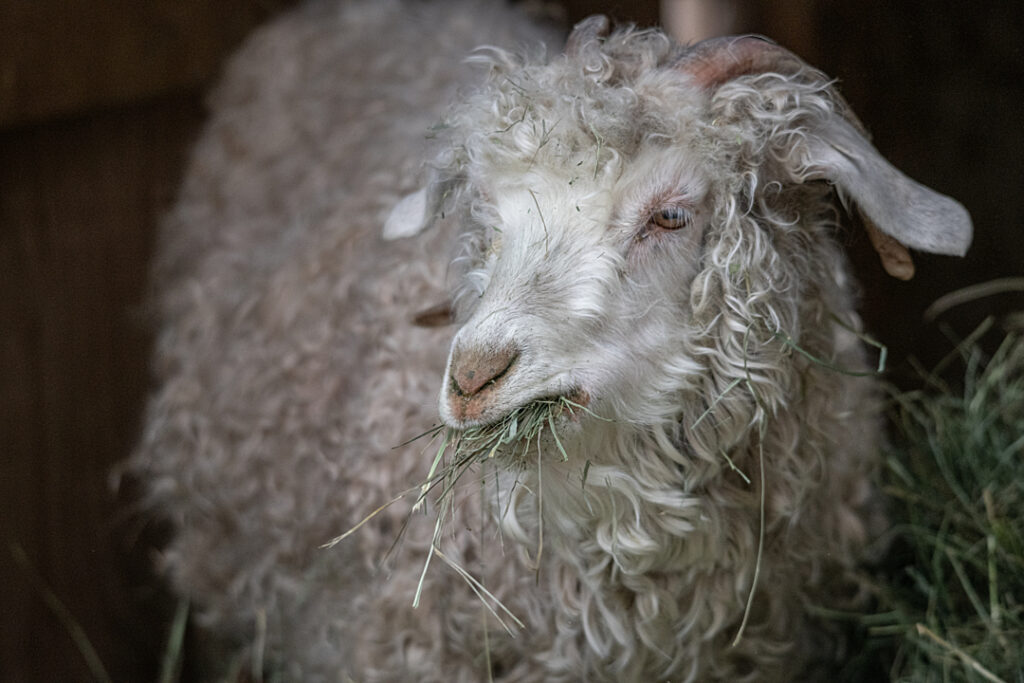
Just as different breeds of sheep have different types of hair coats, so too do goats! While many breeds have relatively short, sleek hair on most of their body, goat breeds bred for fiber production, such as angora goats, have thick, fluffy coats (like our friend above).
Horns
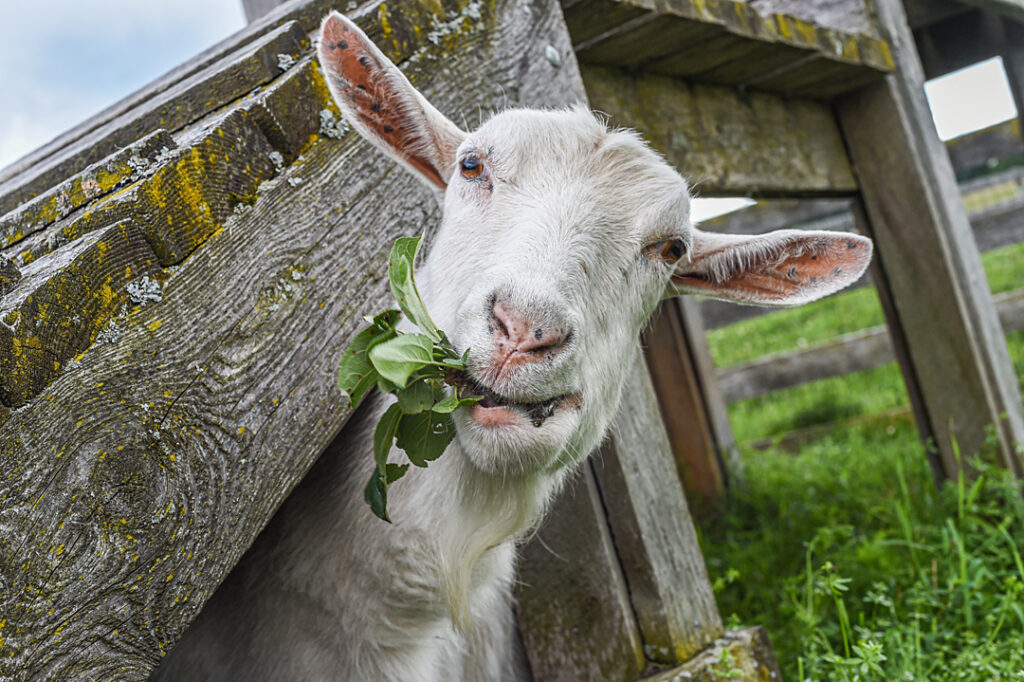
Despite the common (and false) notion that all goats have horns and sheep do not, the truth is, you simply can’t tell if someone is a sheep or a goat based on horns alone. Some goats have horns, but not all do (like our hornless goat friend above). Polled goats are naturally hornless, but not every goat who lacks horns is polled. Others end up hornless due to the cruel practices of dehorning and disbudding, which are often used in agricultural settings to remove a goat’s horns or prevent a goat kidA young goat from growing horns.
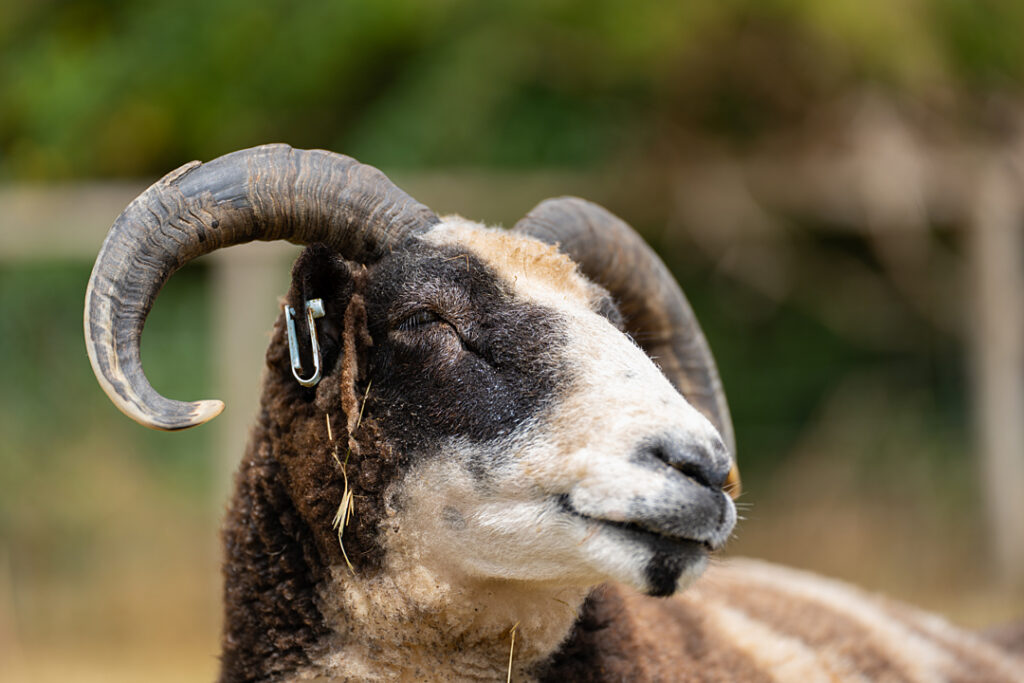
While horns are less common in sheep, some breeds do have horns (like our horned sheep friend below).
Physical Characteristics That CAN Help You Distinguish Between Sheep And Goats
So if you can’t tell by their hair coat or by whether or not they have horns, how can you tell the difference? We’ll highlight the physical characteristics to pay attention to below!
The Most Telltale Sign, Their Tails!
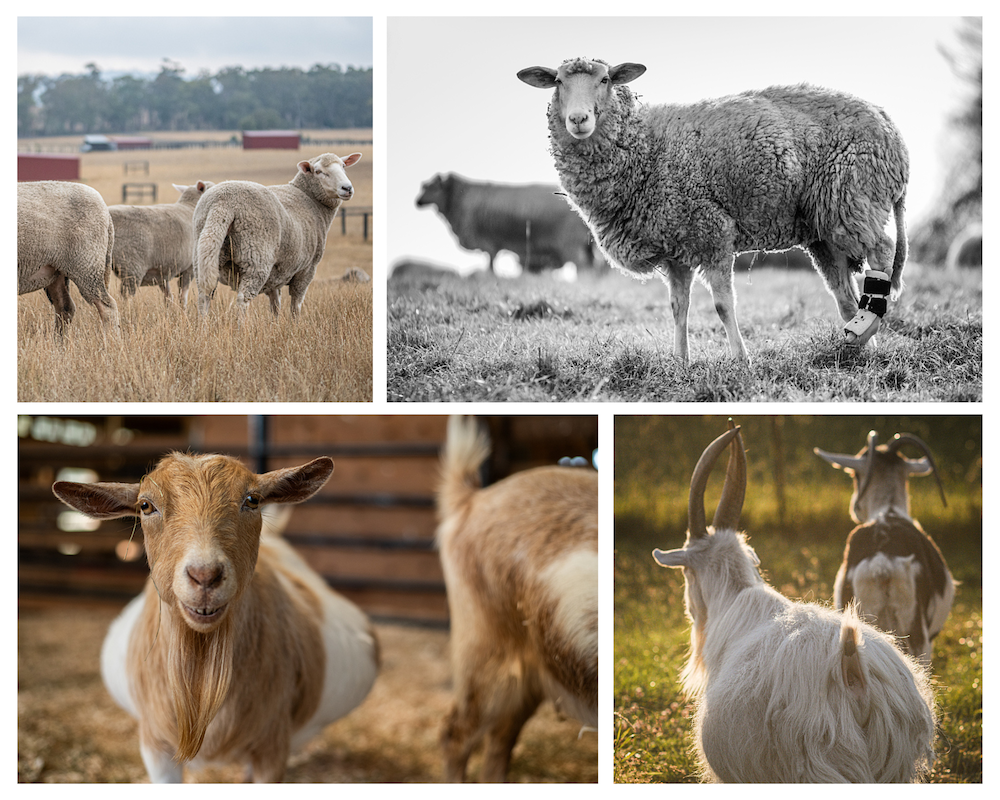
The easiest way to tell if someone is a sheep or a goat is to look at their tail. A healthy goat will have a short tail that usually sticks straight up or is held somewhat upright (as shown in the bottom images below). Sheep tails vary a bit by breed, but are longer than a goat’s tail and hang straight down (top photos below). Unfortunately, in many agricultural settings, sheep have their tails docked – a cruel practice in which a portion of the tail is removed without anesthesia or analgesics. If an individual has had their tail docked, they may only have a small fleshy bit of tail left, or it may appear as if they have no tail at all. Whatever portion of their tail remains will not stand up like a goat’s tail.
Their Face
Your best bet for distinguishing between sheep and goats is to look at their tails, as this is usually the most obvious physical difference. However, you can also find a few clues when looking at their face. The first clue is their upper lip. Sheep have a vertical groove (philtrum) in the center of their upper lip (most clearly shown in the top left photo below), whereas goats do not (bottom left photo below).
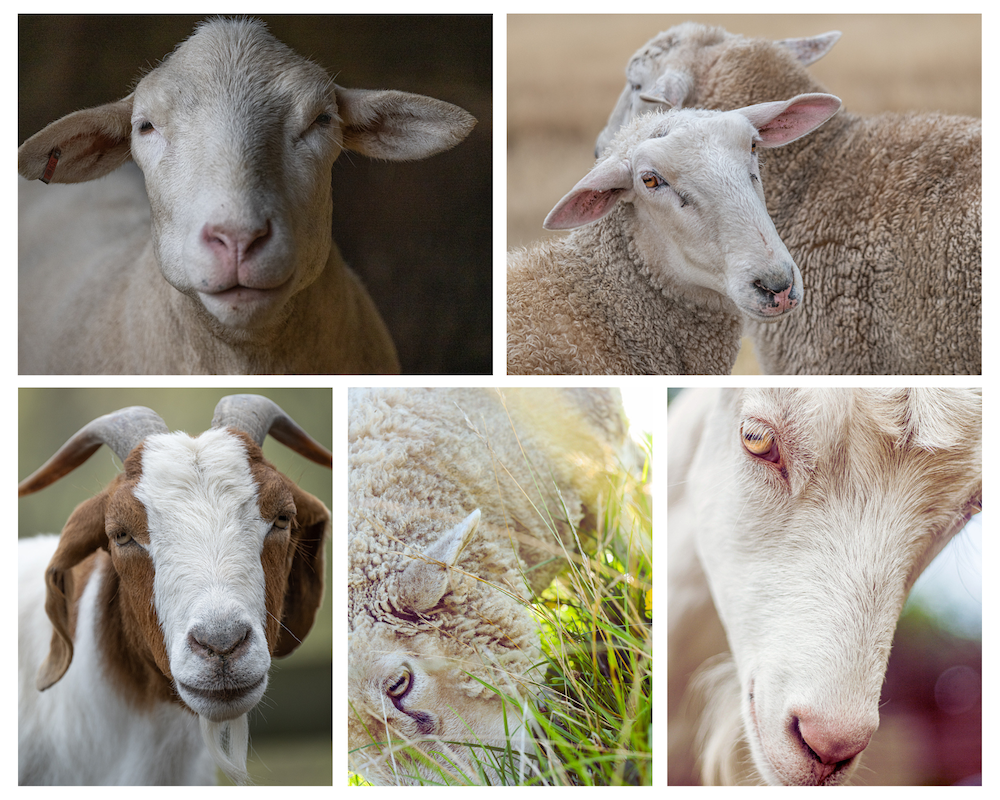
If you look closely, you’ll also see that sheep have scent glands near/below the inner corner of their eyes (this is most clearly shown in the top right and bottom middle photos above). You may even notice waxy build-up in this area (as shown in the top right photo). While goats do have scent glands, they are not located under their eyes (most clearly shown in the bottom right photo above).
So there you have it! Sheep and goats may share quite a few similarities, but once you know what to look for, telling the two apart isn’t as hard as you might think!
SOURCES:
How To Conduct A Sheep Health Check | The Open Sanctuary Project
How To Conduct A Goat Health Check | The Open Sanctuary Project
Sheep And Goats | Sheep 101 (Non-Compassionate Source)