



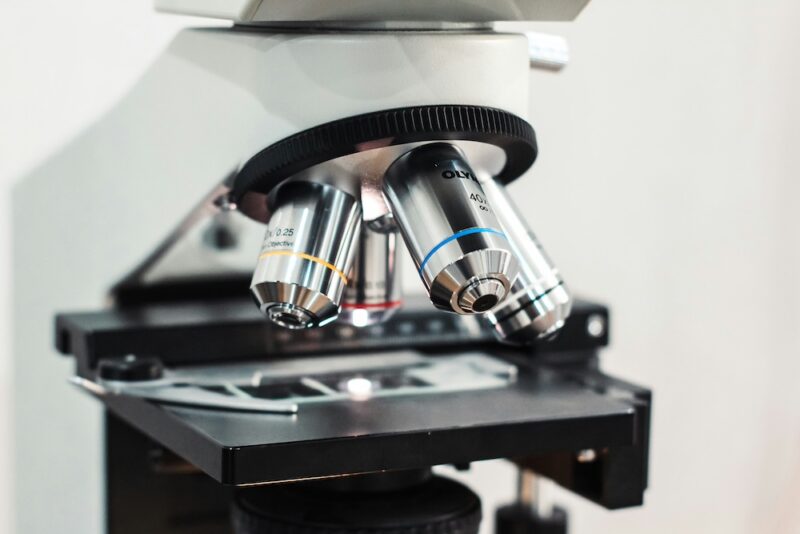

When one of your residents is showing signs of concern, it’s important to work with your veterinarian to diagnose the issues. There are a number of diagnostic tools your veterinarian may recommend based on the specifics of the situation. These include blood testing, fecal testing, microbial culture, and/or diagnostic imaging, all of which you can read more about by following the appropriate link. In some cases, microscopic evaluation of cells or tissues may be necessary to make a diagnosis, and this is where cytology and histopathology come in.
Before we dive in, it’s important to stress that different situations are going to require a different set of diagnostic tools. The person best equipped to identify the most appropriate tool or combination of tools for each specific case will be your veterinarian. The purpose of this resource is to provide an overview of cytology and histopathology so folks are better able to understand their veterinarian’s recommendations if these diagnostics are suggested. It is not a substitute for veterinary care.
Cytology
Cytology (also referred to as cytopathology) is the microscopic examination of cell samples (individual cells or small clusters of cells). It is typically used to help diagnose cancer, certain infectious diseases, inflammatory conditions, and other abnormalities. Cytology is often used for preliminary evaluation and can help determine if other diagnostics (such as histopathological examination) are necessary.
Samples for cytological examination can be collected from anywhere on the body, including external masses or internal organs, as well as from body fluids. Different techniques can be used to collect a sample, including fine needle aspiration, skin scraping, impression smear, swab, and lavage, and the collection technique used will depend on where the concern is and the type of tissue involved. Fine needle aspiration is the most commonly used technique and involves inserting a fine-gauge needle into the tissue or fluid pocket and drawing a small sample into a sterile syringe. This technique may be used to collect a sample from a lump on the skin or to collect fluid from the body.
If the primary concern is a skin issue, a skin scraping may be performed to collect cells from the surface of the skin. If the individual has an ulcerated lesion, an impression smear may be collected by firmly pressing a glass microscope slide against the lesion. In situations where the individual has unusual discharge or where the point of concern involves moist skin surfaces such as the eye, nose, or mouth, sterile cotton-tipped swabs may be used to collect a sample. To collect cells from internal surfaces such as the trachea or cropA crop is a pouched enlargement of the esophagus of many birds that serves as a receptacle for food and for its preliminary maceration., a lavage may be performed, which entails flushing sterile fluid into the area and then suctioning it back out.
Good samples are key for cytological examination, so we recommend having your veterinarian perform sample collection unless they have instructed you to do so yourself and you have the training necessary to do so. In some cases, submitting multiple samples may be recommended to facilitate a more productive examination.
Compared to histopathological examination, cytology is relatively non-invasive, and samples can often be collected without needing to sedate or anesthetize the patient. Additionally, cytology requires minimal equipment, is fairly inexpensive, yields faster results than histopathology, and may be something your veterinarian is able to do in-house (versus sending to a pathologist). Because cytology looks only at the cells and not the architecture of the tissue, it may not provide a definitive diagnosis (and is considered less diagnostic than histopathology). Despite this potential limitation, it can be a useful first step that helps your veterinarian determine how to proceed.
Histopathology
Histopathology (sometimes referred to as “histo” for short) is the microscopic examination of tissue samples that have been preserved, sectioned, and stained. Histopathology plays an important role in post-mortem examinations, which you can read more about here, but in this resource we focus on its role in diagnosing disease in living patients. For some diseases, including some cancers, inflammatory diseases, and congenital diseases, histopathology is necessary for a definitive diagnosis.
Samples are collected via biopsy (surgical removal of a piece of tissue). There are different types of biopsy procedures that can be performed, including punch, wedge, and excisional biopsies, and what is most appropriate in any given situation will depend on the location and type of tissue. A punch biopsy is performed by using a special tool to remove a small, circular piece of tissue, whereas a wedge biopsy is performed by surgically removing a small slice or chunk of tissue. An excisional biopsy removes the entire mass (depending on the location and affected tissues, complete removal is not always recommended or possible).
Because histopathology uses whole tissue samples (versus collected cells), it allows for examination of tissue architecture and provides more information than cytology. For example, in a patient with a cancerous process, the pathologist can often identify the type of cancer, the number of cells dividing, comment on the grade of tumor (if applicable to that tumor and sample), and, if an excisional biopsy has been performed, they can provide their assessment as to whether or not the tumor has been completely removed.
Compared to cytology, histopathology requires more invasive sample collection, though some biopsy procedures are more invasive than others. Depending on the biopsy procedure performed and where the sample is taken from, anesthesia and/or sedation are typically necessary. For example, a punch biopsy taken from a skin lesion may only require local anesthesia with sedation, whereas an excisional biopsy of a large mass or a biopsy taken from an internal organ will require general anesthesia. Samples require special processing and need to be submitted to a diagnostic lab for examination by a veterinary pathologist. Results take longer than cytology (potentially taking a few weeks to receive the final report). For these reasons, your veterinarian may recommend starting with cytology, which provides faster results, and proceeding to histopathology if necessary.
Cytology and histopathology can play an important role in disease diagnosis, but it’s important to remember that no single test is perfect, and no single test will give your veterinarian 100% of the answer. Instead, veterinarians can use each bit of information (including the individual’s species, symptoms, exam findings, and diagnostic tests, such as cytology and/or histopathology) like puzzle pieces to form an overall picture to make medical recommendations for your residents. As always, it’s imperative that you have a good relationship with an experienced veterinarian so that they can determine which diagnostic tools are most appropriate in any given situation. While we hope this resource has given you a basic understanding of what these diagnostics entail, your veterinarian is going to be your best resource when it comes to assessing your residents’ health, recommending the most appropriate diagnostics, interpreting results, and making treatment decisions.
SOURCES:
Cytology, Biopsy, And Histopathology | VCA Animal Hospitals
Cytology | Merck Veterinary Manual
Histopathology & Cytology | Biolab
Clinical Pathology Testing | Colorado State University