




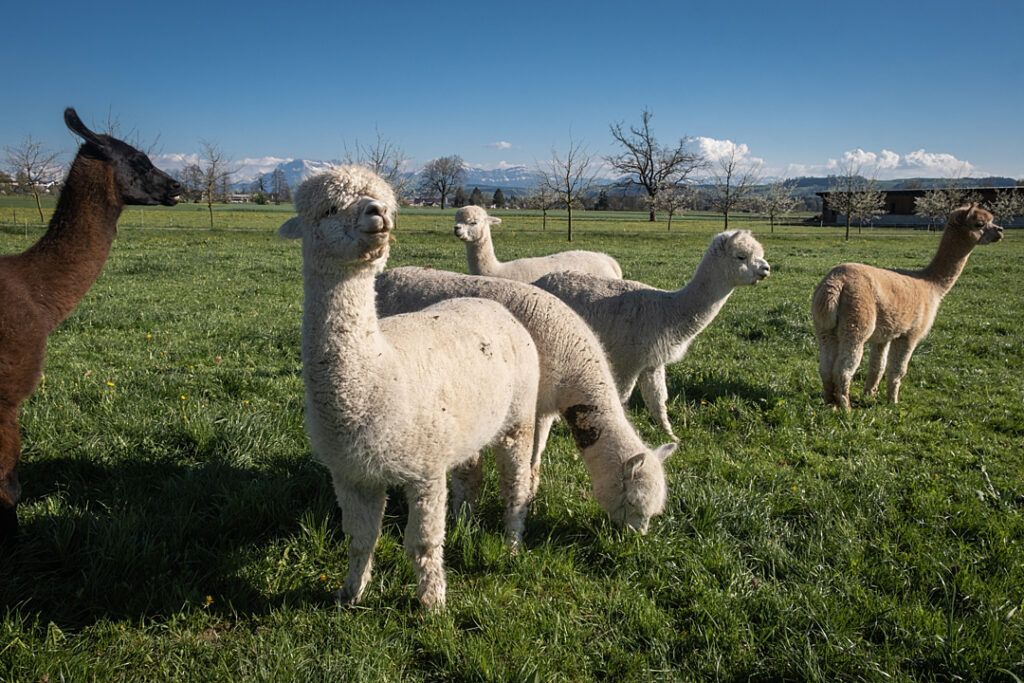
While folks who work closely with llamas and alpacas likely have little to no trouble telling the two species apart, it’s not uncommon for the average person to struggle in this area. In this brief guide, we’ll highlight some key physical differences that can help you determine if an individual is a llama or an alpaca, but please note this resource does not cover all the ways in which llamas and alpacas differ. Below, we will highlight some of the physical differences that are most helpful when differentiating between the two.
Ears
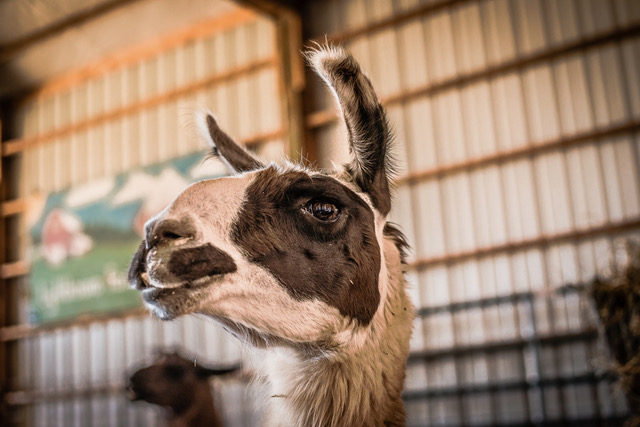
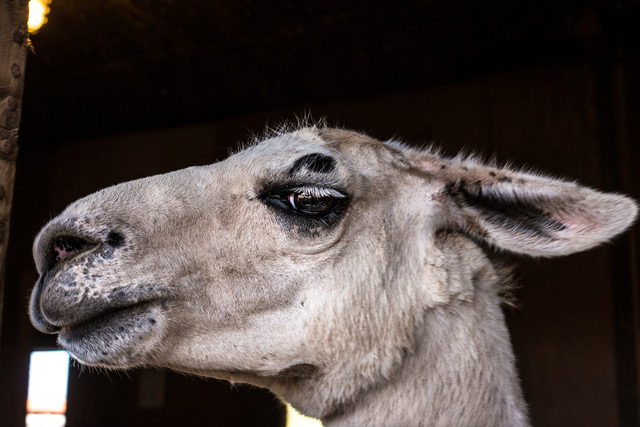
One of the easiest ways to tell llamas and alpacas apart is to look at their ear shape and size. Llama ears are curved and banana-shaped, whereas alpaca ears are spear-shaped. Llamas also have longer ears than alpacas.

Head And Face
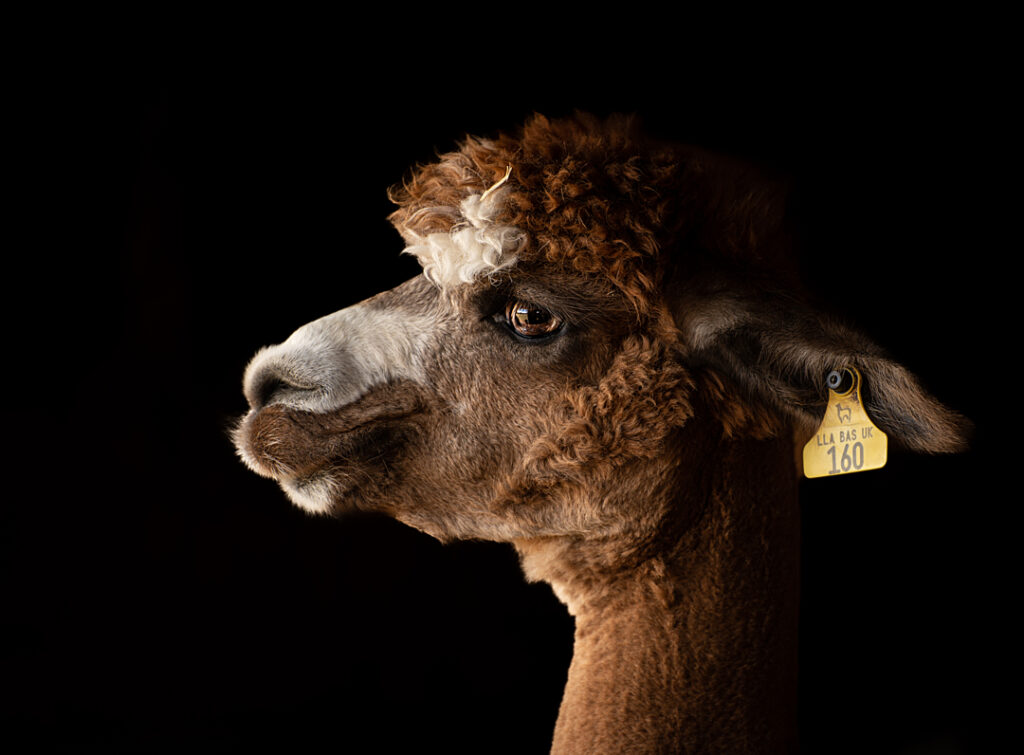
In addition to having longer ears than alpacas, llamas also have a longer face than alpacas. Additionally, llamas don’t usually have long hair on their head or face, whereas alpacas typically have quite a bit of long hair on the top of their head (topknot).
Size
If you compare the size of llamas and alpacas, you’ll find that llamas are bigger than alpacas both in terms of height and weight. While this is helpful to know, it’s not necessarily going to help you determine if someone is a llama or an alpaca, especially if you are looking at only one species at a time. That said, if you were to measure how tall an adult llama is at their withers, they will typically range from 40–47 inches (102–119 cm) tall, whereas alpacas are typically 30-38 inches (76-96 cm) tall. Adult llamas are also more than twice as heavy as adult alpacas, typically weighing 250-550 pounds (113-250 kg) compared to 121-200 pounds (55-90 kg) for alpacas.

So there you have it! Llamas and alpacas may share quite a few similarities, but once you know what to look for, telling the two apart isn’t as hard as you might think!
SOURCES:
Medicine and Surgery of Camelids, 4th Edition (Non-Compassionate Source)
Llamas And Alpacas | Rutgers, New Jersey Agricultural Experiment Station (Non-Compassionate Source)
What’s The Difference Between Llamas And Alpacas? | The Llama Sanctuary (Non-Compassionate Source)