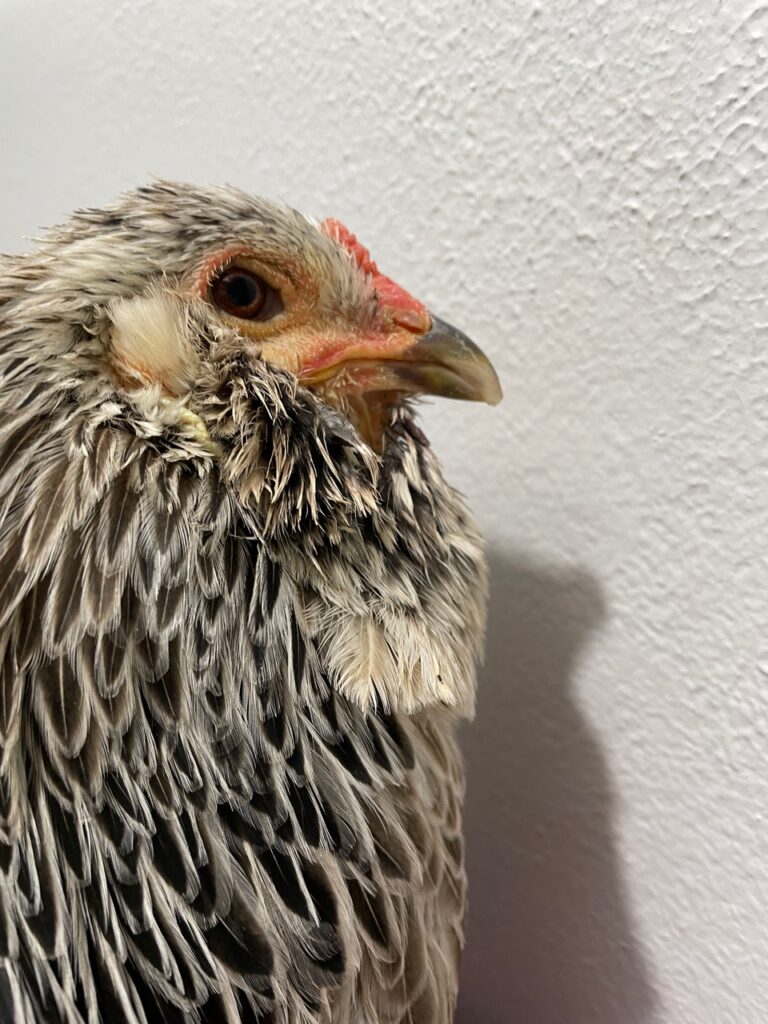
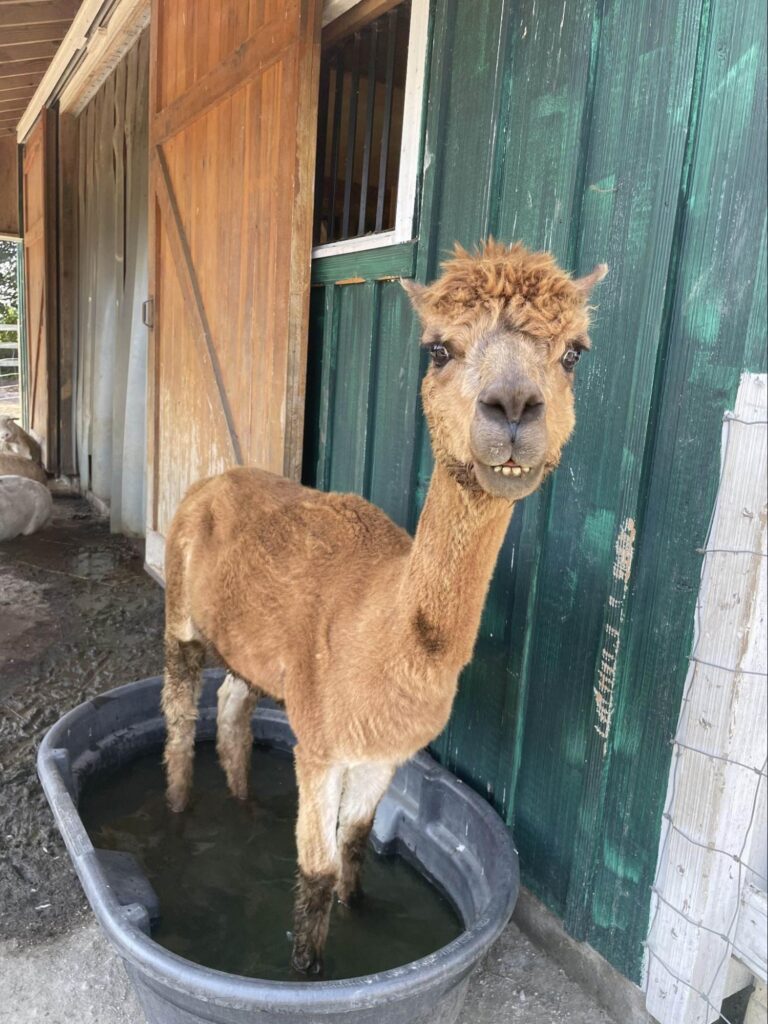
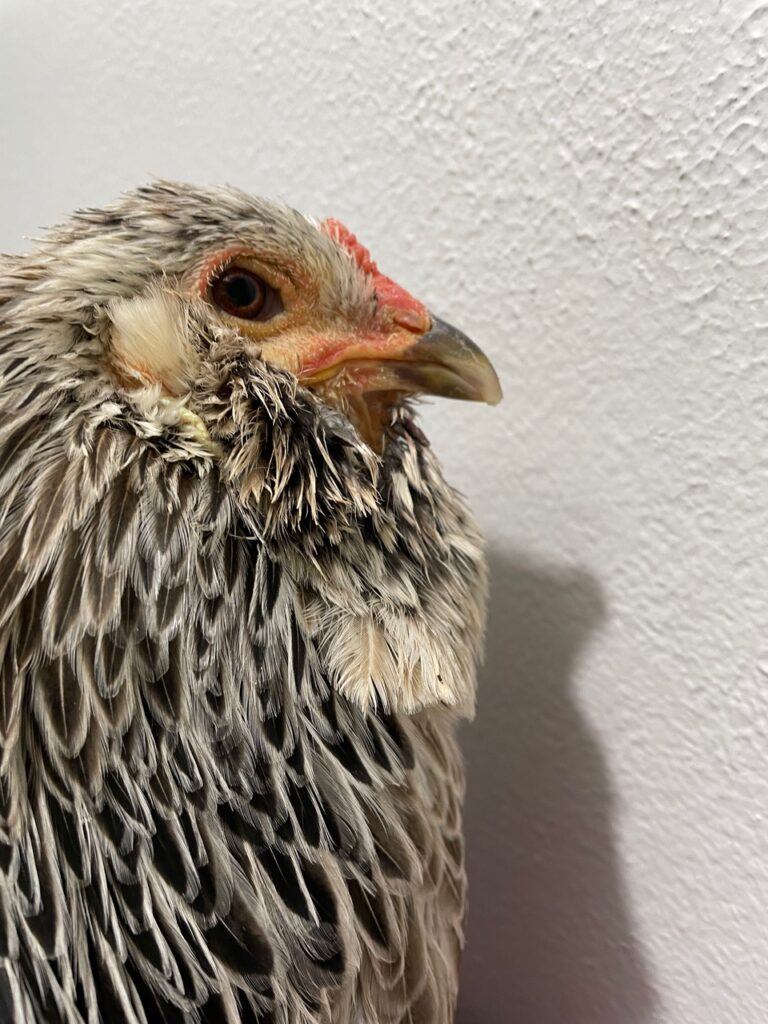
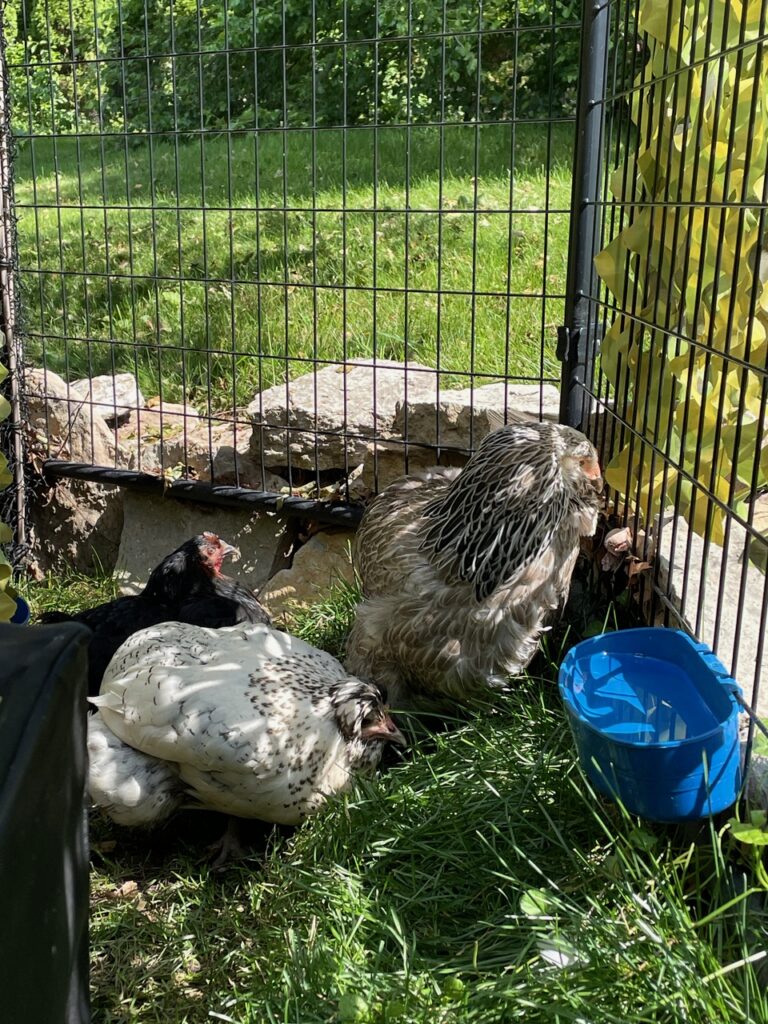
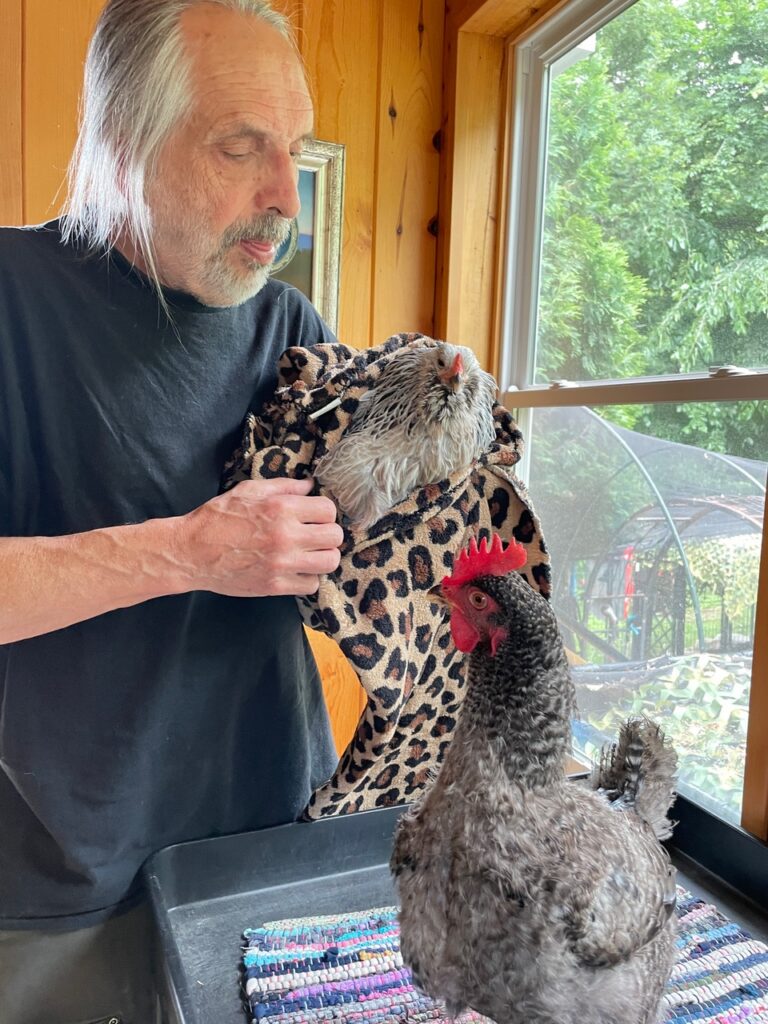
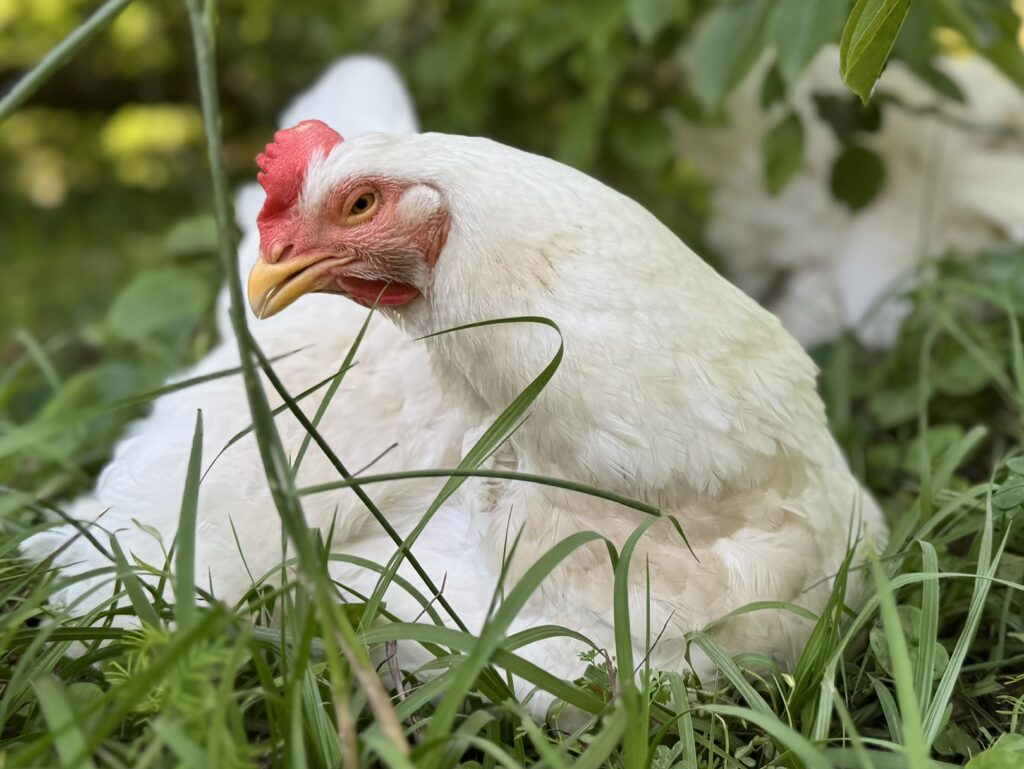
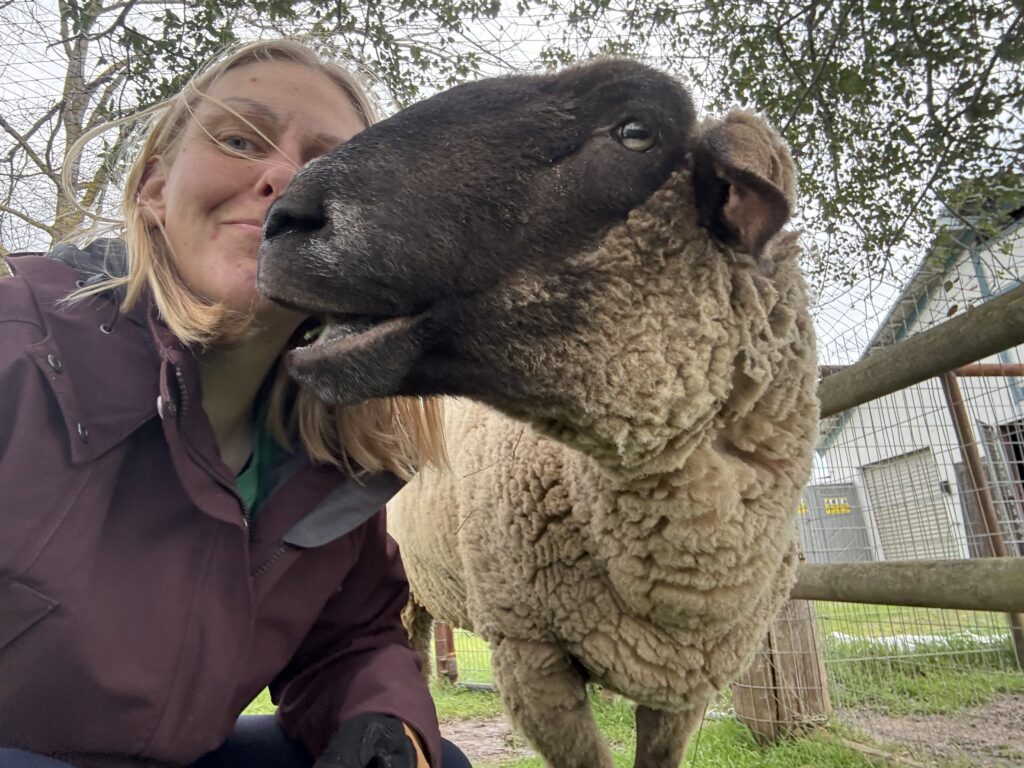
Etta, whose full name is Babe-ette, is 18 years old and has always been one of the quieter residents at West Place. She’s shy by nature, but you’ll often find her spending time with her fellow alpaca, Cash.
Etta came to West Place after being rescued from a failing alpaca farm during the height of the fleece industry, when alpacas were often valued more for the fiber they produced than for the lives they lived.
In her younger years, Etta endured several false pregnancies each spring, a difficult chapter that’s thankfully behind her. Today, she spends her days grazing, taking baths in the summer, and enjoying the peaceful life every alpaca deserves. Etta’s story reminds us that sanctuary isn’t just about rescue, it’s about giving animals the opportunity to age with dignity. After a lifetime of being valued for what she could produce, Etta now gets to spend her senior years simply being herself, surrounded by care, kindness, and the freedom to just be an alpaca.
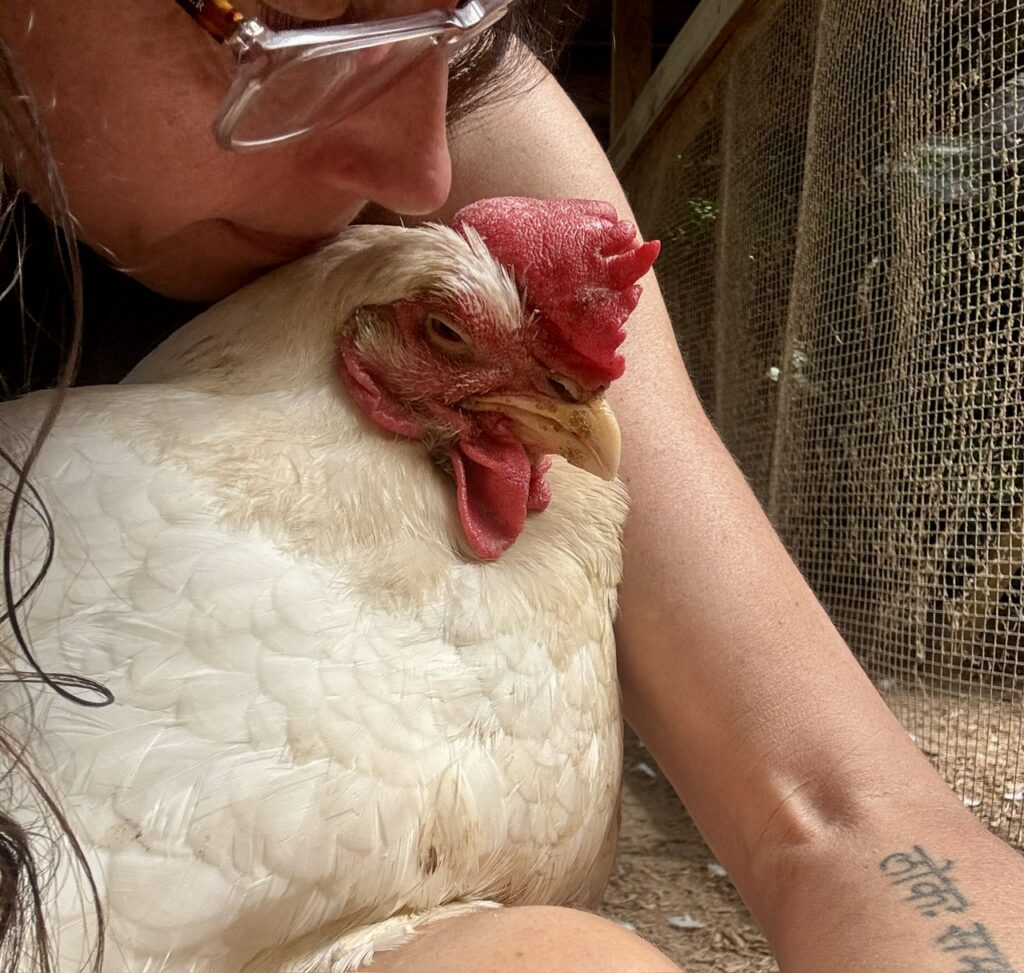
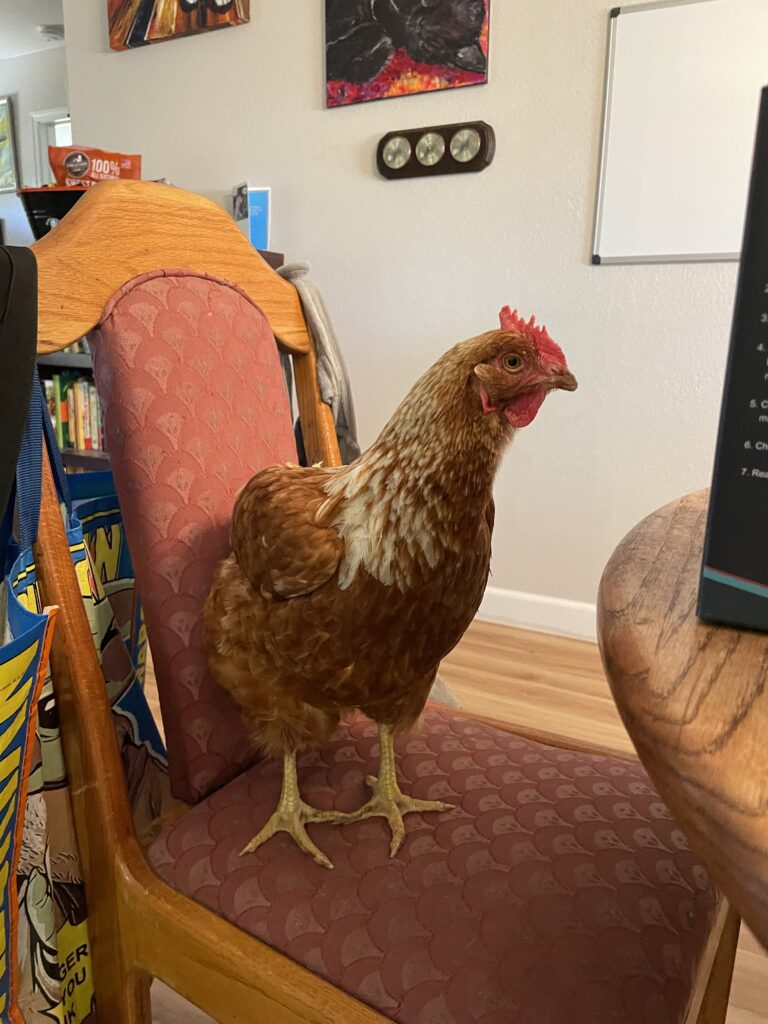
When we reached out to our colleague and long term collaborator Mary at Chicken Run Rescue to ask her for a senior story, she had just suffered a heavy loss. She shared the photos below with us of her beloved resident, Ms. Machowski, as well as the story below. Mary has documented many lives during the course of her work in sanctuary. To see more of her beloved residents’ stories, we recommend checking out her biography series, “Subject of a Life” here.
It is kismet that you should send this yesterday of all days. We helped our oldest resident, Ms. Machowski, embark on her next adventure yesterday morning (thank you, Jane Goodall, for that concept). She was born around 2012 and came to us in 2013. Now 14 years old. I have tried to find research regarding human to chicken year analogies and so far the convention I have found is that 1 human year is equivalent to 10 chicken years. That would make her 140 years old. Her story, as always, started with an email. “Dear Sir,
A week ago I was sitting outside and I saw a chicken run by the house. We are not allowed to keep chickens here and I was surprised to see her. Today I found the poor chicken in our tool shed, wet and frightened. I gave her some bird seeds and fresh water. I want to keep her, but my partner said no. He said we could not afford to get everything she needs…So I am writing to you to ask you if you could come to pick her up. I know no one will claim her as I have mentioned before we are not allowed to keep chickens here.”
Here is the exam info on intake by the wildlife rehab clinic that first cared for her:
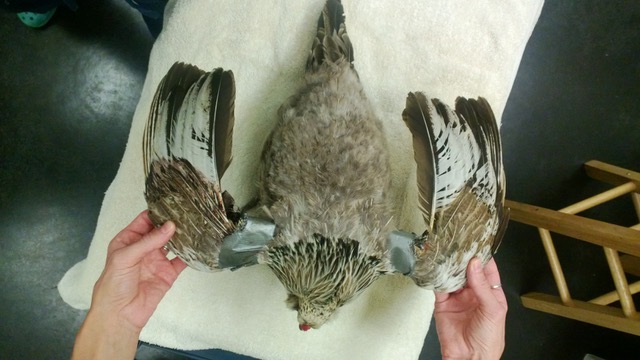
“Chicken is an Americana Hen. She weighs 1520 grams. She had duct tape on both wings. They seemed to have old injury/fractures under the tape. She had biting lice but has been treated topically with liquid frontline (10/5) and orally with Ivermectin .03ml (10/7).”
I am paralyzed with grief so this will be brief as I settle into weeks of reliving 14 years of photos of life with my beloved Machowski. This, and meditation, is how I process the endless grief of the life we chose. I’ve attached our first and last pics of Machowski, including one of her on her last day with a new bird (yet to be named, appropriately brief and distanced for quarantineThe policy or space in which an individual is separately housed away from others as a preventative measure to protect other residents from potentially contagious health conditions, such as in the case of new residents or residents who may have been exposed to certain diseases.) on her first day. Living in a constant state of grief is certainly one thing we didn’t realize when we started.
I created a page on our website called “Subject of a Life.” It is an ongoing compilation of in-depth profiles of some of our rescues. Their stories chronicle the many unseen ways chickens suffer the consequences of public perception and public policy based on misinformation and unchallenged injustice. CRR’s missionThe stated goals and activities of an organization. An animal sanctuary’s mission is commonly focused on objectives such as animal rescue and public advocacy. is to reveal the thinking, feeling being with a very real story to tell, not just yet another chicken. None of them are. Ms. Machowski’s profile will be next. She was in a long term relationship with Rosa Cabeza (also profiled there) who passed away just shy of 1 year ago at 12 years old. They were our 2 oldest, longtime residents with us in all 3 locations. They taught us everything about senior care. We’ve had many old roos as well who are now in the heavenly yard. This series has evolved from illustrated articles to photo essays. Photography is biography.
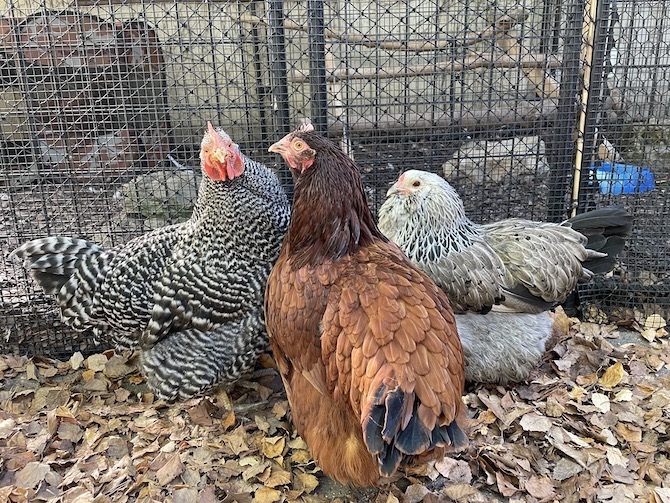
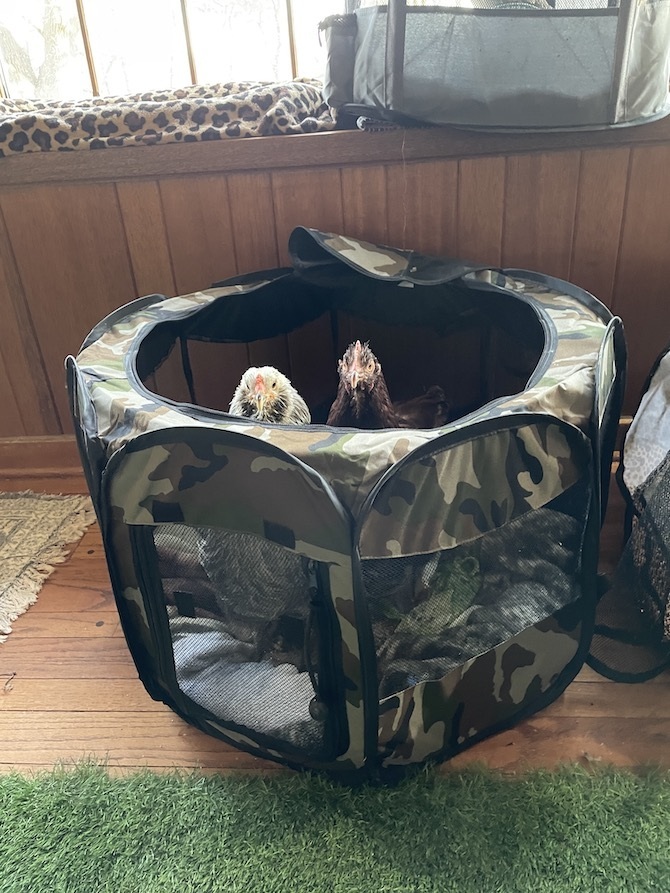
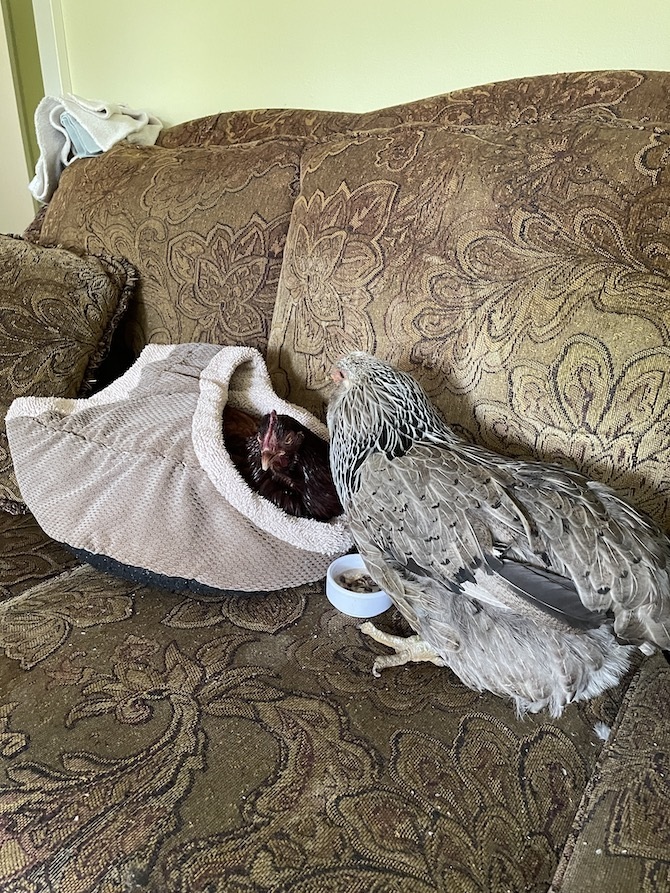
Intake Exam, October 5, 2013Senior Gals Bridge Club: Molly, Rosa and Ms. Machowski, 2023.Machowski and Rosa, last of the Bridge Club, 2025.As Rosa’s heart began to fail, she was bedridden so Ms. Machowski was by her side till the last. At 13 years old, Machowski has seen many friends pass, but none so dear as her Rosa.Ms. Machowski’s last portrait, taken on April 1, 2026 on the occasion of her 40th and last implant.Ms. Machowski’s last morning with her family, Moon Pie and Chiquita.Machowski on her last day, with Amber Leigh Shenanigan Goodall, on her first day with us.
Meet Becky and Nunu
Sweet Peeps MicrosanctuaryA microsanctuary is a small scale community of human and nonhuman (generally “unconventional or farmed”) animal companions, who live together in a chosen shared lifestyle and in commitment to ending the oppression of all beings. Microsanctuaries adhere to the notion that no nonhuman member of the community should “serve a purpose.” Microsanctuaries can exist in any context: rural, suburban, or urban. A microsanctuary can consist of as small a community as one animal and one human caregiver. For more information on microsanctuary please refer to the Microsanctuary Resource Center. is primarily a sanctuary for Cornish crosses. Although over the years, we’ve taken lots of non-Cornishes. But at this point almost all of our Cornish could be considered seniors. Our oldest will be eight in November. And I’ve recently been thinking a lot about how grateful I am for our senior residents. How much their personalities have developed over the years, and how much our bonds have deepened in ways that have only been possible because of that time that almost none of them get . I’m also so very grateful that from the beginning I was connected to the original Vegans with Chickens and the Microsanctuary Resource Center so that from the very beginning, I had some really good advice about how to ensure that these kids could live their best lives possible. And now, of course, with all of the Open Sanctuary Project’s guidelines, there’s just so much information now to help us care for these people.
So I’m gonna share a little bit about a couple residents. I’d love to tell you about all of them, but I will try to restrain myself!
In January 2019, we took in eight of the survivors of a bankrupt Colorado chicken farm that had turned off the heat and stopped feeding the 40,000 birds in their sheds. They had employees in the chicken houses actively killing them as rescuers went in and got out as many as they could find homes for. I took in eight of those survivors. This was the beginning of my micro sanctuary, Sweet Peeps.
Sadly, over the years we’ve lost four of those original residents. But four are still here and doing great. They will turn eight in a couple months. Oh Becky…when the Colorado girls first got to me, I discovered right away that one of them had a compound fracture on her wing. I took her to the vet the next day and on the way I listened to a Buddhist chant to the medicine Buddha Bekanze… the Buddha who heals, and named this little chick Bekanze “Becky.” She healed amazingly well. She slept in the house for about the first year that she was with me and then she would go out during the day to be with her sisters, although it took a while for them to accept her back into the flock. Eventually they did and then she transitioned to living with them full-time. She’s always done really well with her amputated wing, but maybe a year and a half ago she started falling over and not being able to get up and so I decided she needed closer supervision, at which point she came to live in the house. So she sleeps inside and she still goes outside during the day but in a yard that’s right off of the kitchen so I can watch her closely and she’s never unattended.
Becky is amazing. She’s one of the smartest chickens I’ve ever known. You can see the intelligence in her eyes. But she just demonstrates it constantly in so many ways, like when I bring her in at night and she runs up through the porch and then comes through the house and goes right to her own kennel even though there are eight other kennels, but she knows which one is hers. When we walk out in the yard on supervised walks, she stays close to me and if there’s a bird in the sky, she’ll look up at the sky and then look to me to make sure I see it. She knows I’m here to protect her. I know she knows that.
She’s never liked to be picked up. I don’t know if the area where her wing was amputated actually hurts or if there’s just some trauma, but I do my best to respect that and I only pick her up if I absolutely have to. But although she doesn’t like to be held, she wants to be by my side.
Over the years she’s had some really special loving relationships with her sisters. She was extra close to her sister Rosie. They used to sleep on top of each other and they were just always wing to wing. Rosie came to live in the house too at some point when she developed cancer. It was really heartbreaking to lose Rosie both because of the inherent sadness of losing Rosie, but also to see Becky left without her sister. She currently spends her days with another one of her sisters, Jane. And they keep each other company. But it’s not the same special bond she had with Rosie. But Becky and I have a special bond, and I know that even though she doesn’t have her soulmate Rosie with her anymore, she’s still living a really good, happy life, and every day is a good day, and I’m so grateful.
NuNu is one of Becky‘s sisters who will also turn eight in November of this year. When I first took in the Colorado survivors, I actually brought 24 of them back to my house and then other people in the community who had committed to giving them homes came and picked up their chickens from me. The first day I had them I started separating them into groups, the ones I would keep, the ones I would give away. At some point, I looked at one of the groups I was not going to keep and there was one tiny adorable little chicken who I decided I just had to keep. And so I swapped her with one of the other chickens. Nunu stayed with me, and I thought she would be my sweet little baby. But she made it very clear early on she wanted nothing to do with me. One day I picked her up and I tried to snuggle her and she pecked me so hard my glasses went flying and I ended up with a giant scratch on my nose. And after that, I just left little Nunu alone. Anytime I go into the run, some of her other sisters would come running over to me wanting attention. That was never NuNu. And so I let her be. She was happy. She didn’t want anything to do with me, and I accepted that. And for years that was just the way it was.
And then about a year ago, maybe a little bit more, I was giving a thigh scratch to one of the other chickens, Fern. Nunu walked over with interest. And so I started scratching her thighs. And she loved it! And literally ever since then every single time I walk out into the run, she comes running to me, asking me for thigh scratches. In the last couple of months, she also just seems to love to be held, to have her cheeks rubbed and just to be in my arms. She’s become one of the most affectionate chickens I’ve ever known. But it took years for that part of her personality to come out. I think about all those chickens who are killed as babies and how they never get to develop into the fullness of who they could be. And it both shatters me and makes me so thankful that the chickens here have had the incredibly rare opportunity to experience the fullness of life, to get to grow into who they are and change like we all do as we age.
When I took in that first group of chickens, I was under the impression they couldn’t live to be more than like a year and a half or two years old. But again because of the standards that groups like the Open Sanctuary Project and the Microsanctuary Resource Center set, I have been able to give them all of the conditions necessary for them to live much longer. Of course not all of them will live this long. We’ve had people die much younger from things like cancer or infections that we couldn’t successfully treat… But I now know that with some luck and the right care they can live relatively long lives. Which they all deserve so much. And I’m just so immensely thankful for every single one of our senior residents.
And as I said, we have many other senior residents and I would love to actually tell you about every single one of them, but I will stop there for now!
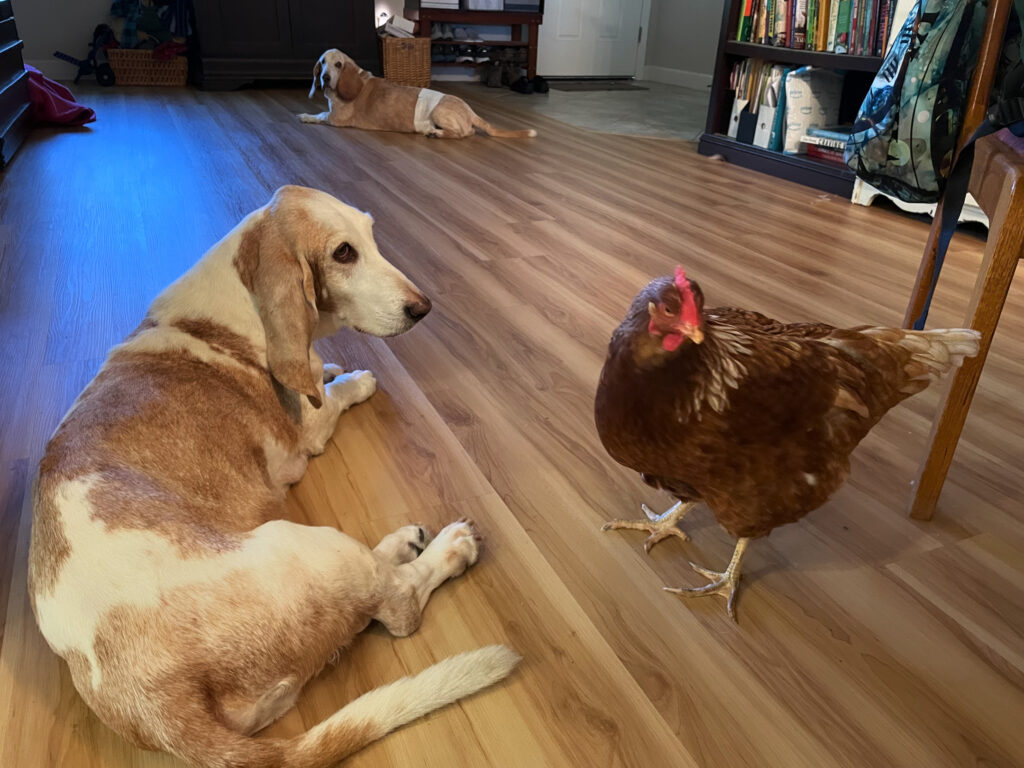
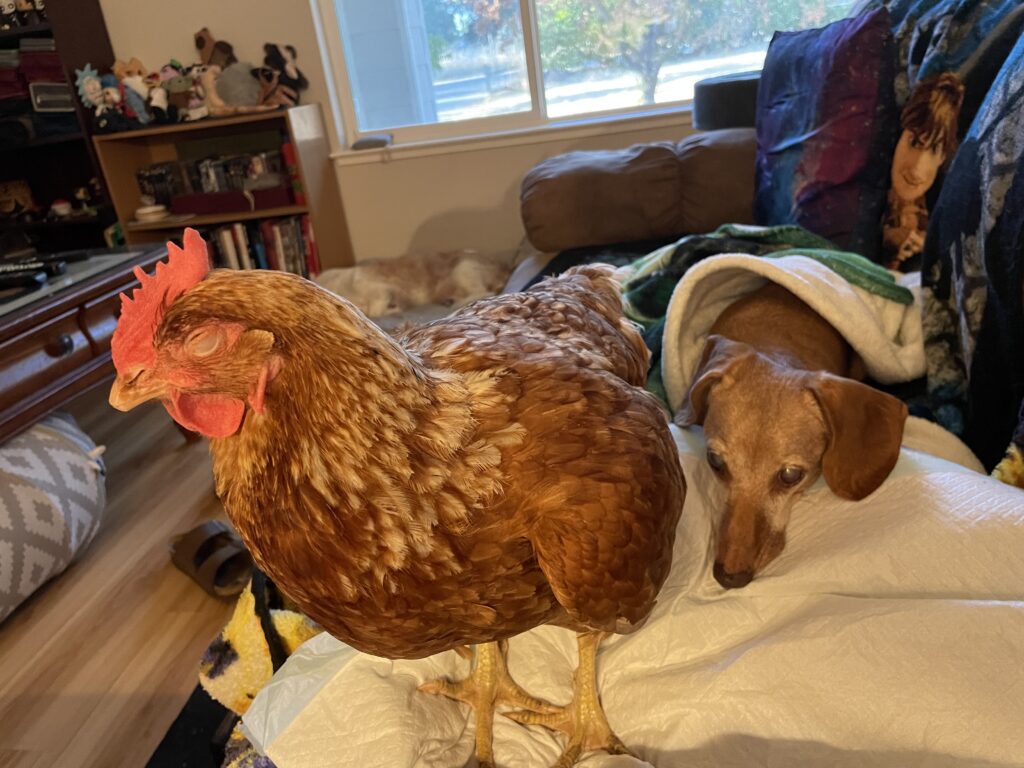
Nyssa the house chicken came to us in 2018 as a 2 year old ex battery hen. Sadly her sisters have all passed away by now, but Nyssa is going strong as a 10 year old hen, quite a feat! She has lived inside exclusively for the last 2 years, and has made friends with all the dogs and cats. Nyssa has an incredibly outgoing personality, and she truly demonstrates to people why it is so bizarre to “love one and eat the other”.
Nyssa at the dinner table.Nyssa and Buster in the morning. Nyssa and Walter sleep.
Meet Cat
As Microsanctuary Resource Center‘s co-founder Alastor says, “I think that’s important advocacy…to show the beauty of senior animals who have lived a wonderful life and have managed to do something that trillions of other animals don’t get the opportunity to do.”
It’s so crucial that we acknowledge senior residents…because the very existence of senior farmed animalA species or specific breed of animal that is raised by humans for the use of their bodies or what comes from their bodies. residents is “not the way the system was designed” to operate.
“The fact that the system was designed to grow babies and kill babies and feed people babies…the fact that we have chickens who are in their teens is a big “F-You!” to the farming system.
What can we as sanctuaries do? Besides being prepared for and accommodating aging residents’ needs, Alastor says, “I think seeing new opportunities for doing advocacy and really making your advocacy be informed by your residents” is “such a central part of what a sanctuary can do.”
To listen to the full interview with Alastor, click here!
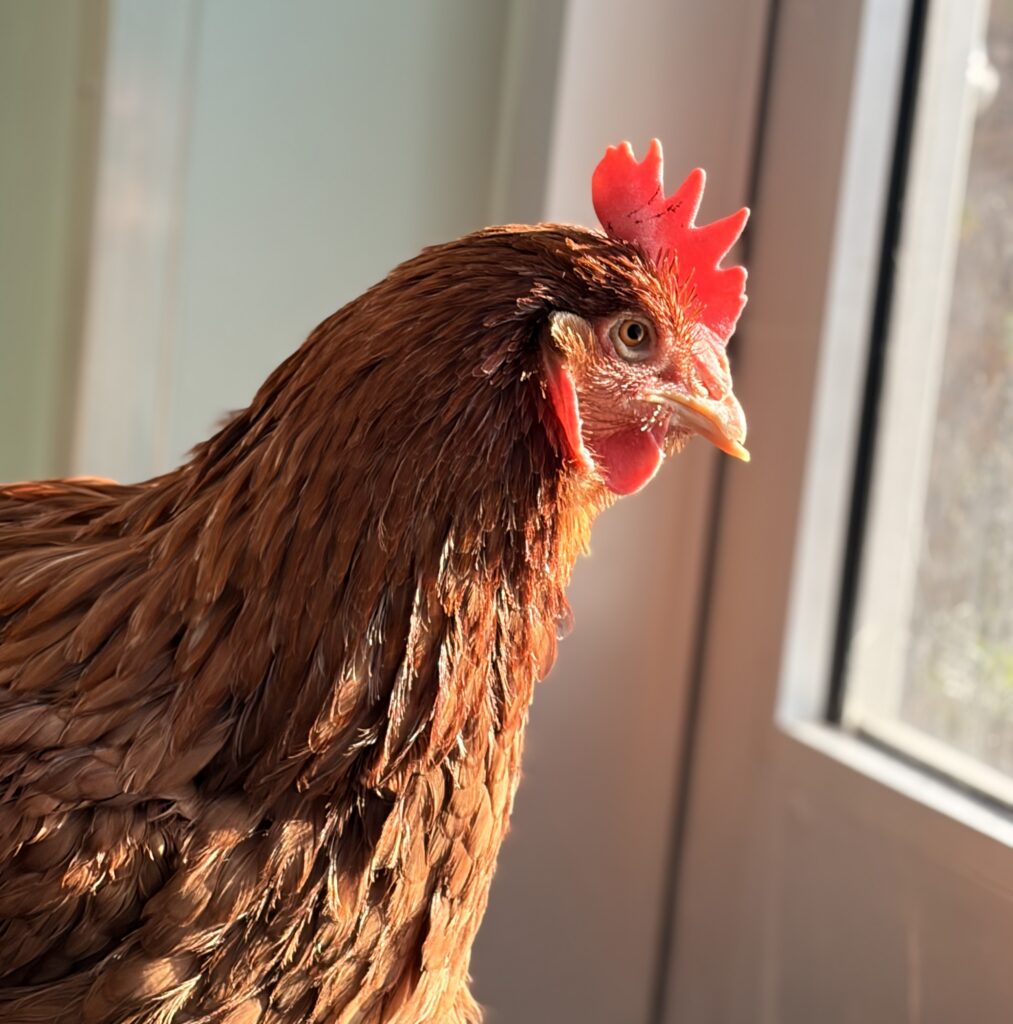
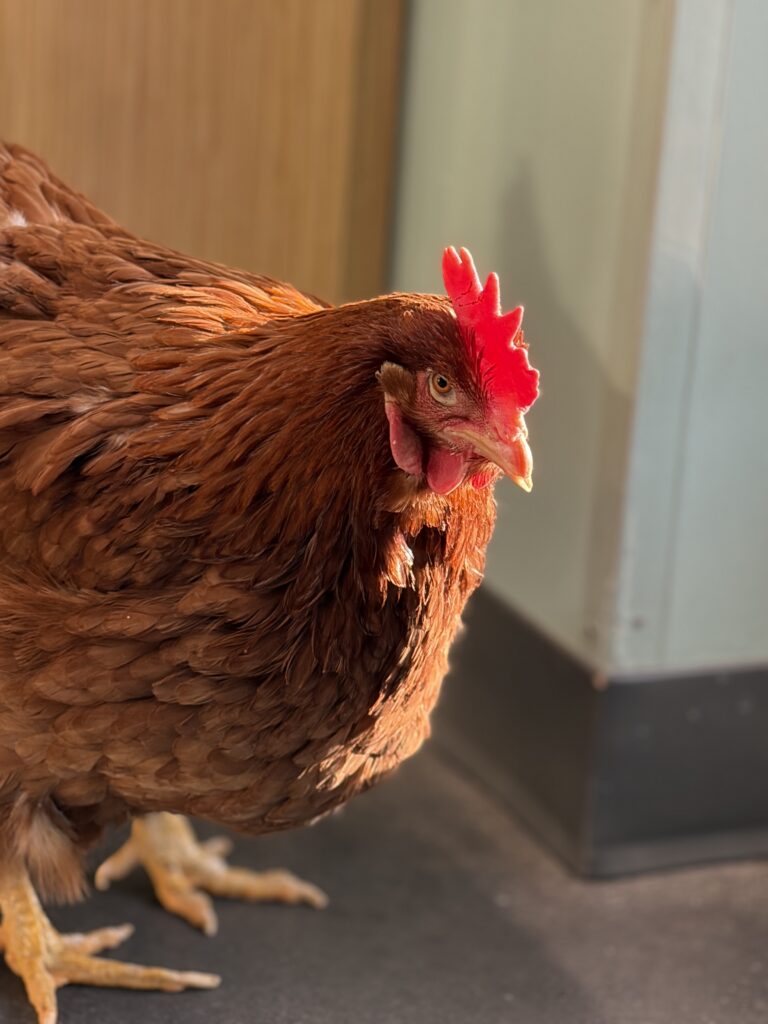
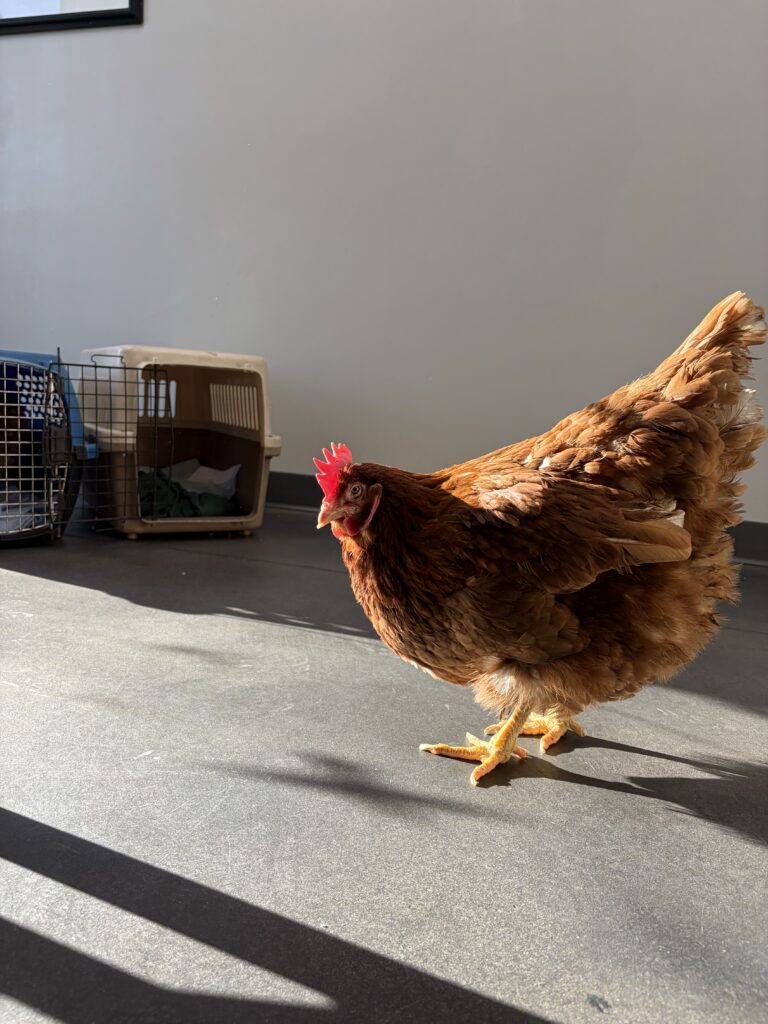
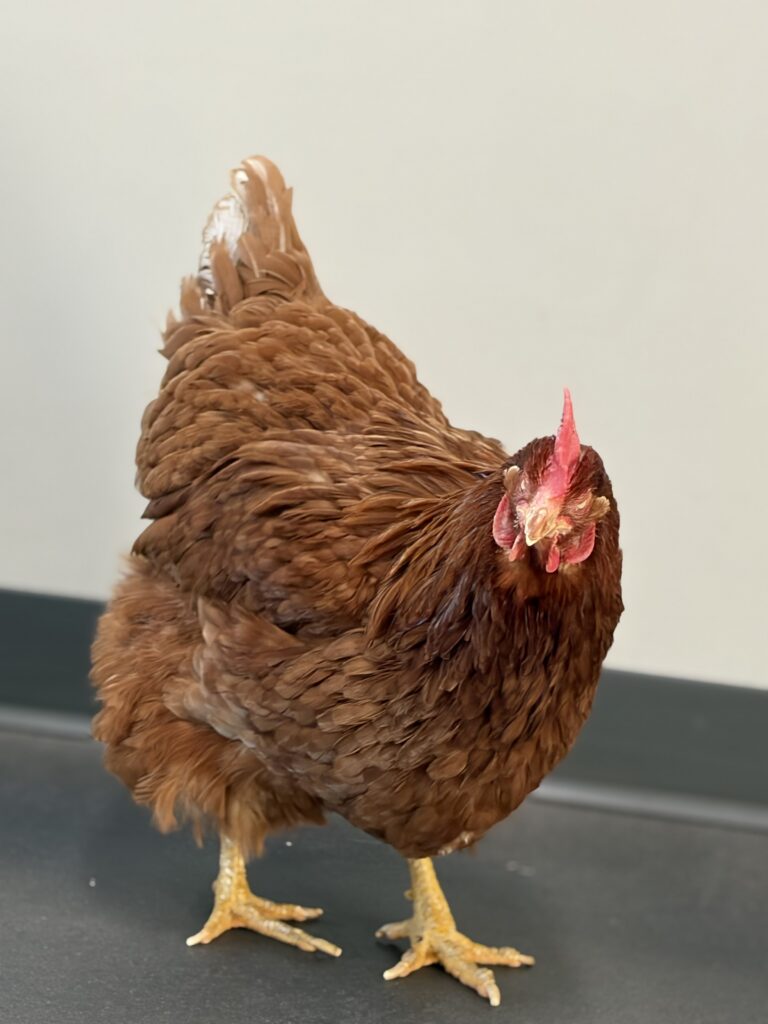
Cat, pictured below, is a 9-10 year old hen who was rescued by the side of the road, most likely after she jumped from a truck taking “spent” industrial layer hens to slaughter.
Cat, gazing outside. Cat peering around a corner.Cat is on carrier inspection duty. Cat, on general inspection duty.
Duck Stories
Meet Girlie
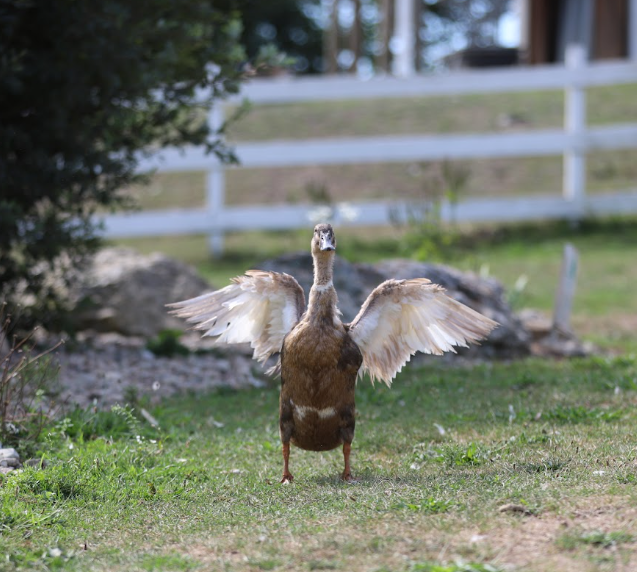
Girlie is a survivor who found her happy ending. She is one of the last living reminders of one of the darkest chapters in our sanctuary’s history. She was one of the 1,400 victims rescued from the 2016 Westport animal cruelty case, the largest animal cruelty case in Northeast history. Of the 67 animals West Place welcomed from that case, three were ducksUnless explicitly mentioned, we are referring to domesticated duck breeds, not wild ducks, who may have unique needs not covered by this resource., and Girlie was one of them.
Because Girlie was already an adult when she arrived, we don’t know exactly how old she is. What we do know is that she’s spent nearly a decade showing us the incredible resilience of rescued animals.
After everything she’d endured, Girlie found something every animal deserves: safety, stability, and companionship. Not long after arriving at West Place, she bonded with Brinks the duckUnless explicitly mentioned, we are referring to domesticated duck breeds, not wild ducks, who may have unique needs not covered by this resource., and the two have been inseparable ever since. Their relationship is a beautiful reminder that even after unimaginable hardship, animals are capable of forming deep, lasting connections.
Today, Girlie spends her days with her husband, Brinks and enjoying snacks of peas and watermelon of a cherished sanctuary resident. Every day she spends here is a celebration of resilience, second chances, and the opportunity to grow old surrounded by love and care.
We’re so grateful that Girlie’s story didn’t end in 2016, it only began.
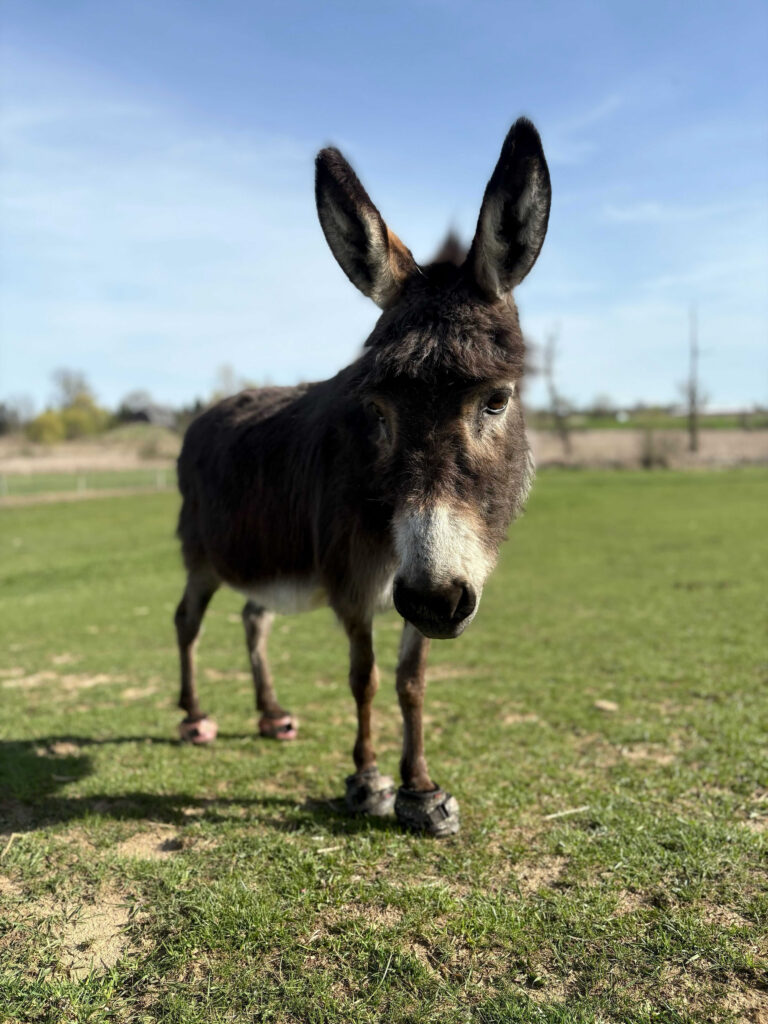
Barn Sanctuary took in seven bonded donkeys in June 2017 after their elderly caretakers could no longer manage them: Blossom, her daughter Beulah, and friends Virginia, Sylvia, Siggie, Mary Pete, and Axle. Since then, Virginia, Sylvia, and Beulah have passed away. At 34 years old Blossom, a mini donkey, is now Barn’s oldest resident. She is timid but affectionate, and an attention-seeker who loves snuggles and dust baths on warm days.
What makes her story so meaningful: Blossom has watched her own daughter and closest companions pass, yet she’s still here, nearly a decade later, living life to the fullest. Her story is proof that consistent care (proper nutrition, vet access, companionship) is what lets an animal age gracefully instead of just surviving. And she’s not just alive, she’s known, the staff can tell you her quirks and favorite things. That’s the difference that sanctuary makes.
Blossom’s story and photo come courtesy of Danielle Gotham of Barn Sanctuary
Blossom the donkey
Goat Stories
Meet Susie
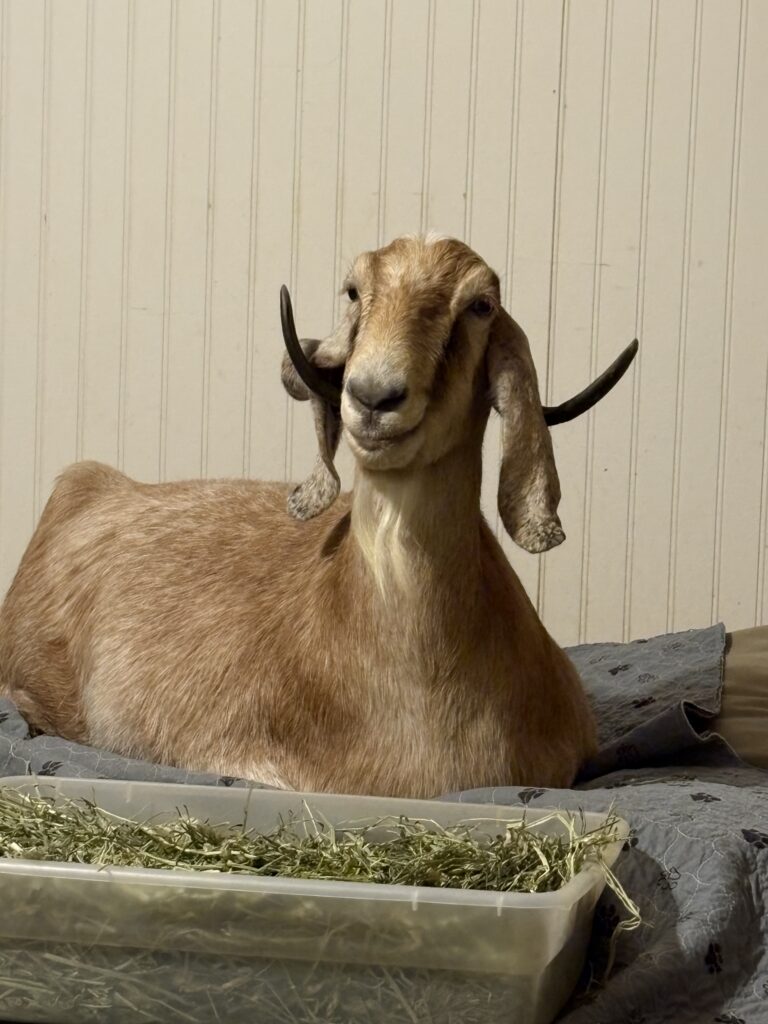
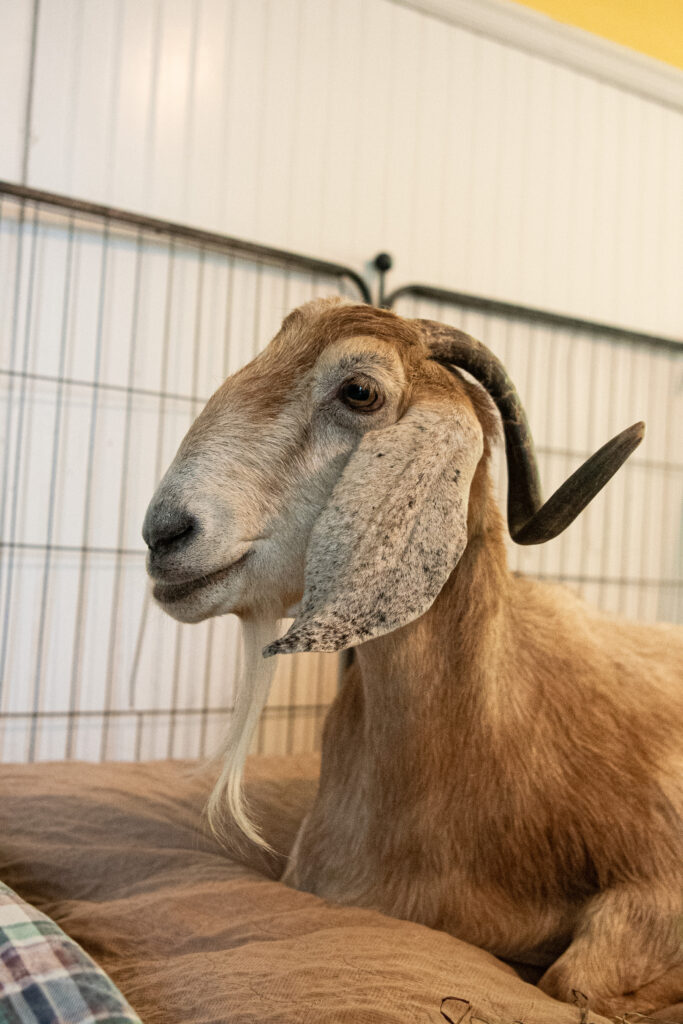
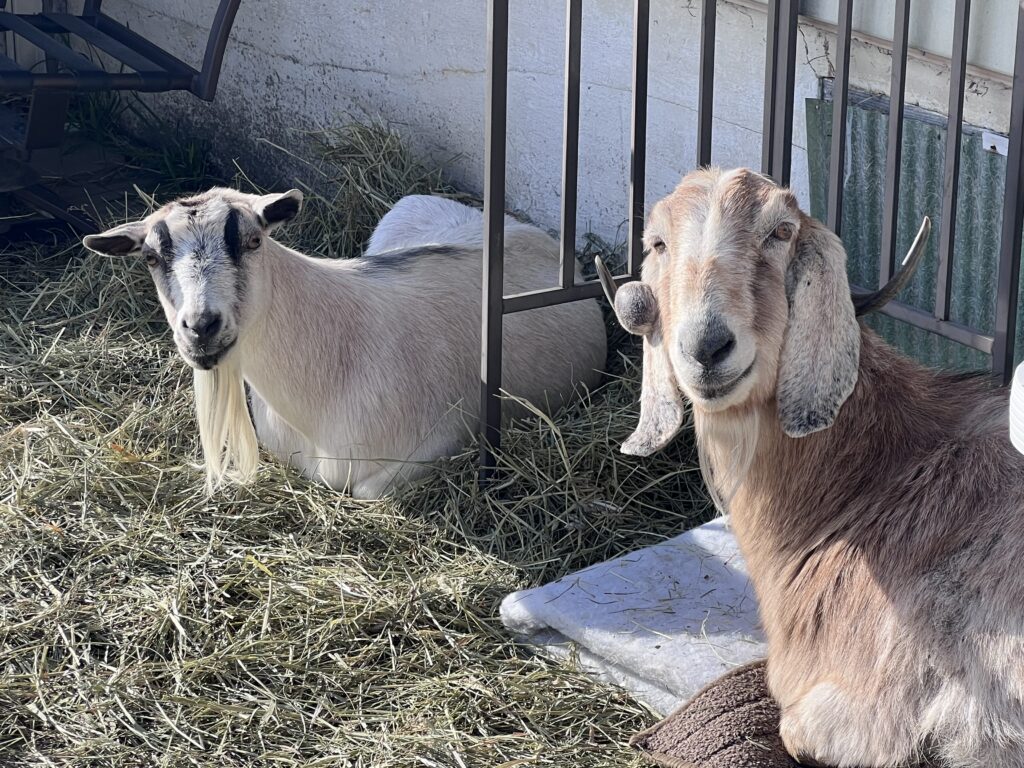
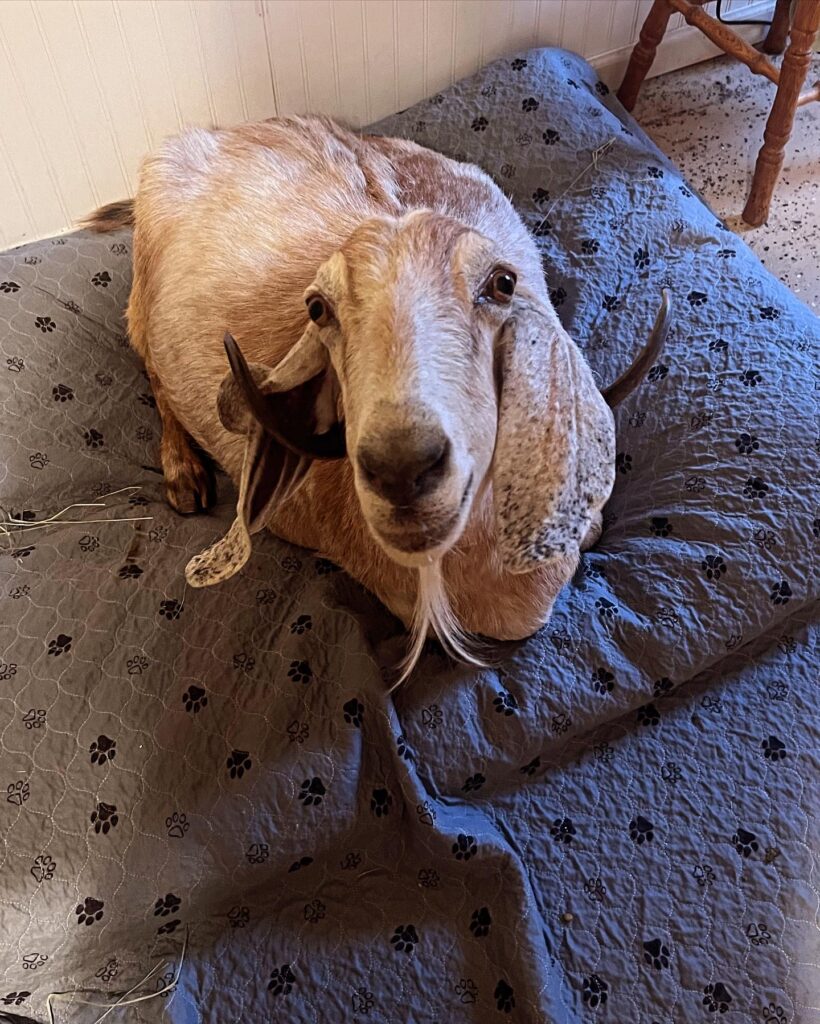
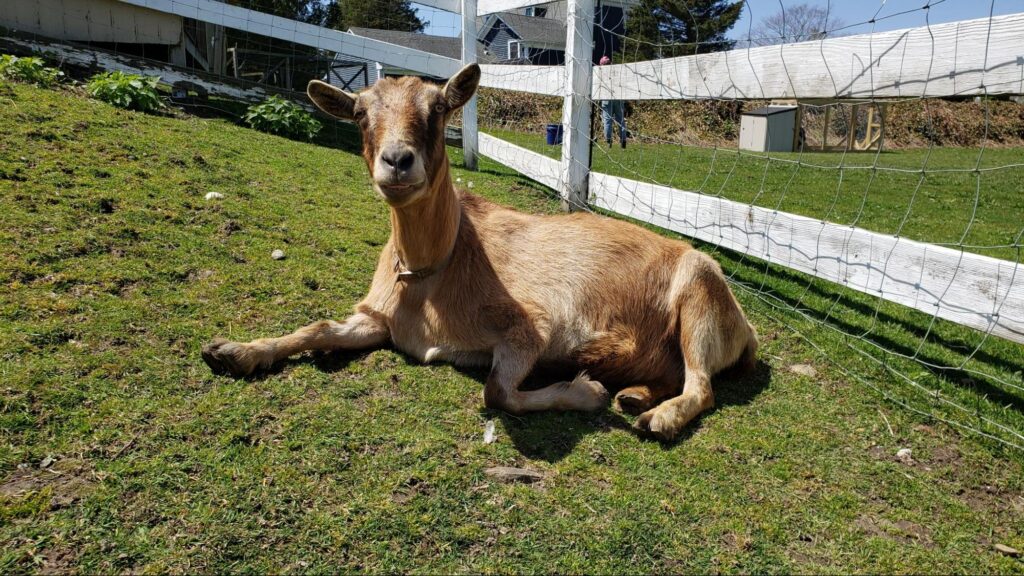
Susie came to us in February of 2024. Her previous owner had bought a new home and when he left, he left her to fend for herself until someone else came to live there. She was discovered sleeping on a broken shutter that was on the ground, was significantly underweight and with long overgrown feet and very calloused knees from kneeling a lot instead of standing. We don’t know for sure how old she is, but she has no front teeth left and is missing a few molars too. Probably between 15-18 years old by now. Because of her arthritic knees and timid nature, Susie joined our “special needs” group instead of the main goat herd. She has settled in very well with living inside the house in our large “goatie room” where she can sleep on any number of large comfy beds, watch tv, or snack on plenty of hay. She also goes out in a private yard with her roommate when the weather is nice to graze, lounge in the sun, and talk to the other goats through the fence. She is the purest of souls, kind to everyone and just soaks up the love any chance she gets. She’s like a big (200+ pounds) cat that wants to rub her body against you and get booty scratches for as long as you have the strength to give them. It is our privilege to give her this easy life for her remaining time here and my hope is that it makes up some for what she endured before.
Thanks for highlighting the senior animals. It has become our specialty, with senior horses, cats, goats, chickens, and our doggo. They are so special and so rare a thing in farmed animalsA species or specific breed of animal that is raised by humans for the use of their bodies or what comes from their bodies. to get to reach old age. Even though our time is sometimes short and it’s heartbreaking to lose them, it is our mission to give them the best golden days and years.
Susie and a snackSusie resting Susie in profile.Susie resting with a friend. Susie smiles
Meet Sadie
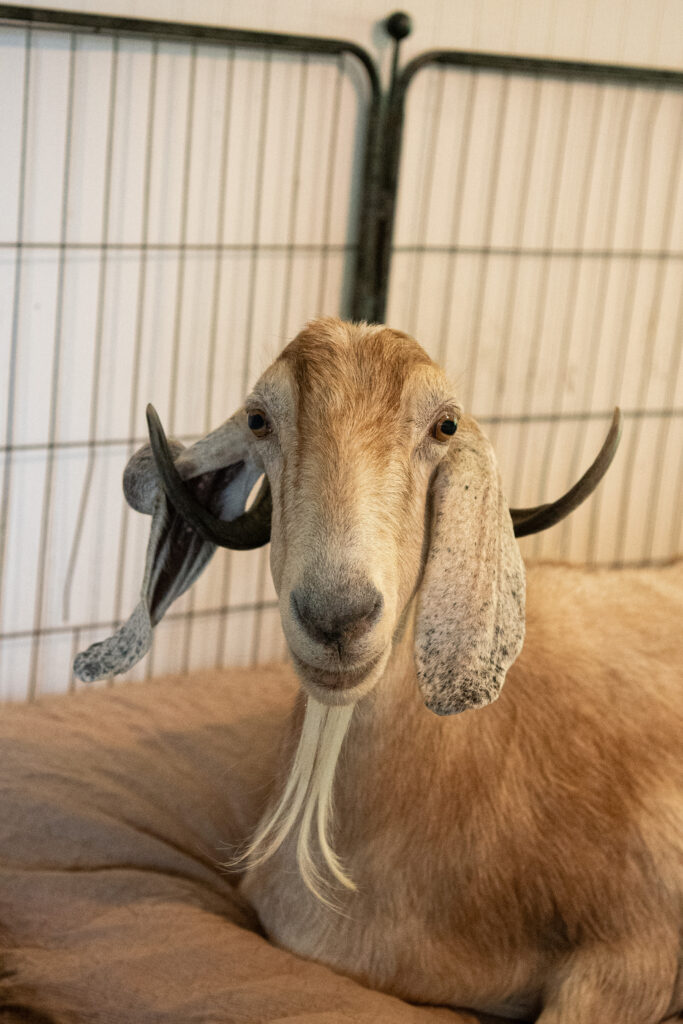
Sadie is the Queen of West Place Animal Sanctuary. Every sanctuary has that one resident who captures everyone’s heart. At West Place, that’s our beloved Sadie.
Sadie’s story began with unimaginable hardship. She was rescued from the 2016 Westport animal cruelty case, the largest animal cruelty case in Northeast history. More than 1,400 animals were found in a state of death or dying, being kept on a remote plot of land that no one lived on. They were being stored for the upcoming Feast of the Blessed Sacrament in New Bedford (the largest Portuguese festival in the world where meat and live animals are sold). Of the 1,100 who survived, West Place welcomed 67 animals, including Sadie.
When she arrived, Sadie was battling bilateral conjunctivitisConjunctivitis is the inflammation of the conjunctiva of the eye., scabby mouth, an upper respiratory infection, pneumonia, and horns that had begun growing back into her skull. It took months of dedicated care, but she never stopped fighting.
Today, at over 12 years old, Sadie spends her days exactly as every senior deserves, surrounded by love, soaking up the sunshine, enjoying her favorite treats, and rarely far from the love of her life, Colby the sheep.
Just recently, Sadie reminded us once again how strong she is. After losing her ability to lift her rear legs and an unexpected stay at Tufts hospital, all the way in Boston, she was determined to make it back home. With excellent veterinary care, lots of encouragement, and plenty of Doordash deliveries of her favorite fruits and vegetables, she pulled through and returned to the sanctuary where she belongs. She went through physical therapy in a wheelchair, and just recently started walking on her own again. Watching her reunite with Colby was a moment none of us will forget.
Sadie embodies everything we hope for every rescued farmed animal: not just survival, but the chance to grow old, to be deeply loved, and to spend her golden years safe, cherished, and home. We couldn’t imagine West Place without her, and we’re so proud to celebrate her.
June was born on a large pig farm in Indiana, part of an industry that treats piglets as production units, not individuals. When she fell sick with an eye infection and pneumonia, she was discarded. She was found still alive in a metal barrel outside the farm, tossed aside as an expendable piglet not worth treating. After being rescued, she made a full recovery with medication and care, spent a year in foster care, and eventually arrived at her forever home at Barn Sanctuary.
Today, June is curious, sassy, and fiercely herself. She is the self-proclaimed queen of her yard, with a sharp mind, a big appetite, and zero hesitation about demanding the life she deserves.
What makes her story so striking: June was born into a system that decided her worth before she’d lived a single day of it, and discarded her the moment she stopped being useful. That she gets to be demanding now, that she gets to have an appetite and an attitude and a yard she rules, isn’t a small thing. It’s the whole point. Barn didn’t just save her life; it gave her back the right to want things, to take up space, to be sassy instead of silent. June isn’t subdued and quiet, she’s a queen. That’s what safety makes possible.
June’s story and photo come courtesy of Danielle Gotham of Barn Sanctuary.
June
Meet Gladys
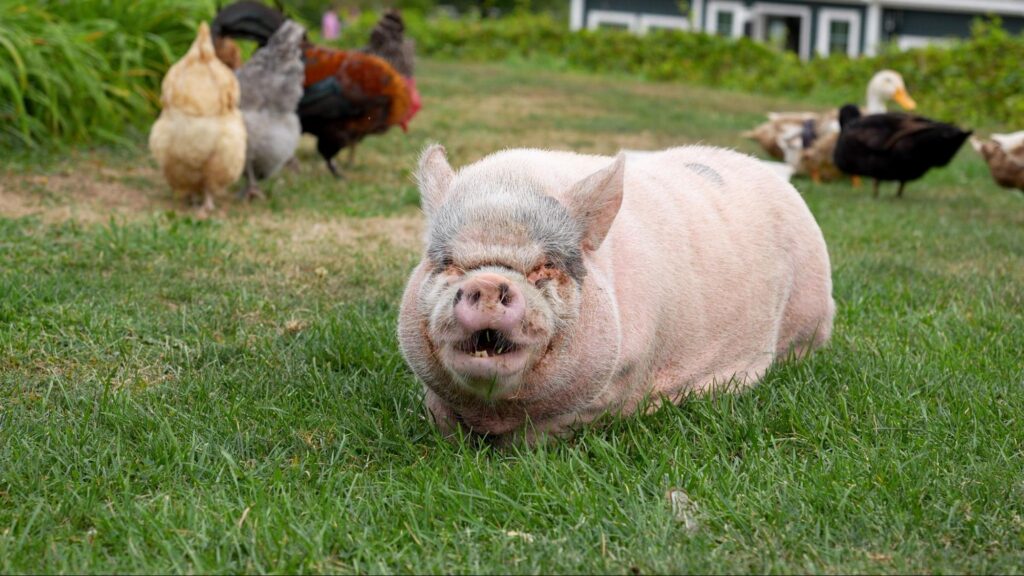
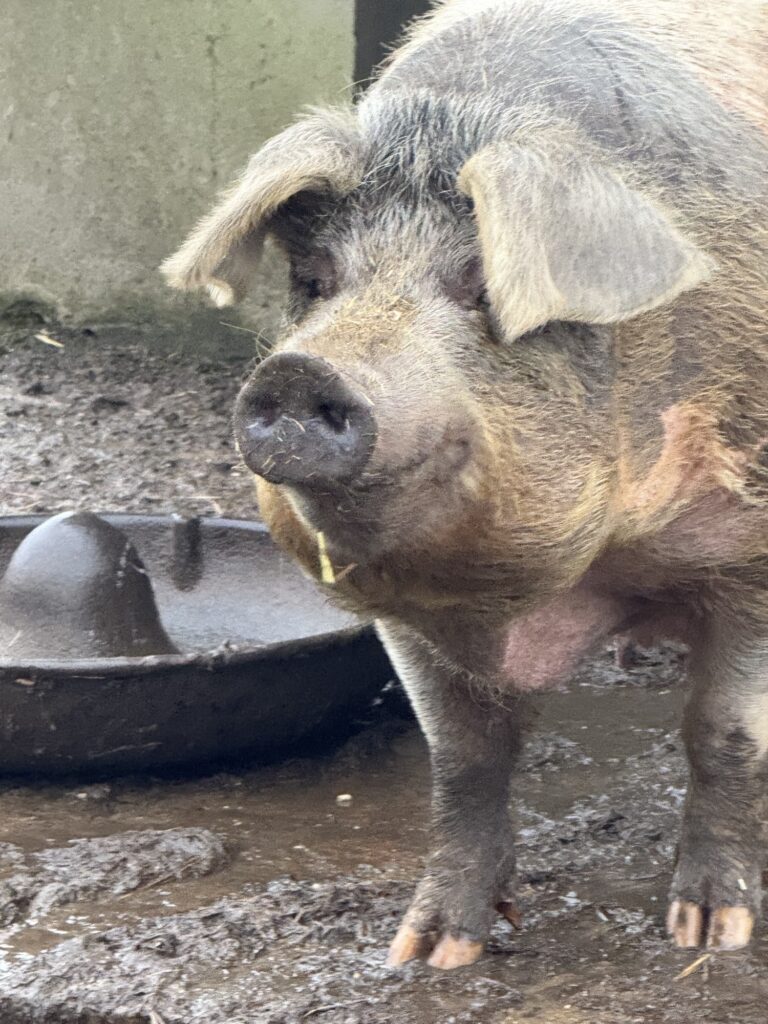
Gladys the perfect pig came to us 2 years ago, she was already estimated to be at least 13 years old then, but we suspect she was older. She is likely 15 or older now. She has the most gentle soul and loves everyone and everything. Gladys is on 6 different pain medications and supplements for arthritis, but her slow pace doesn’t stop her loving life.
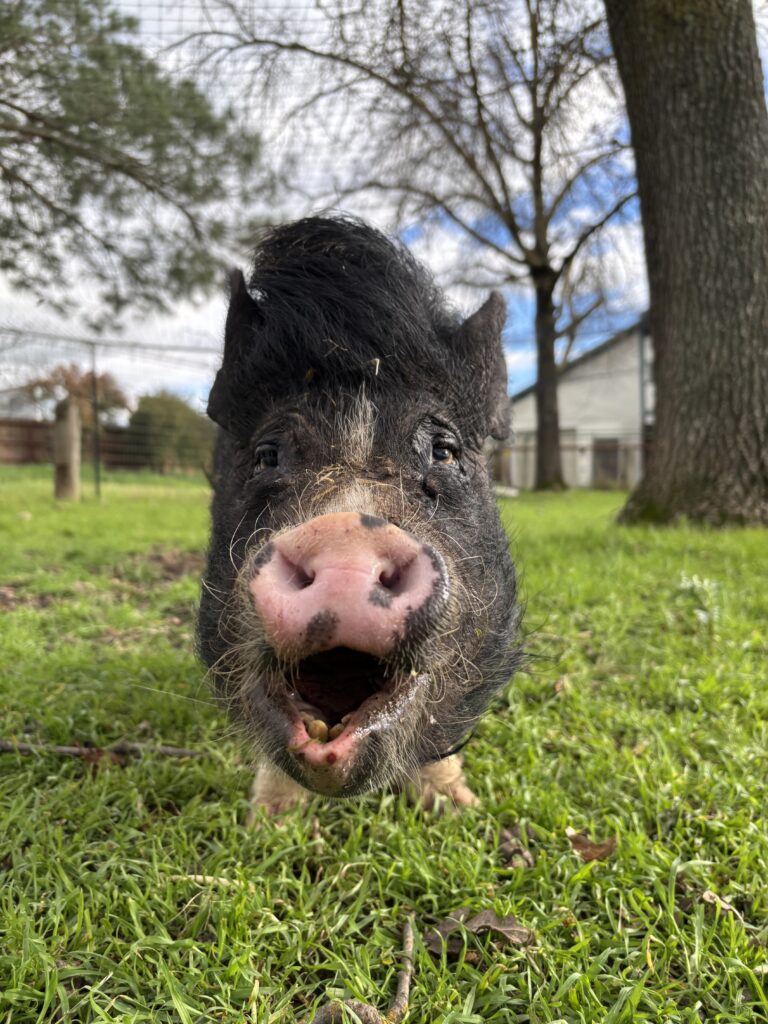
Pickles lives life on her own terms. If there’s one thing everyone knows about Pickles, it’s that she’s going to do things her way. She’s happy spending time on her own, she’s never shy about announcing her opinions with a loud squeal, and if she’s in just the right mood, she’ll roll right over for a belly rub. Around here, we let Pickles be Pickles.
Born in 2017, Pickles didn’t have the start in life she deserved. She was passed from family member to family member before ending up confined indoors in a tiny 3-foot by 3-foot pen. With almost no room to move, she became overweight, lost her muscle tone, and developed painful bacterial infections in the folds of her face.
She was eventually given to a farmer who agreed to care for her temporarily. When he decided he no longer wanted her, he threatened to send her to slaughter if she wasn’t removed immediately. Thankfully, we were able to step in just in time and welcome Pickles to West Place in 2023.
With proper nutrition, regular exercise, and skin care, Pickles gradually regained her strength and health. Pickles receives a special diet of high-quality Mazuri Mature Maintenance Mini-Pig grain especially designed for seniors, along with fresh fruits and vegetables (but only certain vegetables, as she is very picky). Her skin-care routine consists of brushing, exfoliation with a sugar scrub, lotion, and sunscreen on sunny days. She also receives an Omega-3 supplement for her joints (American pot-bellies are prone to arthritis, especially if they were overweight earlier in life), as well as a skin and coat supplement. Today, at 9 years old, she’s exactly who she’s meant to be – a pig with plenty to say, the freedom to make her own choices, and all the space she needs to enjoy life.
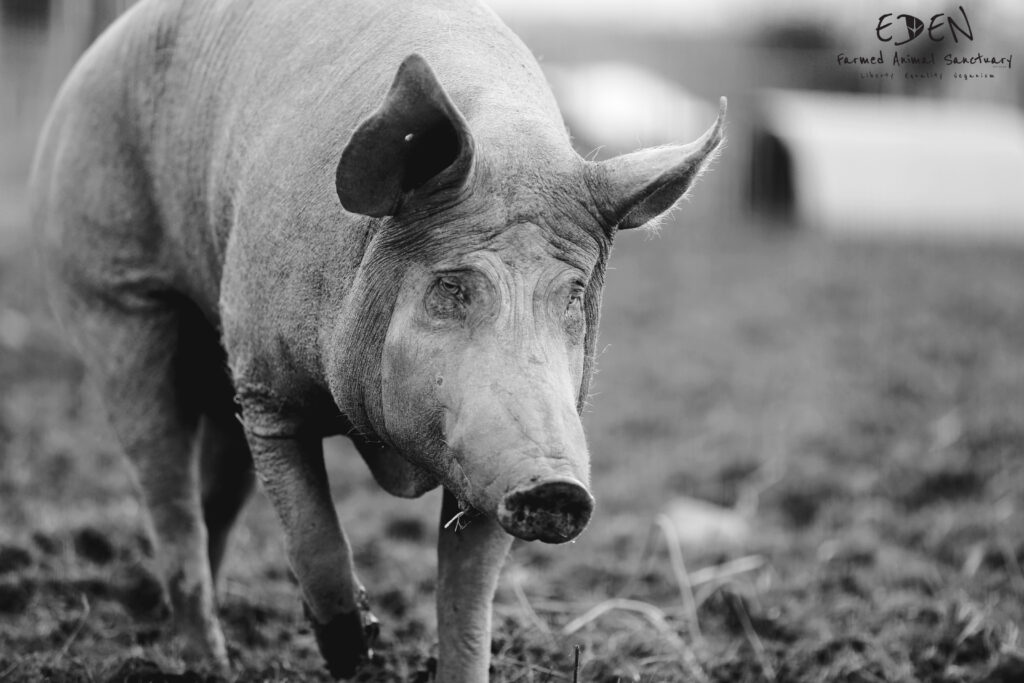
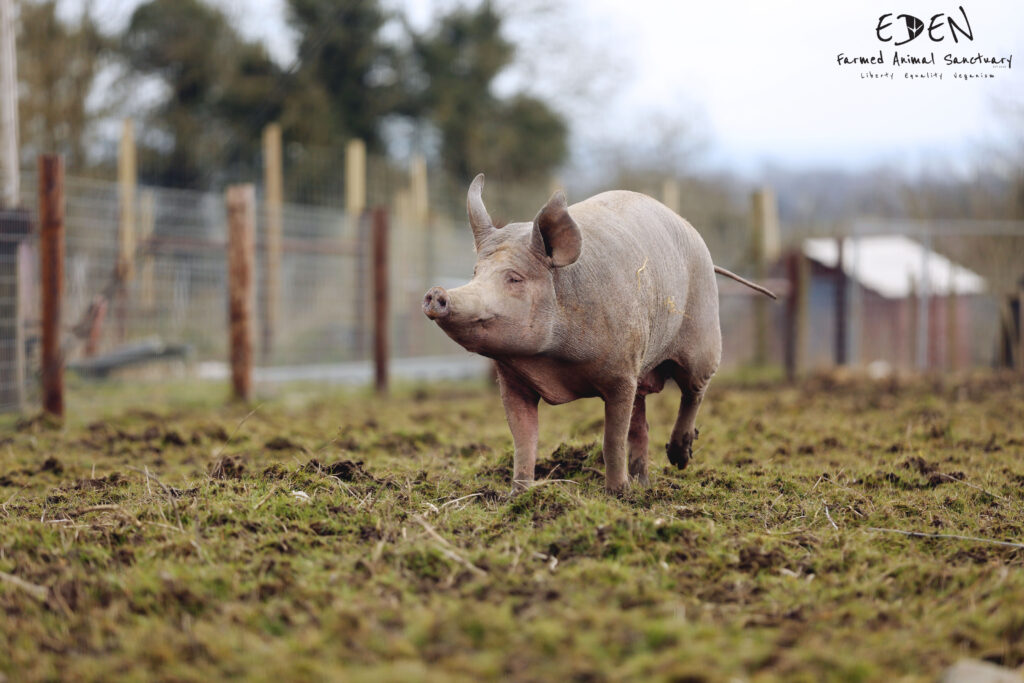
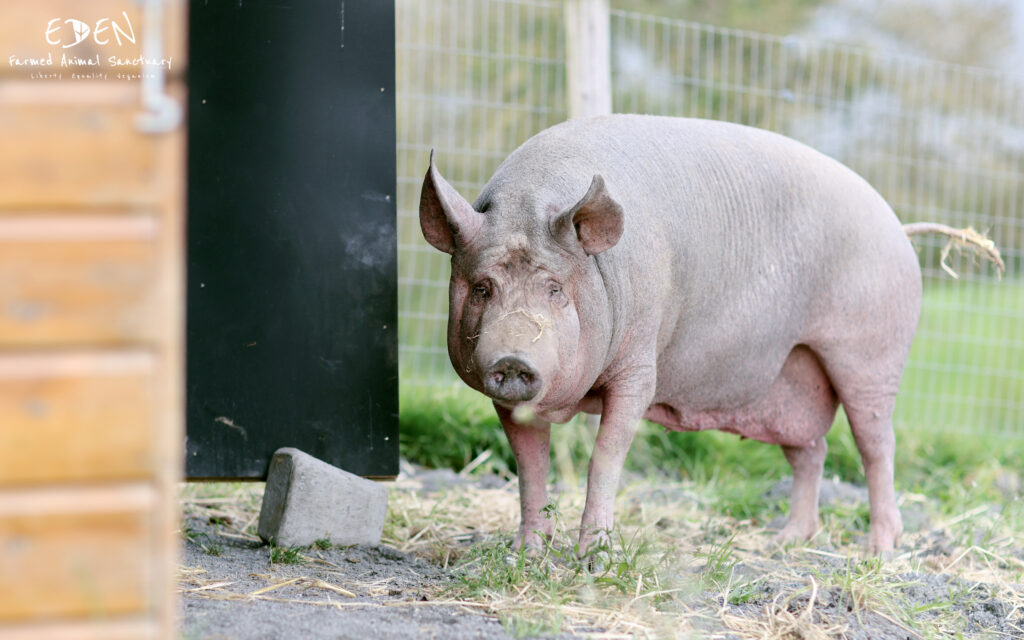
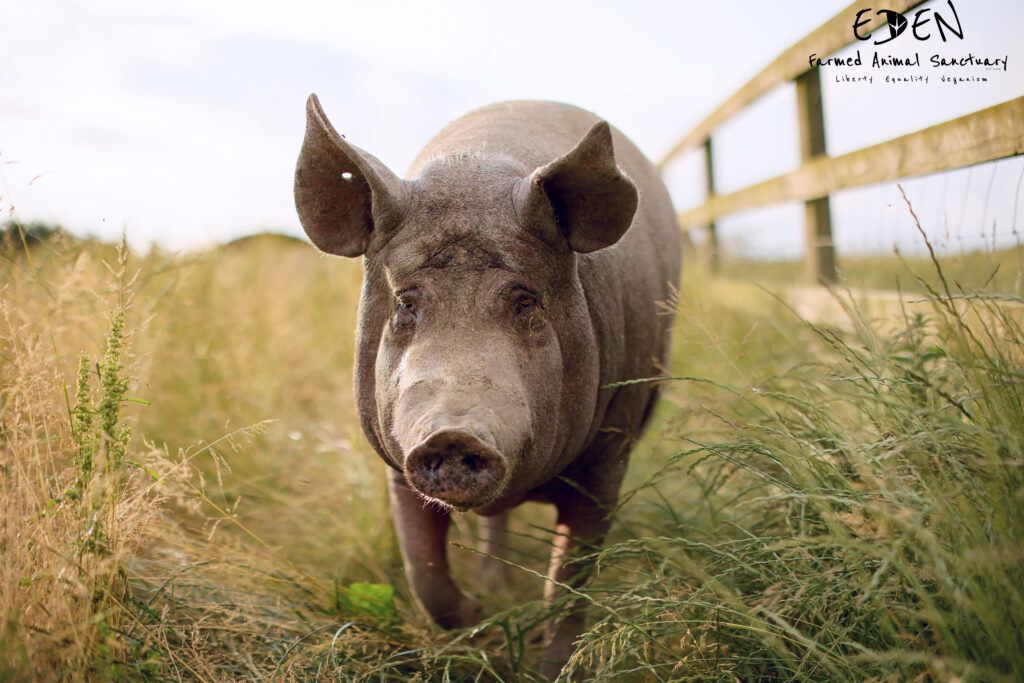
Yesterday Banbh left this world and her home at Eden. At sixteen years of age, this dreaded day was inevitable. This morning our sanctuary is a different place without her. We miss the way she would chat to us, from the time she heard us approaching her barn with her meals or a treat, or when we popped in just to say hello and see if she needed anything from us. We miss her kind and wise face and the beautiful presence she brought to Eden.
The life she led at Eden was in stark contrast to her origins. She was taken from a standard pig farm by a family that subsequently used her as a breeding sow. Every year she was sent to a boar to be impregnated. Every year, having lovingly nursed and cared for her piglets, they were taken from her to be slaughtered. Banbh was such a sensitive, loving pig who treasured the care and affection we gave her, that we can only imagine how good a mother she was. It is tragic that she endured these years of exploitationExploitation is characterized by the abuse of a position of physical, psychological, emotional, social, or economic vulnerability to obtain agreement from someone (e.g., humans and nonhuman animals) or something (e.g, land and water) that is unable to reasonably refuse an offer or demand. It is also characterized by excessive self gain at the expense of something or someone else’s labor, well-being, and/or existence., having a male forced on her when it was not of her choosing; having her precious body used because of her capacity to give birth and be a mother; having experienced the grief of losing so many piglets because of the human demand for pig flesh. The family that took her from an industrial farm, imagined that they had ‘rescued’ her. For sure, they saved her from being slaughtered but they merely changed the conditions of her exploitation and prevented her from living the kind of life that was her right, free from human use.
We are so grateful that she eventually experienced the peace and care of a veganAn individual that seeks to eliminate the exploitation of and cruelty to nonhuman animals as much as possible, including the abstention from elements of animal exploitation in non-food instances when possible and practicable as well. The term vegan can also be used as an adjective to describe a product, organization, or way of living that seeks to eliminate the exploitation of and cruelty to nonhuman animals as much as possible (e.g., vegan cheese, vegan restaurant, etc.). sanctuary where she blossomed, and we were very fortunate to be blessed with her company for eight years.
She arrived at Eden in 2018 when she was eight years old. Not long after her arrival, we noticed that her skin was extremely irritated and had gone black in colour. She had contracted mange caused by a microscopic burrowing mite, from the male pig she had been sent to. It took months of treatment for her to recover, and we had to completely change her housing and bedding to prevent any further contamination. I remember so well the first day I saw Banbh relaxing and lying outside in the sun. She had been stressed and highly irritated with intense itch and sore skin until we treated her.
Banbh made an incredible mark on those of us who knew her, even if only for a short time. I am attaching a photo of the dignity with which her body was honoured after she left us by one of our staff members who cared for her meticulously at the end of her life. Banbh was an unassuming, undemanding pig who loved digging in her paddock and resting in the sun. She very much appreciated human company, attention and contact. We regularly massaged her and took special care of her skin because of her early history of mange. She loved her meals and treats and for the last few months of her life, we spoiled her with a higher calorie pig food and as much mango, melon, pineapple and banana as she wanted. Right before she was put to sleep, she enjoyed some slices of pineapple, and we syringed pineapple juice into her mouth.
We’ve known Banbh was getting weaker for the last few years. Every now and then she would become unwell and be disinclined to leave her barn. At Eden, we respect that other animals know their own bodies and limits better than we do, and we don’t push them to do anything they don’t want. In the last hours of her life, Banbh’s body indicated to us that she most likely had cancer. We are very grateful that she was on extra pain relief and steroids for the last few weeks. She left this life as quickly, gracefully and peacefully as she arrived at our sanctuary eight years ago. She has left a huge emptiness and sadness in her wake.
Although it is a beautiful name, we can’t take credit for naming her Banbh. She was named by the family who took her from the farm where she was born. Ironically, Banbh is the Irish word for a baby pig. I have often wondered about Banbh’s experience of being a mother and the fate of her piglets. Anyone who has eaten ‘pork’, or a ‘bacon’ sandwich, has eaten a young pig who was separated from a mother like Banbh who no doubt grieved their loss. Anyone who has paid for pig flesh, has financially supported the same exploitation that most people are appalled by when read in the context of a pig who has a name, and whose personality and feelings are highlighted. Anyone who has eaten pig flesh is responsible for the slaughter of a vulnerable, defenceless young animal, who was every bit as sensitive as Banbh, and who valued their life just as she valued hers. On a vegan sanctuary the horror of animal use is very visceral for us because we know its individual victims such as Banbh and we know that their rights are violated by all forms of animal use whether that occurs on so called factory farmsIntensive agricultural operations that prioritize large volume animal product production using strict production methods, typically away from the public eye. or smallholdings. Banbh has been a huge inspiration for our work at Go Vegan World. We will remember her with love.
Banbh exploringBanbh posing for the camera. Banbh enjoying her grassy field.
Meet Poppy Popskin
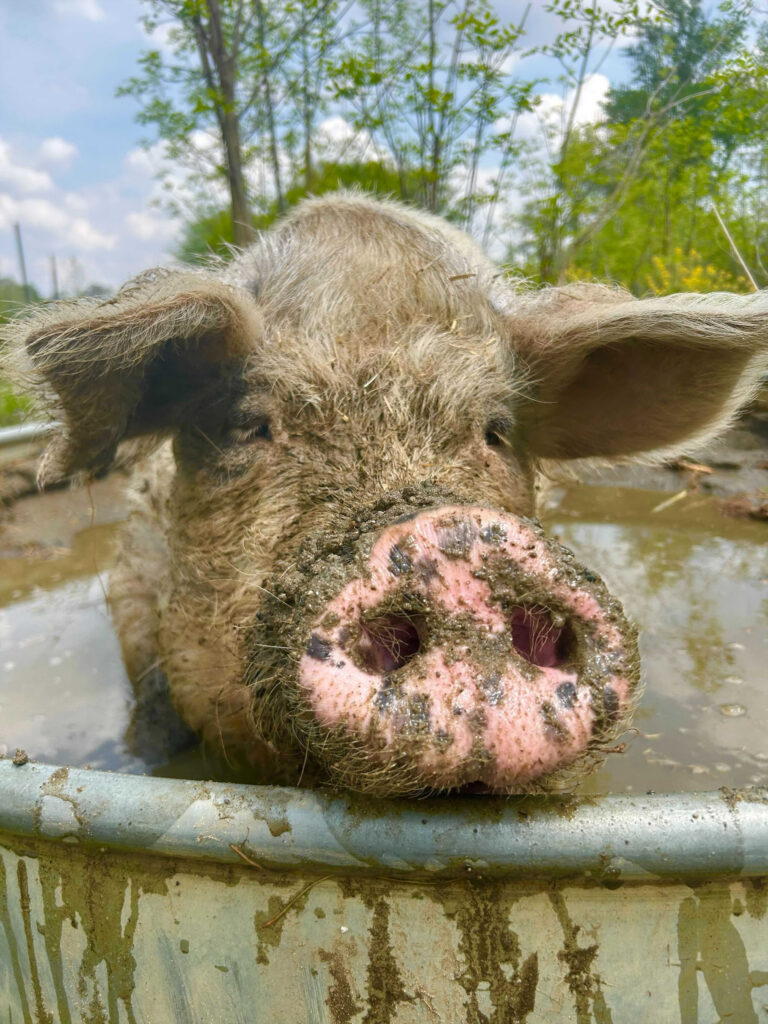
We have 16 pigs and our oldest is Poppy Popskin. She came to us in 2022 when she was 11 years old, so she is now 15 . She was used for breeding and she was going to be euthanised because they had ‘finished’ with her . The people who owned the land where she was kept turned up our doorstep asking us to take her, as they had compassion for her and had grown to love her. We had barely moved in at the time, but they agreed to build her a concrete shelter if we would take her, so we decided that we would look after her for the rest of her years and make them as special for her as possible. We also rescued a male Tamworth a year later, that was also used for breeding and they are now best friends. They sleep together and banter like a married couple. She is healthy and well. We feed her sow nuts, fruit, vegetables, flaxseedWhen using flaxseed as an animal supplement, it should be ground, not served whole. Consider using a clean coffee grinder and grinding the seed right before feeding for greatest effectiveness!, glucosamine, coconut oil, milk thistle flour and turmeric and black pepper, She loves life and is affectionate and friendly.
Poppy Popskin’s story and photos come courtesy of Suki Player of Little Pigs At Home.
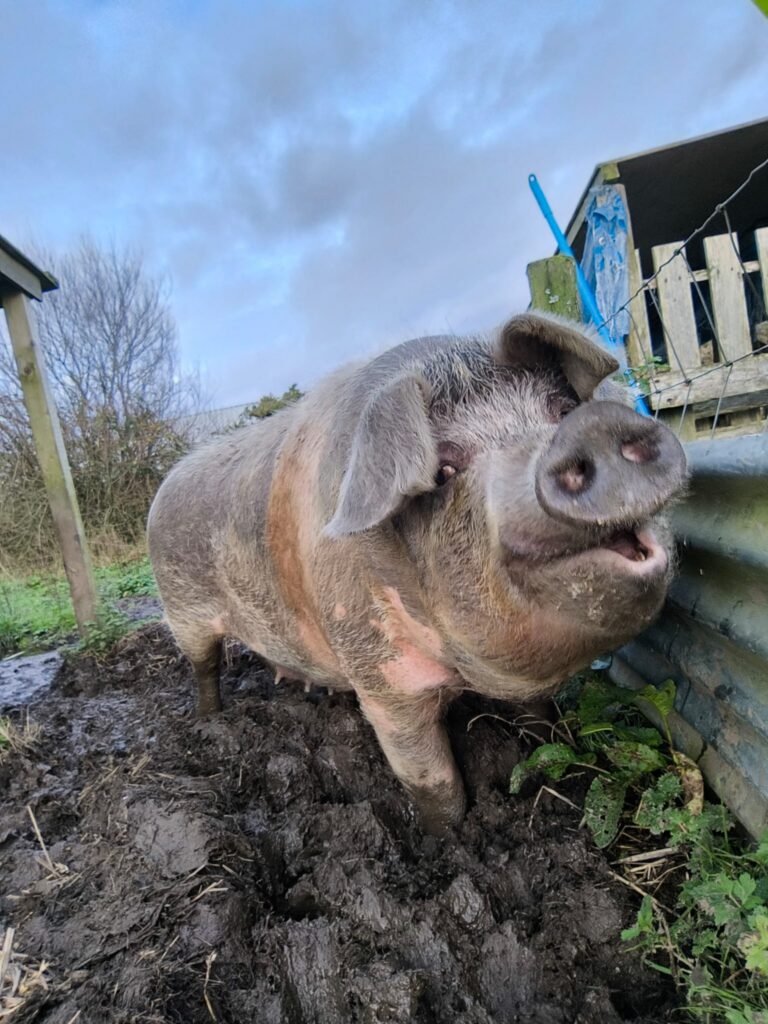
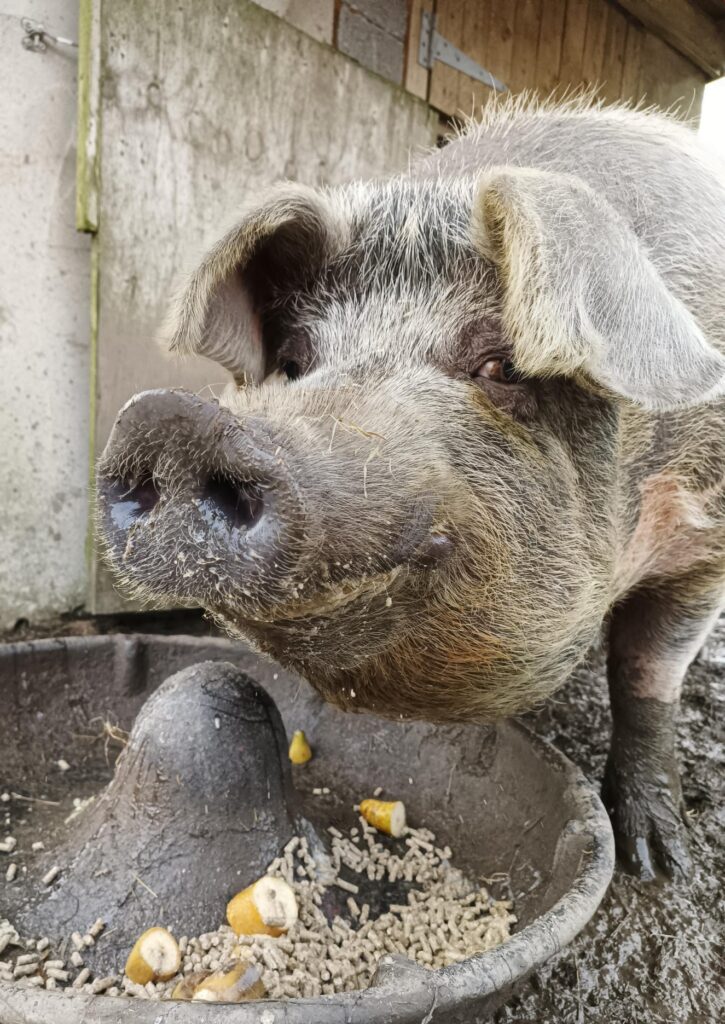
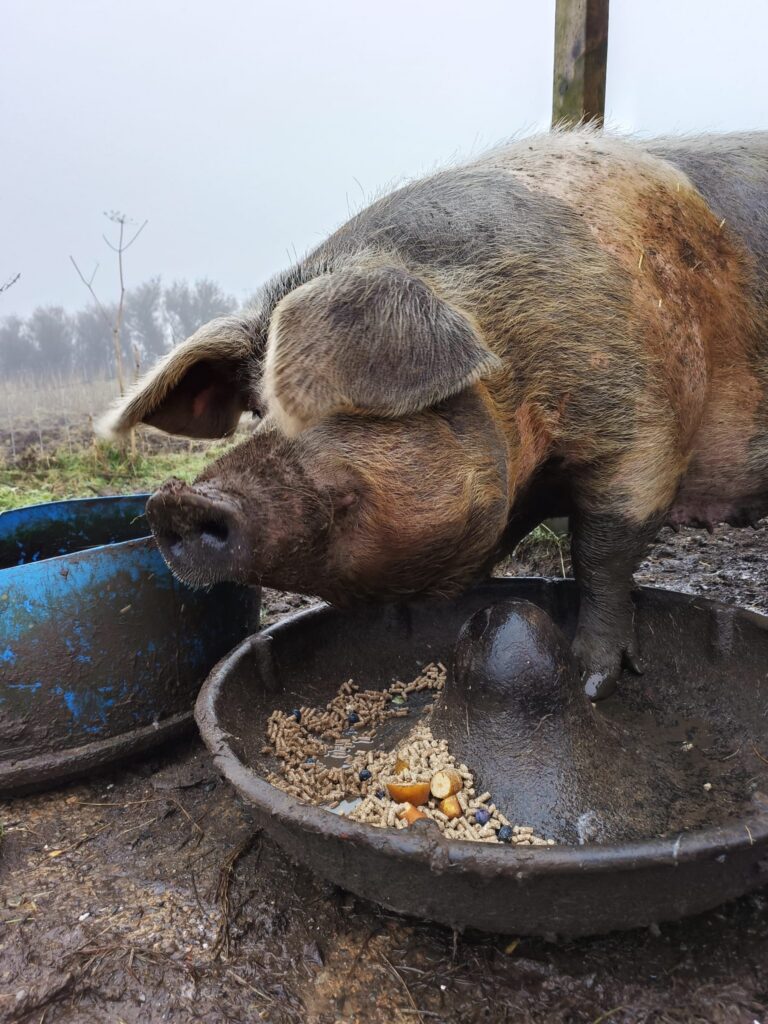
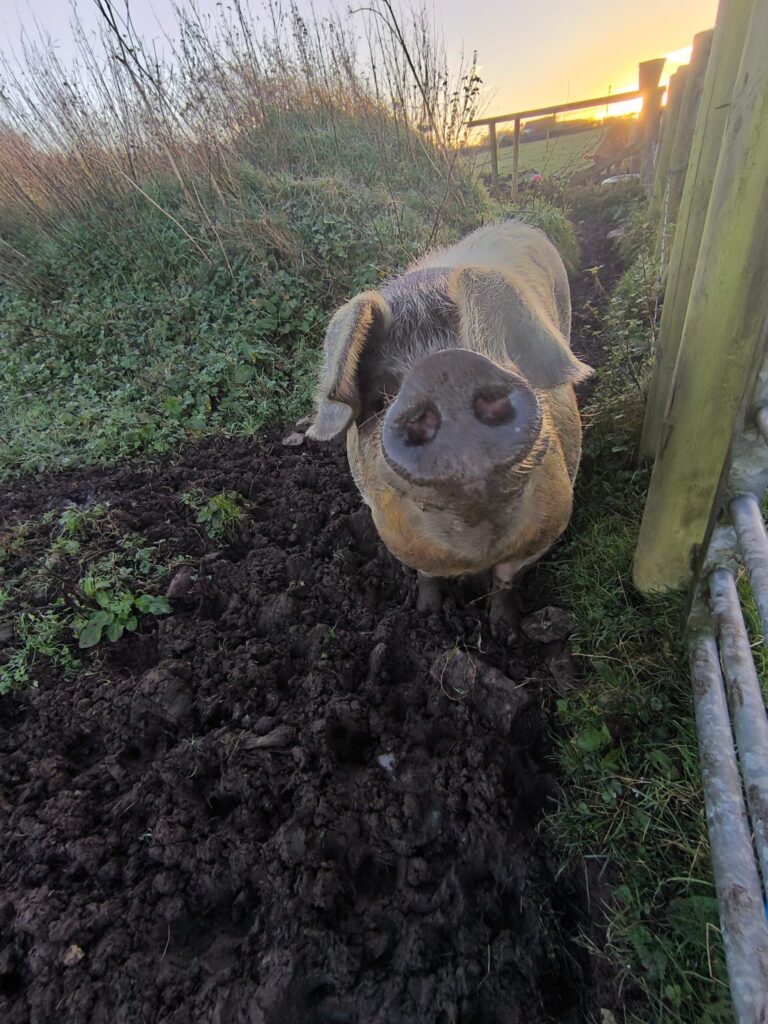
Poppy Popskin enjoying the mud. Mud time is the funnest time for Poppy Popskin! Snack time for Poppy Popskin.Sometimes it’s even more fun to get in your food while you’re eating it! Poppy Popskin has the most boopable snoot!
Sheep Stories
Meet Noble
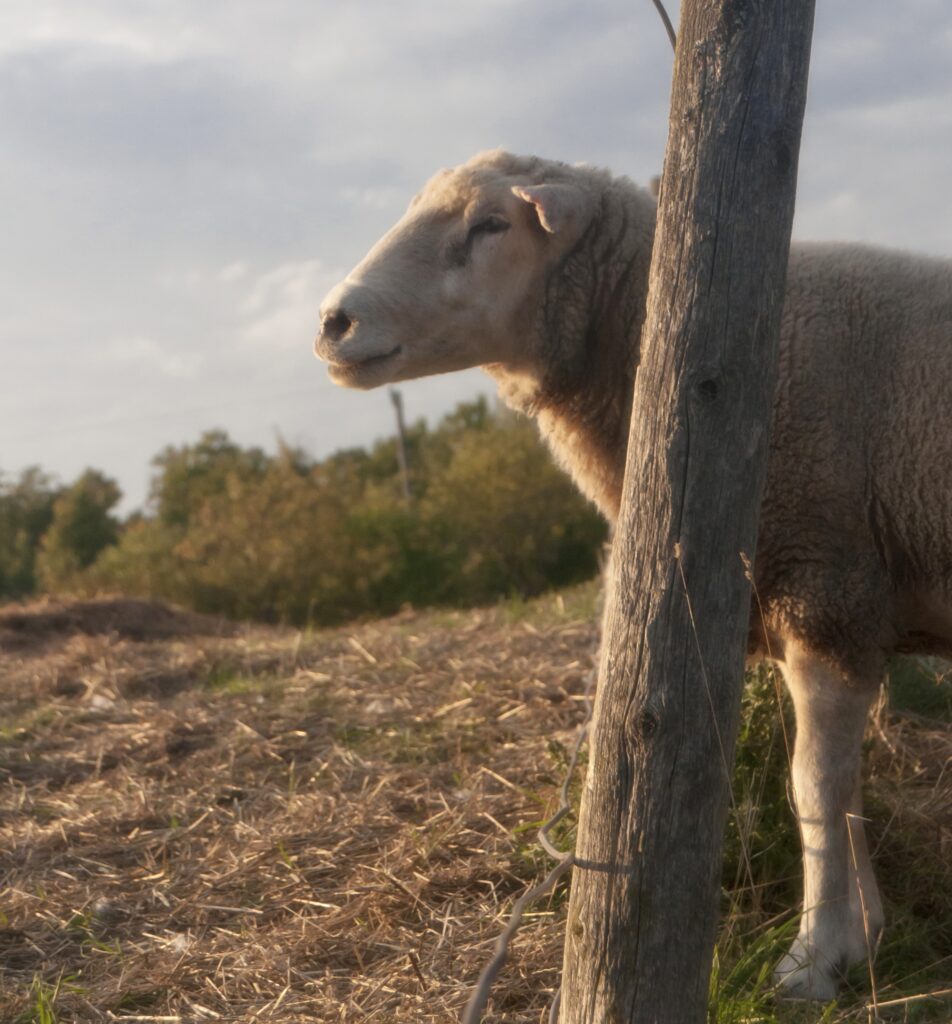
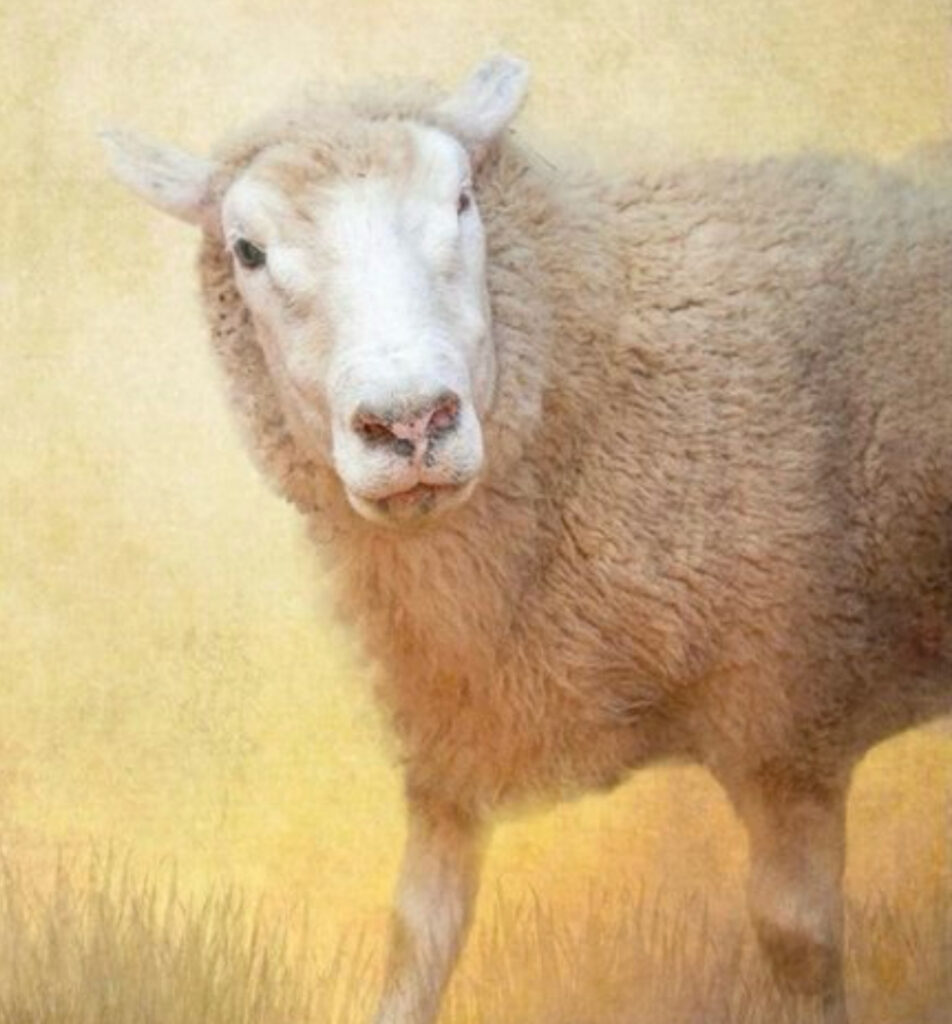
When Noble was just a lamb, he was found standing in a frozen water bucket. The cold stole half of his left ear and the sight in his left eye. Born on a sheep farm, he was considered a special-needs lamb. The farmers loved him and did everything they could, but as the years passed, his care became more than they could manage. In 2019, at seven years old, Noble came to Promised Land Animal Sanctuary in Campbellford, Ontario.
He arrived with one good eye. Today, he is completely blind. Yet somehow, that has never stopped him from teaching us how to see.
Blindness didn’t take away his love of life. Every morning, Noble confidently wanders out to graze, memorizing the land beneath his feet and trusting the voices of the people who love him. When he becomes disoriented, a gentle hand or familiar voice is all he needs to find his way again.
Age has brought arthritis. Scoliosis has curved his spine. Daily medication keeps him comfortable. And if you happen to find him standing quietly in the pasture, you’ll quickly discover that his greatest weakness is back scratches. He just melts under a good massage.
His second greatest weakness? Food. Noble has never met a piece of fruit, vegetable or the occasional bagel he didn’t enthusiastically approve of.
At 14 years old, every day with him feels like a gift. People often ask us how we know when it’s time to say goodbye to an animal. The answer is simple. We don’t count the years. We count the joys. And Noble still has plenty of that.
So today, we’ll scratch his back, hand him a piece of apple, tell him he’s the handsomest old sheep in Ontario and let him remind us that a life doesn’t have to be perfect to be beautiful.
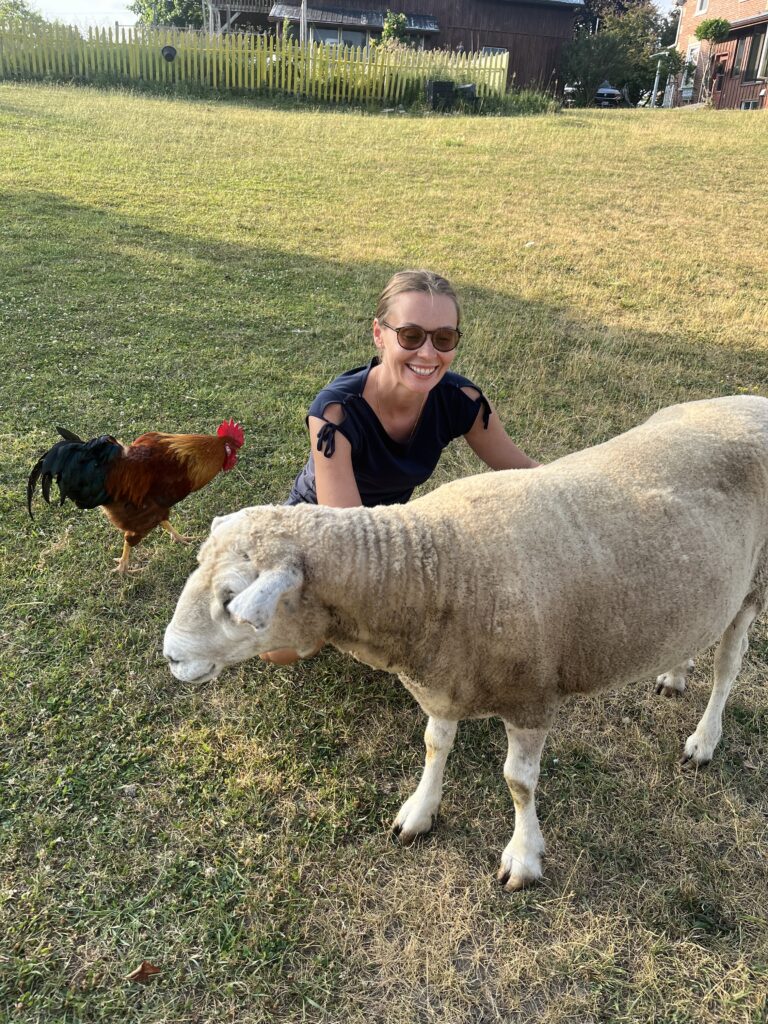
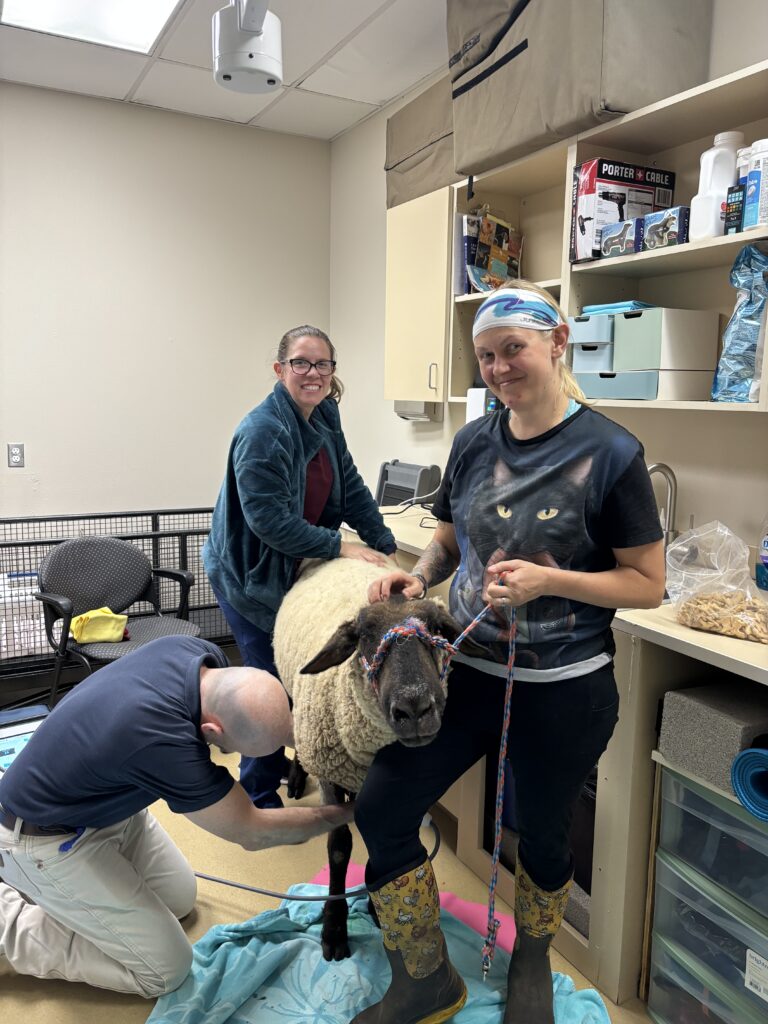
Beau the 9 year old sheep came to us earlier this year from another sanctuary that had to close down due to one of their founders passing away unexpectedly. Beau suffers from elbow arthritis, a common ailment seen in older sheep if they make it to old age. Not only is Beau on arthritis meds, he underwent shockwave therapy this year which dramatically helped his arthritis. (Beau was originally an FFA rescue).
Beau receives shockwave therapy.Beau and Lindsey share a kiss. Beau makes a silly face.
Meet Ruth
Ruth arrived at Barn Sanctuary in October 2017 alongside Rose, as one of Barn’s first sheep rescues. She survived a horrific ordeal: the truck towing her trailer led police on a high-speed chase, the trailer crashed, and several of the goats and sheep inside died from their injuries. The driver was charged with over 80 offenses, including animal cruelty. Ruth was one of the survivors. Understandably, Ruth was deeply wary of humans after the crash, and it took months before she felt safe with people. Today she’s still selective about who she trusts, but she’s come far enough to accept affection from familiar staff and volunteers. She loves to take long pleasant naps in the sun, and will scratch her bum on any gate, tree, or barn door in reach.
What makes her story so powerful: Ruth’s fear wasn’t irrational, it was earned. That she’s since learned to trust anyone again is a testament to what patient, consistent care can rebuild. Sanctuary isn’t just food and shelter; it’s the time and safety an animal needs to heal at their own pace. Ruth didn’t just survive that day, she got the chance to become herself again.
Ruth’s story and photo come courtesy of Danielle Gotham of Barn Sanctuary
Ruth
THE OPEN SANCTUARY PROJECT’S ELDER CARE RESOURCES:
This resource was authored by a guest contributor to help support the animal sanctuary and rescue community. Specific acknowledgments can be found at the top of the resource!
Please note that this resource was produced by humans without Generative AI Tools unless specifically noted within the resource.See our AI Tool Policy here.