



Episode Notes
Senior Advisor Tara and NonprofitA non-governmental organization whose primary purpose is something other than selling goods or services. Specialist Julia discuss senior sanctuary residents. They talk about how aspects of senior care may impact sanctuary capacity, but also create opportunities for animal advocates to expand their narratives!
—
This Episode’s Referenced Open Sanctuary Project Resources:
- The Golden Years: How An Aging Resident Population Can Impact Your Sanctuary’s Capacity And Create Opportunities To Expand Your Narrative | The Open Sanctuary Project
- Celebrating Sanctuary Seniors: A Gallery Of Stories | The Open Sanctuary Project
Observation: An Important Caregiving Tool | The Open Sanctuary Project - Observing And Recording Resident Behavior | The Open Sanctuary Project
- Resident Ongoing Treatment & Observation Record | The Open Sanctuary Project
- The Importance of Veterinary Care at Your Animal Sanctuary | The Open Sanctuary Project
- Building And Maintaining A Good Relationship Between Your Sanctuary And Veterinarians | The Open Sanctuary Project
- Fostering Positive Relationships Between Animal Sanctuaries | The Open Sanctuary Project
- Determining Your Animal Sanctuary’s Capacity For Responsible Care | The Open Sanctuary Project
- An Introduction To Fostering Agency In Farmed Animals At Your Animal Sanctuary | The Open Sanctuary Project
- The Microsanctuary Resource Center
Episode Transcript (Auto-Generated)
Tara Hess: Welcome to another episode of the Open Sanctuary Podcast. I’m Tara and today I’m joined by my friend and colleague Julia for a deep dive into one of the most rewarding but also sometimes challenging aspects of sanctuary work: caring for residents in their golden years. Julia, before we get into some of the challenges and opportunities associated with senior care, can you talk a little bit about the significance of being able to care for residents in their twilight years? I love the way you address this in the resource.
Julia Magnus: Of course. First, I want to acknowledge that this resource was inspired by part of a conversation that I had with Alistair Van Cleek from the Micro Sanctuary Resource Center, which you can find as a podcast as well. What I came out of that conversation with was that I truly believe that providing lifelong care is perhaps the most significant accomplishment of a farmed animal sanctuaryAn animal sanctuary that primarily cares for rescued animals that were farmed by humans.. So, thank you, Alistair, for that. And thanks to all the sanctuaries that contributed beautiful photos and stories of their senior residents for our celebration of seniors this summer. But a big takeaway for me was that in the animal industrial agricultural system, most of these animals are slaughtered as babies and never get to live even close to their natural lifespan. So seeing a senior farmed animalA species or specific breed of animal that is raised by humans for the use of their bodies or what comes from their bodies. thrive is actually a major monument to collective liberationCollective liberation recognizes that all systems of oppression are intertwined and acknowledges that working in solidarity with one another to undo all of these oppressive systems is the only way we can achieve a world where everyone, human and nonhuman, is truly free from exploitation and harm. from these oppressive systems.
Tara Hess: I love that perspective because it is a triumph and of course it is a privilege to care for these individuals throughout the course of their lives, but it is not without its challenges. You shared a quote from Alistair where they said that the baby to senior pipeline is shorter than you think. It does seem important for folks to realize that the adorable little baby you just rescued is going to grow up and hit their senior years possibly much faster than you expected.
Julia Magnus: Exactly. And while we often focus on the intensive care that animals need right after rescue, we cannot forget that as they age, their needs are going to shift and increase significantly. So today, we will walk through those changes: the medical, the emotional on the side of care staff, the physical, and the financial. And Tara, you are as familiar, if not more so, with these changes as I am. So if you have stories to chime in, have at it.
Tara Hess: Will do. For a second, it sounded like you were calling me old. But yes, will do. Let’s start with the day-to-day. We have talked often on here quite a bit about the critical role of observation in caregiving, but you explain in the resource that this becomes even more important for senior residents.
Julia Magnus: Right. Much like newborns, health challenges in elderly residents have much heavier implications in older animals and illness can become serious very, very quickly. So, it is really important for caregivers to recognize and document even the slightest deviation from normal behavior.
Tara Hess: Yeah, that is so true. But of course, not every change is cause for concern. There was a really touching story in the resource about a hen named Noo-Noo that illustrated this perfectly for me. The story is that for years, Noo-Noo wanted nothing to do with her caregiverSomeone who provides daily care, specifically for animal residents at an animal sanctuary, shelter, or rescue. Tracy, but as she aged, a simple thigh scratch turned her into one of the most affectionate chickens Tracy had ever known. But it took years for that part of her personality to come out and bloom. It does show that when animals get to experience the fullness of life, they continue to change and grow just like we do. But to keep them healthy enough to reach that stage and thrive in their old age, you do absolutely need specialized veterinary care, which is a really big part of that lifelong commitment and we both know that it is not always easy to find when it comes to farmed animal species.
Julia Magnus: Right. Many veterinarians do not get the chance to see farmed animalsA species or specific breed of animal that is raised by humans for the use of their bodies or what comes from their bodies. in a compassionate care setting, and some veterinarians may have never had the opportunity to care for elderly farmed animals, which can sometimes make things challenging. You also need to factor in that older residents often need more frequent wellness checks or follow-up appointments to monitor chronic conditions. They might also require more frequent diagnostics like blood work or specialized services like dental care. All of this can contribute to significantly higher veterinary bills.
Tara Hess: Yeah. And you raised a great point about veterinarians not always having experience with senior care and beyond just that there is a dearth of veterinary literature on the subject for farmed animal species. In the resource, you suggest collaborating with other sanctuaries who have cared for elderly residents. One sanctuary might find that they have a colleague across the country whose vet has dealt with a similar senior issue that maybe they are facing or one of their residents is facing. It is a great opportunity to foster positive relationships and share community knowledge. Sometimes you might even be able to arrange for your veterinarian to consult with another sanctuary’s veterinarian, assuming they both agree to it, of course, which can be a great way to expand what the veterinary world knows about farmed animals and the diseases that affect them, which ultimately can better the lives of other farmed animals. This is something we talk about a bit in our resource on building and maintaining a good relationship with your veterinarian, which we will link to in the show notes. Julia, you talked about the fact that senior residents may require more frequent or prolonged treatments. Can you talk a bit more about that?
Julia Magnus: Sure. Your veterinarian will help establish treatment plans for your residents as needed, which may and likely will require that you administer medications to them. Many seniors face chronic progressive conditions like osteoarthritis, meaning that they might be on meds for the rest of their lives. So, administering meds daily or even multiple times a day can increase your workload and the time that you need to dedicate to senior residents while you are still ensuring that you are meeting the needs of everybody else.
Tara Hess: Right. And then to circle back to veterinary care, certain prolonged treatments will mean you should do more frequent blood work to monitor for adverse effects. So it all sort of contributes to the other if that makes sense. When administering medications, you point out that we have to be careful about stress here. Now this is always important, but seniors may operate at a gentler pace and might be more sensitive to routine disruptions. So it is important to keep this in mind when determining the logistics of medication administration and other treatments. And no matter how old a resident is, finding ways to keep it positive is key. Hiding meds in a species-appropriate tasty treat can actually become a moment of bonding and enrichment between the caregiver and the resident. And because these individuals may be on meds for prolonged periods of time, keeping things positive can have a huge impact because this could be a part of the duration of their life. I can actually think of quite a few older individuals I cared for who, for most of their life, they were the kind of person who wanted to just do their own thing and not really be around humans. They had their non-human friends, but in terms of having anything to do with me or the other caregivers, they were not interested. As they got older, if they needed certain medications to keep them comfortable, once they got used to it, it became this really positive bonding moment where someone who wanted to usually stay away from you might be like, “Oh, you’re the person who brings me that molasses syringe. I’m totally interested.” If you look at it beyond the workload, it can be such a positive experience and alter your relationship a little bit because you have this moment of daily connection.
Julia Magnus: It is definitely true and it can take a while to figure out. I have a cockatoo who is on I think seven meds daily and she absolutely refuses to take it in any kind of conventional way. So, we had to ultimately figure out how to break a piece of a Triscuit and then place some Cheerios on top and then soak the meds into those. She is absolutely delighted now when she gets her meds and she feels very special, but it took a minute. The bonding can be very beautiful and great and it is very awesome when you figure those things out, but it also can lead to another kind of heavy topic that we address in the resource, which is the emotional capacity of caregivers. When you have worked with a resident for years and years and their body begins to fail, it is pretty common for caregivers to experience anticipatory grief which can be defined by many, many symptoms, but they can include things like anxiety, stress, exhaustion, etc.
Tara Hess: Yeah. And depending on the circumstances that can be compounded if you rescued a group of individuals who were all about the same age when they were rescued because now they might all hit that stage of their life where they are requiring end-of-life care at the same time. And so that can lead to serious issues with compassion fatigueA form of Secondary Traumatic Stress Disorder that can affect anyone serving individuals who have experienced or are currently experiencing trauma. and burnoutA physical and emotion reaction to prolonged, unmanaged workplace stress. because it can just be a lot. It is a lot with one and then it just gets multiplied if you are dealing with a little group of people.
Julia Magnus: Yeah, it is a super lot and that is why we think it is really important that sanctuaries support their staff’s mental health. Validating these emotions and allowing folks to talk through them, I think we all think is a very critical component of sanctuary sustainability. But as much as it can be very difficult at times to care for residents who are nearing the end of their lives, I think it is also important that we try to focus on the beauty of it. One of the stories that was shared with us was this story of Noble the Sheep. He is blind. He has arthritis and scoliosis. But his caregivers at Promised Land Animal Sanctuary said they focus on his joys and the gift of every day that they get to spend with him.
Tara Hess: Yeah, that one got me. I for sure cried when I read that one because it was so… all the stories were beautiful. All the photos and all the stories were beautiful. I think they are all a great reminder for us as caregivers to continue to look for the beauty and joy in all of it because it can be easy to get bogged down sometimes by the other parts. But let’s shift gears a little bit and talk about living spaces. As older residents get stiff or arthritic, you cannot necessarily keep everything in their living spaceThe indoor or outdoor area where an animal resident lives, eats, and rests. the same. You might need to adjust the flooring or increase the quantity of bedding. It might also affect the way they are fed if you need to make their food more accessible. And that is just the beginning of the list.
Julia Magnus: Yeah. And on top of that, social groups might need to change too. Older residents might lose their patience for younger exuberant companions. Some might be completely the opposite. Let’s keep in mind that everyone is an individual. But sometimes some might even push themselves too hard just to keep up with their herd or their flock. That can be dangerous depending on what health conditions they are dealing with. So that is a whole thing too.
Tara Hess: Yeah, that is such a great point. When I was first thinking about this conversation and thinking about this part, it is like yes, that just hypothetically is challenging. You have a group that worked and now you have to do something to make it continue to work. But I think one thing people may not think about unless they have been there before is if you need to divide up groups. It is not always super straightforward because you might be like, “Oh, Harold cannot keep up.” And so Harold needs to be over here where the terrain is a little easier for him. But Harold’s best friend, Zach, can keep up and sort of likes going all over the place, but Harold and Zach cannot be separated. So, it can be really complicated figuring these things out. And I know in your interview with Alistair, they shared a striking example of Triangle Chicken Advocates where they had been caring for a flock of 45 roosters. Everything was working out, but as individuals aged, they had to make some changes. Ultimately the group needed to be broken down into smaller groups or pairs in order to keep everyone happy and safe. This meant the sanctuary had to build out multiple new indoor and outdoor spaces where there used to be just one large one. Depending on your infrastructure, this may not be an easy feat, especially if you do not anticipate ahead of time that you might need to do that down the road.
Julia Magnus: Yeah. And costs are involved. So it is always good to plan far ahead and think about leaving space. We suggest, for example, leaving quarantineThe policy or space in which an individual is separately housed away from others as a preventative measure to protect other residents from potentially contagious health conditions, such as in the case of new residents or residents who may have been exposed to certain diseases. space open versus just filling every spot in your sanctuary.
Tara Hess: Exactly. And thinking ahead about sometimes how these larger spaces could maybe be broken down into smaller spaces without building a new structure. Is there a way if you have pens or something like that that this larger space can be open for now and it’s one group but there are already mechanisms in place that doors, gates, or whatever can be closed? Maybe you need to adjust some fencing, but it is flexible. I guess creating these flexible living arrangements is a good idea to consider.
Julia Magnus: Totally. And sometimes to further that point, sometimes the best new space might actually be the caregiver’s home. We are seeing more and more house animals in the sanctuary world and in the resource and its companion resource, which is just a gallery of stories that we received when we put out a call for them. There are a lot of these stories. It may not always be appropriate for everyone, but it can be a very unique way to provide the level of observation and comfort that senior residents require.
Tara Hess: Yeah, absolutely. One thing we have not talked about yet is how a resident’s diet might change as they age.
Julia Magnus: Yeah. While some residents may continue to do well on their current diet, others might require a change to what they are fed or supplementation. Senior diets often require special preparation which can take more time.
Tara Hess: Yeah. I feel like I know this super well. Now granted I was caring for a large number of residents, but I would spend on average an hour each in the sheep and goat barns just handing out medications, which was mostly pain medications for individuals with arthritis or other pain issues, and also doing supplemental feedings. I feel like especially if you look at ruminants—this is not to say that other types of animals do not need supplemental food—but if you have somebody who is eating just hay and supplemental minerals and then they get dental issues, you have got to supplement them with something else, but no one else in their group can necessarily get it. It can be super complicated, time-consuming, and physically demanding. If you think of a cowWhile "cow" can be defined to refer exclusively to female cattle, at The Open Sanctuary Project we refer to domesticated cattle of all ages and sexes as "cows.", they are not going to eat like a little dish of pellets. That is like giving me a cracker and being like, “I’ve supplemented your diet.” We are talking like a five-gallon bucket of grains soaked in water just to add more heft to it. It is so heavy to carry. So I think these things that are time-consuming and physically demanding—if you do not, and by you I mean the sanctuary leadership, if you do not account for that and make sure people have time to do these things, it can make it really stressful. And then I think people are going to lose out on seeing the opportunity in it. If you have to spend a whole hour in a certain resident’s living space doing things, there is inactive time while people are eating; it is such a great time to either give some scratches, do close observation, or do some bonding. So, I think if you can account for the time, which of course we are going to talk about more with capacity and things, you can turn these things that might be sort of hard or challenging or an adjustment and they can really be such beautiful opportunities to provide even better care because you are observing the individuals more closely. And so that was a whole thing about time, but it is not just time that we need to consider. All of these things we talked about—the increased veterinary assessments, medications, specialized diets, if you need to make alterations to infrastructure or build new infrastructure—that all costs money.
Julia Magnus: Exactly. And to help folks budget for resident care, we do have a lifetime cost of care estimation calculator that folks can check out. We will drop it in the show notes. It is not an exact science to be very clear, but it can help plan for the long haul. So yeah, again that will be in the show notes along with other resources that we referenced earlier, right?
Tara Hess: Yep. So this leads to one of the hardest decisions a sanctuary may have to make and that’s the question of intake versus capacity. As your population ages and requires more resources, like we have been talking about—time, money, etc.—your capacity for new rescues shrinks.
Julia Magnus: Yeah. And it is absolutely agonizing to say no to a new rescue. I think all of us who have done this work for any period of time have had to do it. It really stinks. But prioritizing the commitment that you made to your existing residents is absolutely paramount. That might mean that a sanctuary has to close entirely to new intakes for a period of time to remain sustainable. And that weirdly, or maybe not weirdly to people who are familiar with this problem, it does create a fundraising dilemma. Donors really love to donate when they see cute young rescues and unfortunately it is way easier to raise money for a new arrival than for the ongoing lifelong care of a senior.
Julia Magnus: Right. But you point out that we have the opportunity to flip the script.
Julia Magnus: I think we do. Yes. And instead of just focusing on the rescue moment, we can use senior narratives to teach people about the natural lives of these animals versus the expectations that animal agricultureThe human production and use of animals in order to produce animal products, typically for profit. has wrongly ingrained in us. By sharing stories like Miss Macowski, who was a hen resident at Chicken Run Rescue who lived to be, I believe, close to 14 and stayed by her partner Rose’s side until the very end of Rose’s life. It was a very special bond. We can show that these animals are unique individuals with deep social bonds. And I am very hopeful that uplifting this kind of narrative, sharing our senior gallery with folks, and sharing all these stories can help uplift this kind of narrative, which I really believe can change the wider consciousness about animal rescueAn organization that helps secure animals from dangerous or unacceptable situations. As organizations, rescues may or may not have dedicated permanent infrastructure for housing animals. and hopefully highlight how very important it is to support lifelong compassionate care, not just the rescue.
Tara Hess: Yeah. I mean, sharing senior stories can be so powerful. I really encourage folks to check out the companion resource to the senior care resource that shares even more stories because they are just beautiful. But we should, speaking of senior stories, just add a note that for folks who facilitate visits between their residents and the public, it is important to keep in mind that we have to respect their agency. This of course applies to residents of all ages. But you may find that as a resident ages, someone who previously enjoyed visits from new humans feels differently. Of course, the inverse could also be true. You could have someone who did not prefer to be around visitors and now does. But it is just important to keep in mind that just like us, our residents are always changing, and we have to follow their lead in that regard. So, if you find that someone—maybe their mood or their needs—just changes daily, you really have to respect that. And it is also important to consider that if you have somebody with mobility or stamina issues, which of course is not only an issue in senior residents but certainly can be a common issue in senior residents, that can affect their ability to demonstrate what they want. Someone who might want to move away from humans approaching them may not be able to do so. And so just really paying close attention to your residents, what they need, how they behave, and stepping in on their behalf when needed to be like, “No, we’re not even going to approach Charlie. We’re going to let Charlie just do their thing, and if they want to come over, they can.” Or maybe you know Charlie and you see that he is giving you the eyes like, “I don’t want to get up but I do want you to come here and petAn animal who spends regular time with humans in their home and life for companionship or human pleasure. Typically a small subset of animal species are considered to be pets by the general public. me.” Just be their advocate, I guess, is what I want to say as that very, very long ramble.
Julia Magnus: Absolutely. And I do truly hope that folks take the opportunity not only to check out the written resource that we have done on these general considerations for senior care but again, as you said, the gallery resource which seven different organizations contributed to, with multiple stories of multiple residents. If you have stories you’d like to share with us as well, we would love to include them over the next couple weeks. We will be sharing some of these stories on socials and probably throughout the year as well.
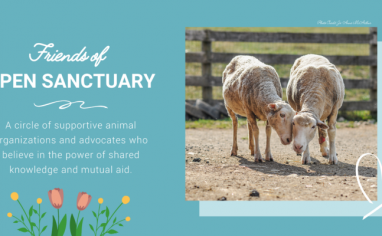
Tara Hess: So, thanks to everyone. Thanks to everyone who kicked in there and thank you to you for writing this resource and thanks to Alistair who contributed inspiration and content and, like Julia, to everyone who contributed the amazing stories. Ultimately, while caring for seniors can be a challenge, it is also a beautiful opportunity. These residents prove that everyone deserves to live their entire life with dignity and respect. To all the caregivers doing this challenging, beautiful work, thank you. And to our listeners who want to learn more about any of the topics we’ve discussed, be sure to check out the resource linked in our show notes. If you enjoyed this conversation, please consider becoming a friend of the Open Sanctuary Project. As a nonprofit, we rely on the support of our community to keep our missionThe stated goals and activities of an organization. An animal sanctuary’s mission is commonly focused on objectives such as animal rescue and public advocacy. alive. And our friends program is a monthly giving program designed specifically for those who use and champion our resources. With a donation of $10 a month or more, you can help sustain the important work we do. Your committed monthly support allows us to stay independent and provide unbiased, research-backed information. It also helps us stay current, funding the constant updating of our over 800 resources as new knowledge or practices emerge. And most importantly, it helps us stay free. Your support ensures that a startup sanctuary with limited funds has the same access to critical knowledge as the world’s largest organizations. Thank you for listening. We will catch you on our next episode.