



Introduction
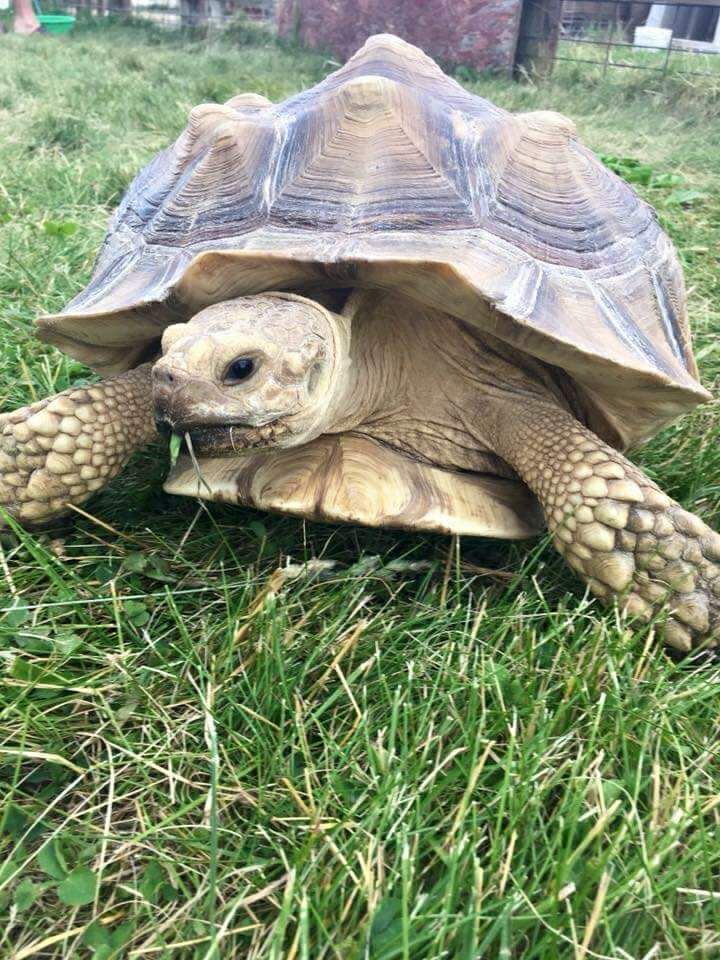
When thinking about animals in need of sanctuary, tortoises may not be the first animal that come to mind. However, the unfortunate reality is that for a myriad of reasons, tortoises too are frequently left without proper homes or care, and it can be particularly challenging to find placement for sulcata tortoises (also known as African spurred tortoises) in particular.
While sulcatas are unfortunately endangered in the wild, due in no small part to being taken from their habitat for the “exotic petAn animal who spends regular time with humans in their home and life for companionship or human pleasure. Typically a small subset of animal species are considered to be pets by the general public. trade,” they are also commonly bred in captivity and are highly available tortoises for purchase. Due to their widespread availability and low prices, they are often impulse purchased, as many folks may see sulcata hatchlings and think of them as small, manageable animals.
However, impulse buyers of these tortoises are frequently not equipped to care for them, especially long term. As the third largest species of tortoise, sulcatas can on average reach 80-110 pounds (36 – 45 kgs). They can outlive humans and require complex and specialized care. In particular, due to their size, long-term accommodations for them can be difficult to create and maintain. As a result, many reptile and other rescues have received surrenderThe act of transferring guardianship of an animal to a person or organization, especially via legal contract. requests for sulcatas, and find themselves under increasing pressure to find enough suitable refuges for these large tortoises.
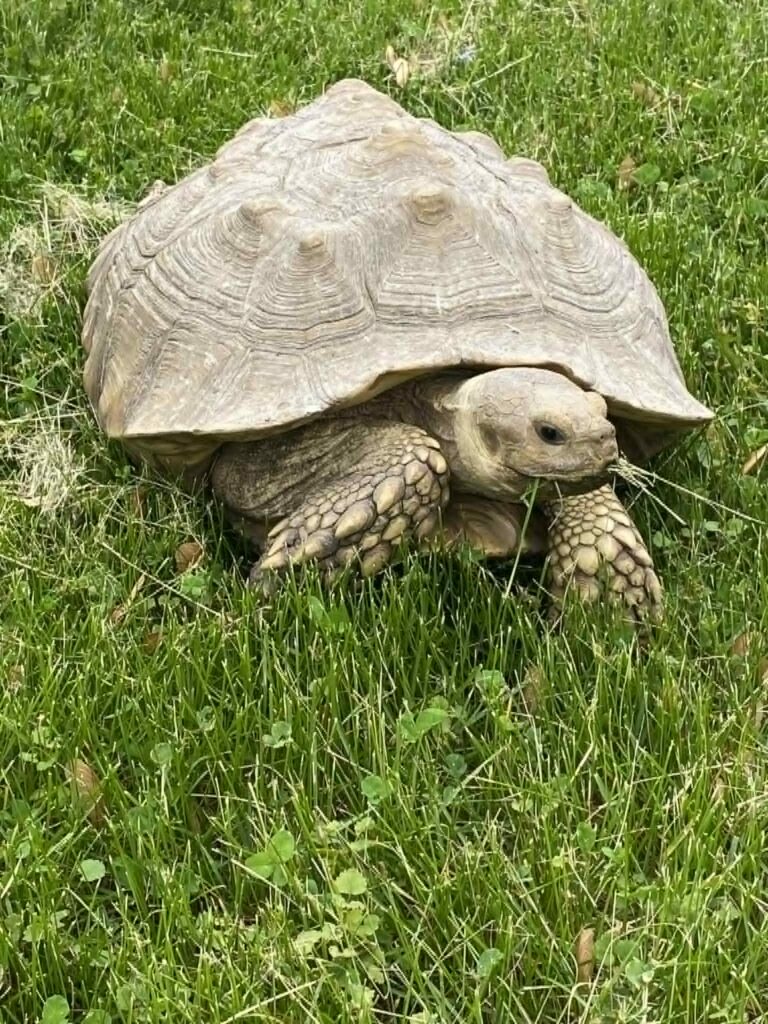
Unfortunately, because Sulcatas can survive a long time with insufficient care and have endured inappropriate folklore care practices that are pervasive in reptile care generally, there are many misconceptions about the care that they require. There is a misconception that Sulcatas are “hardy” or easy to care for, and therefore folks subject Sulcatas to conditions that are inappropriate and even unacceptable in compassionate care contexts. Like any other animal, these tortoises deserve to live happy, healthy lives. The most important part of setting up your sulcata residents to thrive is understanding their background and natural history to provide them the best care possible.
General Characteristics
Lifespan estimates for sulcatas in captivity vary, and will of course depend on the quality of care that they receive. While they typically live for 80-100 years, it is not unheard of for sulcatas to live upwards of 150 years. This is an important consideration when taking in sulcata residents, as you will need to consider their lifespan when it comes to estimating lifelong costs of care, as well as the fact that these residents can, and may likely, outlive you. Should you choose to take in a Sulcata resident, having a plan in place for their long term care will be critical.
Sulcatas are popularly known for their large size. Among the largest terrestrial turtle species in the world, they can reach lengths of between 24 and 30 inches (60 to 75 cm) and can exceed 100 pounds (45 kgs) in weight. Depending on their care and environment, they can also reach large sizes quite quickly. Prospective caregivers of sulcatas should be aware of their potential to reach these sizes and weights, and the associated strength that a tortoise of this size has, as this can have impacts on handling, transport, and living spaceThe indoor or outdoor area where an animal resident lives, eats, and rests. size and structure.
Natural Habitat and Habits
Sulcatas are native to much of Africa south of the Sahara in a region of semiarid grasslands, savannahs, and thorn shrublands. Therefore they need a warm, dry environment. They are often found on hills, stable dunes, and flat areas with shrubs and high grass. Their natural environment has dry, hot seasons in which there is limited access to water. Sulcatas are very active in the wet season. Despite the natural environment being largely dry and arid, there are also microclimates created by vegetation and landscape. These areas found under bushes, shrubs, and trees will have higher levels of humidity, giving sulcatas the opportunity to access the environmental choices they need in order to thrive.
During the dry season, to get the most moisture available, their skin is resistant to fluid loss, but when exposed to moisture, it can become highly permeable. Sulcatas will dig burrows, up to 3 meters in depth, to provide shade in the hottest part of summer or to reach areas with higher moisture levels. They sometimes aestivate (enter a period of hot or dry season dormancy) during these hot periods, using the burrow as a shelter.
As ectotherms (cold blooded animals), sulcatas rely on external heat sources to regulate their body temperature. This is known as thermoregulation. They will seek shade to cool down and bask in the sun to warm up. Sulcatas prefer to have a cluster of sturdy, low-growing plants they can crowd amongst while they bask. Unlike other species of tortoises, they do not hibernate and require sunlight and heat year-round.
Sulcatas will most easily thrive in an area that mimics their natural habitat. While sulcatas can be cared for in regions that experience low temperatures and winters, they will likely require being brought indoors during colder temperatures and given supplemental lighting and heat. If you live in a cooler climate, consulting with a knowledgeable reptile veterinarian will be critical to determining what you will need to provide your sulcata resident during those times.
Social Behaviors
Sulcatas are typically passive and docile towards humans. They rarely show territorial behavior and generally are not confrontationalBehaviors such as chasing, cornering, biting, kicking, problematic mounting, or otherwise engaging in consistent behavior that may cause mental or physical discomfort or injury to another individual, or using these behaviors to block an individual's access to resources such as food, water, shade, shelter, or other residents.. Despite their calm attitude, being handled often will result in stress, which can lead to health issues. When stressed, sulcatas may urinate or defecate, hide in their shell, and sometimes hiss. If you have to pick up a sulcata resident, the best practice is to place your hand underneath their shell and lift them up slowly, to avoid panicking them. Support the body and legs as you lift and keep a firm but gentle grip. Tortoises can feel touch to their shells, and as they become accustomed to you, many will appreciate you giving them a gentle shell pet or neck scratch. They can also learn to be hand-fed, which can help you build a trusting bond.
Sulcatas are not a social species and can thrive alone without any negative effects on their mental health. However, they can be kept together in pairs or small groups in very large spaces such as paddocks/pastures. It is not recommended to keep sulcatas with other species of tortoise from a biosecurityMerck Veterinary Manual defines biosecurity as ”the implementation of measures that reduce the risk of the introduction and spread of disease agents [pathogens].” perspective, as there is a chance of passing on disease. Some tortoises are particularly susceptible to catching diseases from other species, as they have no resistance to pathogens they have never previously encountered.If you plan to keep multiple sulcatas together, it is important to know their sex. It is best to avoid housing multiple males together as they can be confrontational towards one another. You may also need to keep females and males separately. Mating behaviors can cause either or both tortoises to lose balance and tip over, which can present a significant risk of overheating and death if they cannot right themselves. Further, after mating, females will dig nests and lay a clutchGroup of eggs laid during one nesting period of 15-30 eggs in the ground. Preventing these eggs from hatching by collecting them is not as easy as it can be with bird residents, as the nests can be difficult to find, and the eggs are buried.
Knowing the sexes of your sulcata residents is imperative to avoid unintentional reproduction. As there are already many animals in need of sanctuary, it is important you do not allow residents to breed purposefully or accidentally.
Basic Care Considerations
While this resource is an introduction to sulcatas, and not a comprehensive care guide, because of the pervasive misconceptions surrounding reptile care (and sulcatas in particular) we want to provide some additional fundamentals on critical needs that sulcata tortoises must have met in order to thrive. Before you consider taking on a sulcata resident, this is the most basic information that you need to consider in determining whether or not you can provide them with compassionate care.
Temperature Control
In captivity, a hot, dry, and sunny environment must be provided year-round. While they can tolerate some lower temperatures, they cannot be kept outdoors in chill, damp weather. Therefore, they should have access to an enclosed shelter area with safe and appropriate heating and lighting in such conditions, as well as if the night temperature drops below 50 degrees Fahrenheit (10 degrees Celsius). Additionally, as mentioned above, if the resident will be living in a temperate climate, they will need special accommodations like an insulated shelter for cooler days and nights, and likely fully indoor living spaces for colder months.
Living Spaces
Despite their slow speed, sulcatas are capable of traveling great distances. A general guideline for minimum living space requirements for a single tortoise is based on the expected adult shell length. Length of enclosure should be 8 times the shell length, and width of enclosure should be 4 times the shell length. This is typically equivalent to 20’Lx10’W (6.1mLx3mW). However, for these residents, bigger is better, and for a large adult sulcata or a small group, a half to a full acre (4047 square meters) wouldn’t be unreasonable to make sure your residents have sufficient space to explore and exercise.
Outdoor living spaces should be in a location that is not too wet, with well draining, loose soil, and access to both shade and sunshine. The barrier walls should be sunk partially into the soil to prevent burrowing escapes. All barriers must be opaque and secure. Unsurprisingly, given their size, sulcatas are very strong tortoises and will walk through any barrier they can see a way out of.
Surprisingly, sulcatas can also be climbers. Therefore, care must be taken to ensure they are not able to access anything to climb which is steep enough that they risk toppling over. Flipping onto their backs and being unable to right themselves can be life-threatening. On the other hand, barriers must be tall enough to prevent a sulcata from climbing over it. Surprisingly frequently, sulcatas have escaped enclosures that are not sufficiently secure, and can travel for far distances before their caregivers have even realized they are gone. Obviously, should they escape, sulcatas face many life threatening risks including being hit by traffic, being taken by other humans, or even predation!
In spite of their spurred legs and thick shells, sulcatas are not immune to predation. Smaller sulcatas can be lifted and carried away by predators (including aerial predators) and larger individuals can be hurt or even killed by a larger predator. Depending on where you site their living space and on your local predator population, you may want to cover the top of the pen to keep out potential predators. Additionally, if predation is a risk you will want to secure sulcata residents in a predator proof shelter at night.
Diet
Sulcatas are herbivorous grazers, eating a wide variety of plants and grasses. Their diet needs to be high in fiber and calcium and low in protein. Variety is key to a healthy diet. While some vegetables can be offered as occasional treats, fruit should never be offered. As adults, they should be given a quantity of roughage roughly the same size as their shell. Food should be offered on a plate or tray to prevent accidental ingestion of substrate. With that said, sulcatas will graze on whatever is available in their living space, and so it is important to be sure that all flowers, weeds and grasses that they can access are free of pesticides and herbicides, and if you pick forage for them, ensure that you are not picking plants from areas that are routinely subjected to vehicle exhaust or any chemical spraying.
These tortoises have a high demand for calcium and vitamin D3 and should be given supplements at least two to three times a week. If you live in a less sunny climate, or your sulcata resident lives largely indoors, consult with a qualified reptile veterinarian to see if additional supplementation is recommended.
Sulcatas should have access to clean drinking water at all times. A large flower pot saucer sunk into the substrate for easy access can make a good water dish. However, the water should be no deeper than the resident’s knees. As with other residents, you will need to replace water daily as sulcatas often soil their water quickly. You should use a safe disinfectant such as F10SC to give it a good cleaning.
Health
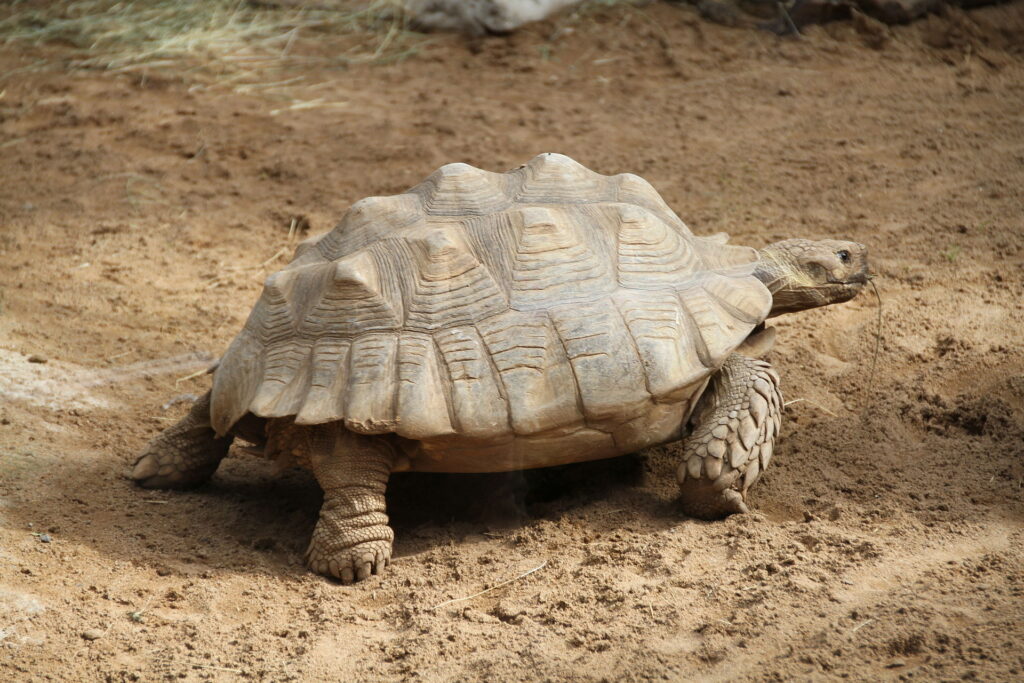
If you rescue a sulcata, it is not unlikely that they may have shell deformities, most commonly a pyramiding shell. Pyramiding is an abnormal growth pattern that causes the shell scutes (the overlapping, tile-like scales which make up a turtle’s shell) to rise vertically into pyramid shapes rather than growing flat. This is often due to improper diet, lack of humidity, nutritional deficiency, sedentary lifestyle, lack of sunlight, and/or disease of thyroid or parathyroid glands. This condition often occurs in the first 2-4 years of life and is not reversible. In many, less severe cases, they can still live happy, healthy lives. A visit to the veterinarian is advised.
As with any sanctuary resident, it is important to find a veterinarian experienced and knowledgeable about the resident’s species prior to taking on that species. For reptiles, this can be difficult as many veterinarians are not properly equipped with up-to-date reptile care and medical practices. The best starting place to find an appropriate veterinarian is the Association of Reptile and Amphibian Veterinarians. Their “Find a Vet” page can help you find veterinarians that are accredited members of the ARAV near you. Regular vet visits are important as tortoises are good at hiding signs of illness.
Conclusion
Having a good understanding of sulcata’s natural habitat, behavior, and characteristics can help you decide if you can provide the compassionate care necessary for a sulcata resident to thrive at your sanctuary. Caring for these tortoises is often a lifelong commitment that requires planning, resources, and a good understanding of their natural history and needs. Sulcata residents’ needs may vary based on the climate, as in cooler weather they will need additional shelter with proper heating and lighting. Sanctuaries and caregivers who take in sulcatas play an essential role in providing these resilient animals with the safe, enriching environments they deserve. By prioritizing proper housing, nutrition, veterinary care, and compassionate care practices, caregivers can help ensure sulcatas live healthy and fulfilling lives for decades to come. Most importantly, increased education and awareness about the realities of sulcata care can help prevent future animals from ending up in need of sanctuary.
SOURCES:
Estimating Species Lifetime Care Costs At Your Animal Sanctuary | The Open Sanctuary Project
Why Residents Shouldn’t Breed at a Farmed Animal Sanctuary | The Open Sanctuary Project
Resident Drinking Water Considerations At Your Animal Sanctuary | The Open Sanctuary Project
How To Find Appropriate Veterinary Care For Your Farmed Animal Sanctuary’s Residents | The Open Sanctuary Project
Fire Safety At Your Animal Sanctuary | The Open Sanctuary Project
Geochelone sulcata | Animal Diversity Web
Williams, Jane. Tortoise HusbandryThe ongoing care of an animal. Sometimes husbandry practices include references to breeding animals. and Welfare. CAB International, 2024.
African Spurred Tortoise | INaturalist
Sulcata Tortoises | Herp Care Collection
Care For Us African Spurred Tortoise | Wild Welfare
Sulcata Tortoise Care Sheet | Reptifiles
Pyramiding: Cause and Effect | My Sulcata Rescue
Tortoise Shell Deformities: A View From the Inside | Tortoise Trust
Association of Reptile and Amphibian Veterinarians | ARAV